

Mini terrariums are where small-space planting gets properly fun.
You still get the look of a living glass world, just compressed into a jar, bottle, candle holder, or any other small glass container you can rescue from the kitchen cupboard.
But mini terrariums aren’t just regular terrariums made smaller.
The scale changes what works.
A little too much water can swamp the whole base. One fast-growing plant can fill the glass. So the goal isn’t to shrink every layer equally – it’s to simplify.
In this guide, we’ll look at the best mini terrarium ideas, what to build them in, and which plants actually stay small enough to fit over the long term.

Mini Terrarium Ideas: 5 Small Builds to Try
Some mini terrariums are large enough to work like proper planted ecosystems. Others are so small that they’re better treated as decorative moss displays.
We’ll start with the most practical builds first, then move down into the truly tiny stuff.
1. Bottle Terrarium
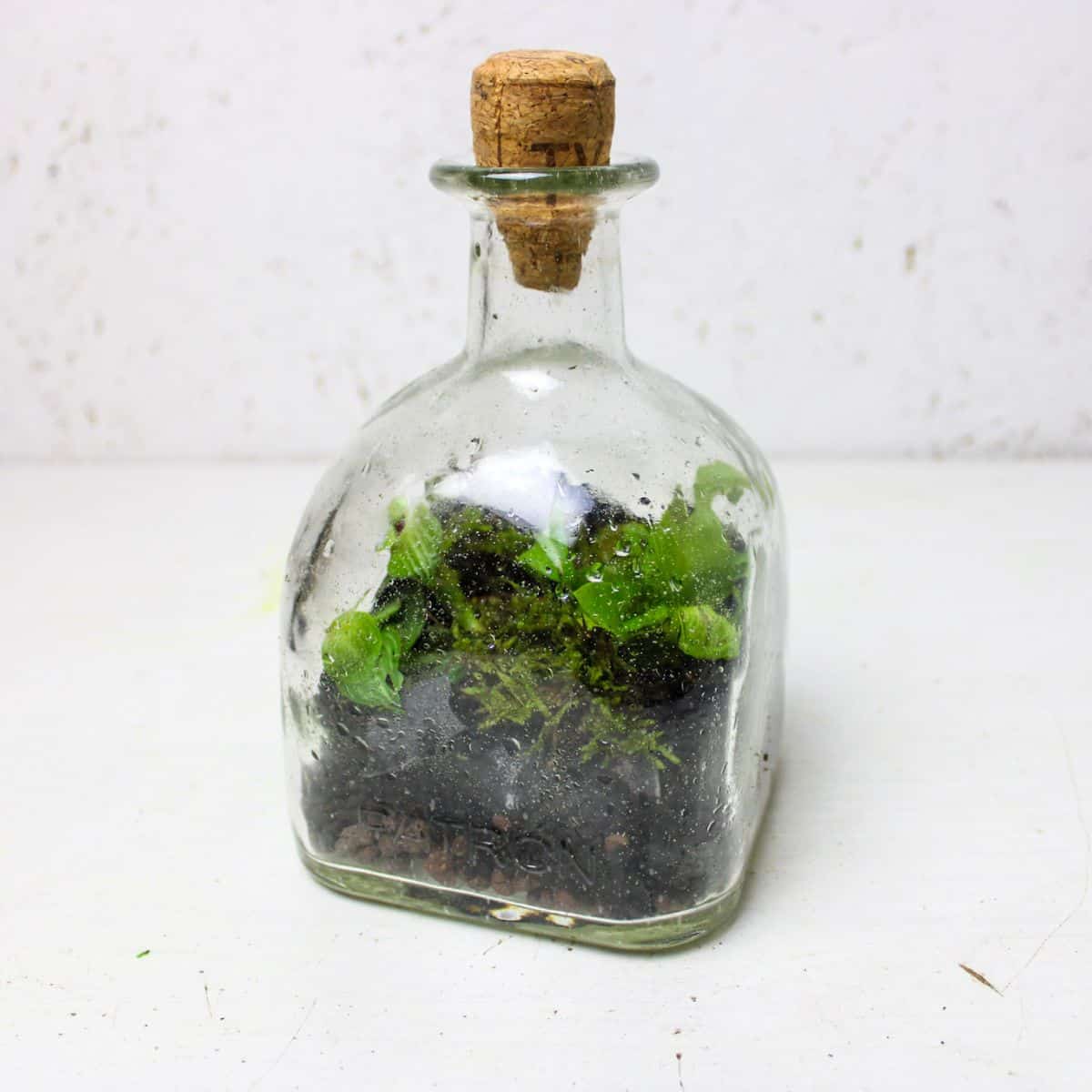
Bottles make brilliant mini terrariums, especially when they have a narrow neck.
The old tequila bottle I’m using here is a great example. It’s sturdy, interestingly shaped, and gives you a perfectly valid reason to finish the contents first. (Practical horticulture, obviously).
In practice, bottle terrariums are perfect for closed tropical conditions because the narrow opening helps retain moisture. Even without a cork stopper, they can stay surprisingly humid inside.
The main challenge is access.
The smaller the opening, the more deliberate you need to be. So you’re going to need a funnel for substrate, tweezers for planting, and a whole lot of patience.
That’s why bottles work best with small cuttings and compact plants that don’t need much rearranging once they’re inside.
2. Jar Terrarium
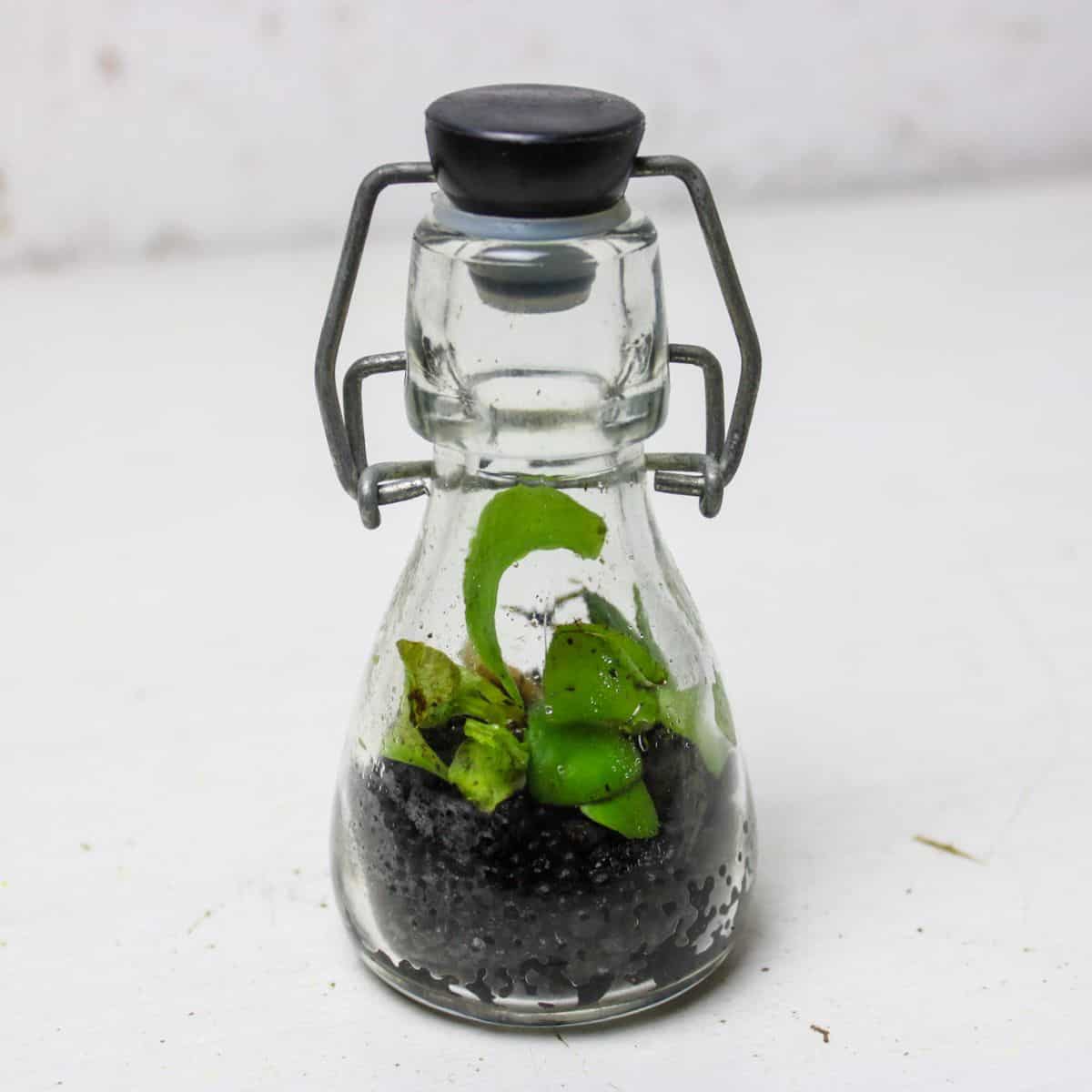
Jar terrariums come in all kinds of sizes.
Regular mason jars are roomy enough to hold proper layers, but still compact enough to feel like a mini build. You can usually work inside them with tweezers, a brush, and a bit of patience rather than needing full terrarium surgery tools.
Whereas these little swing-top vinegar and olive oil bottles make lovely little mini (micro?) terrariums.
3. Mini Open Terrarium
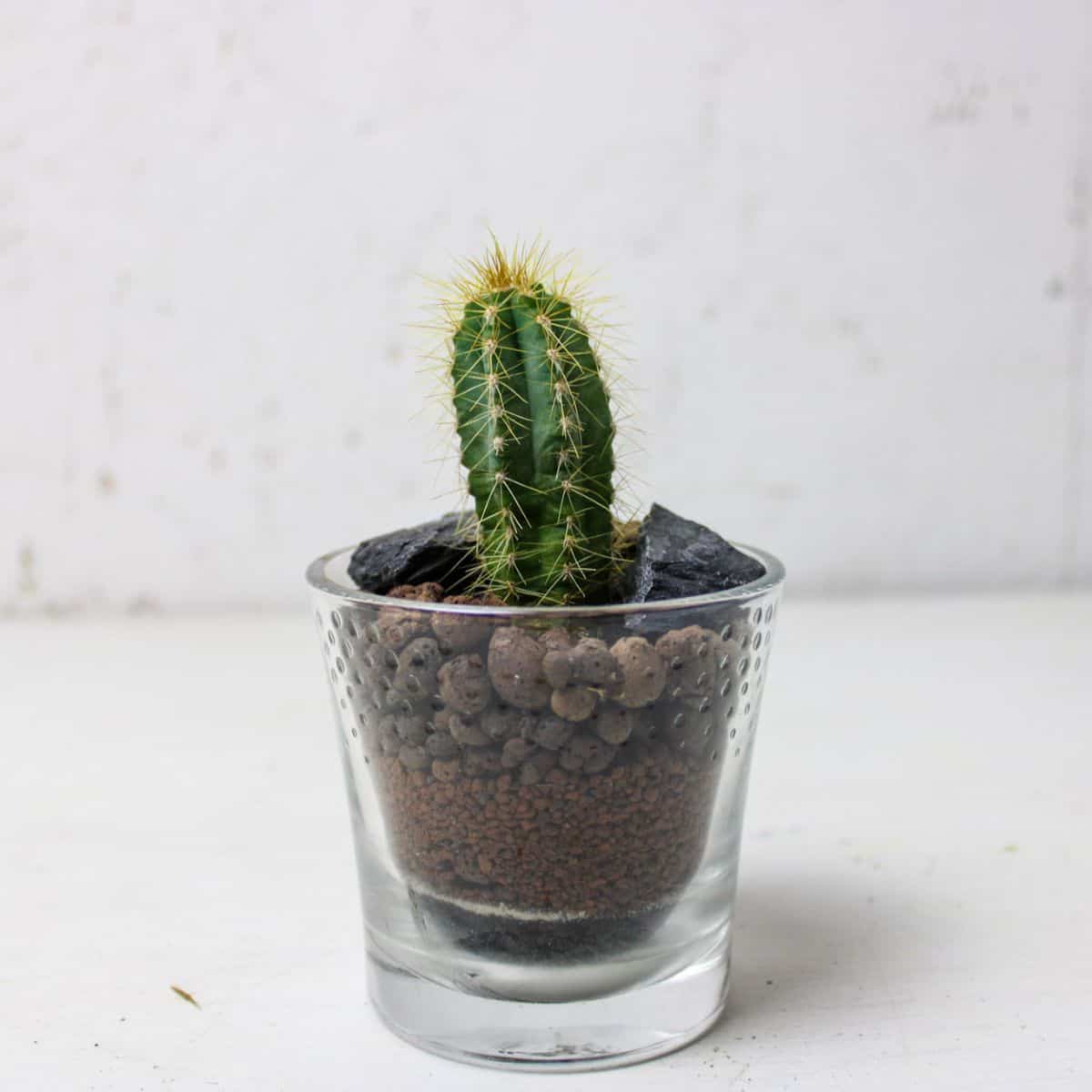
Not every mini terrarium needs to be sealed.
Candle holders, small vases, shallow glass bowls, and decorative cups are often better suited to open terrarium designs. They can still make beautiful mini displays if you match the plants to the container.
Some colorful layering and a simple succulent or cacti go a long way to make a gorgeous addition to your mantlepiece.
4. Spice Jar Terrarium
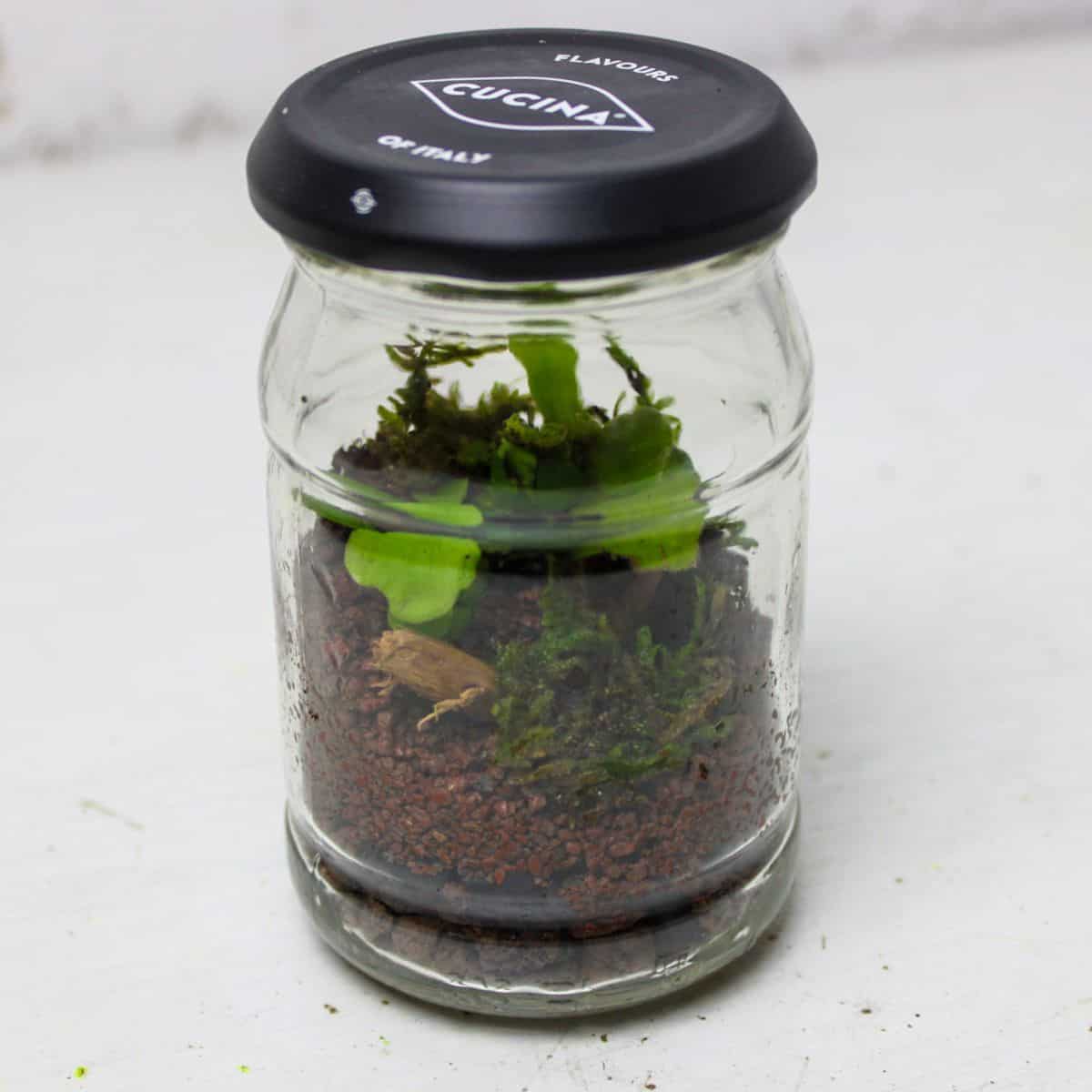
Old spice jars, sauce jars, and tiny food jars are perfect for mini terrariums (or, as in our case today, pesto).
Personally, I like these kinds of jars because they often allow for a full 360-degree design. You can build around a central hardscape piece and let the moss and plants wrap around it naturally.
These jars often come labeled, but some hot water and steel wool will make short work of them.
5. Micro Terrariums
We’ve now truly departed from the miniature and are diving deep into the experimental waters of the micro terrarium – something so small you’ll need that extra touch of ingenuity.
Let’s look at two different ways to do it:
First, we have the micro moss terrarium.
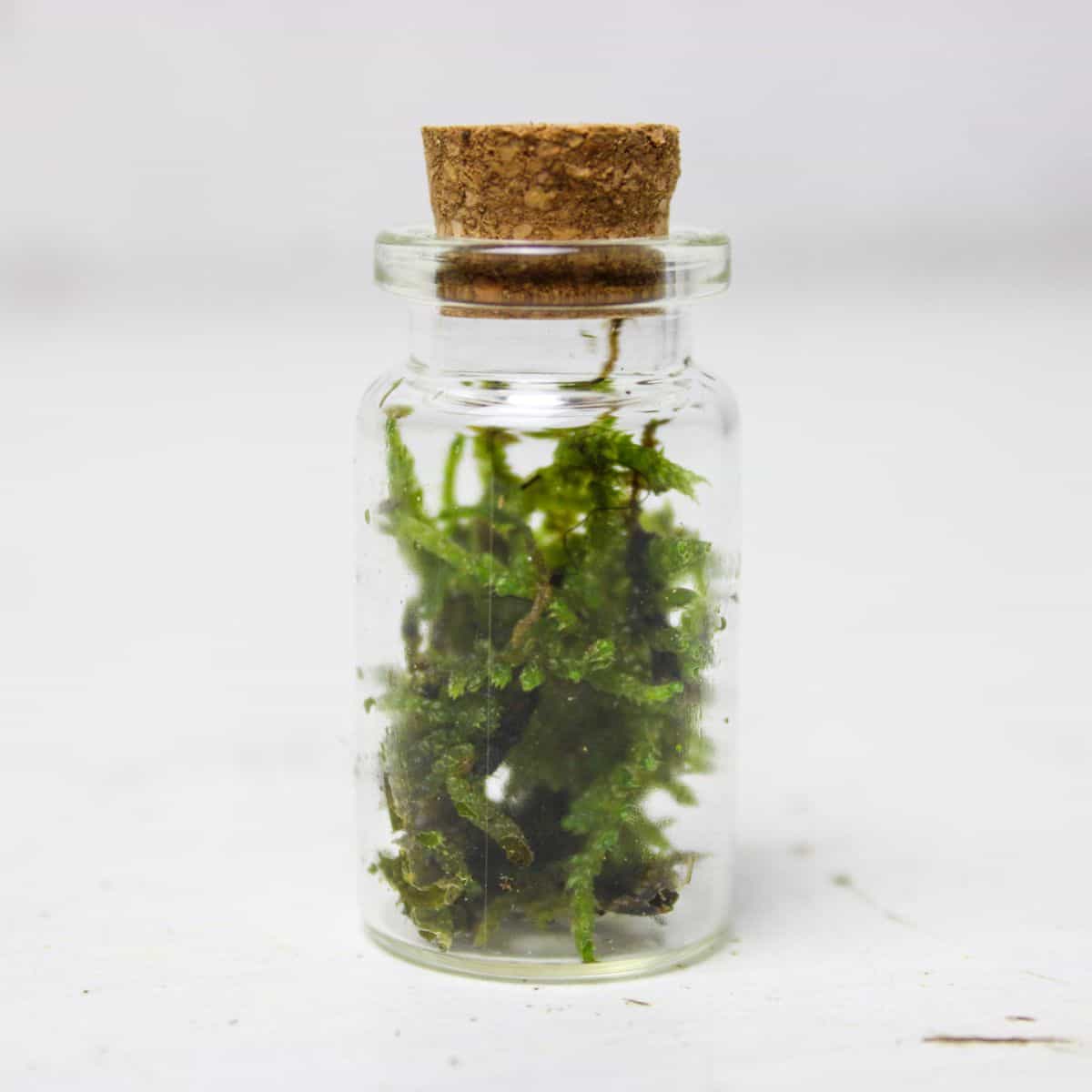
For this, you can simply pop a tuft of live sheet moss in so you can see that wonderful green from all angles. Give it a tiny bit of water every now and again if it dries out, and you’re good to go.
Though how long it will last is a little tricky to say. So, using preserved moss is a viable alternative (and what is used most often in terrarium jewelry).
The second micro terrarium method is the super popular mini marimo moss terrarium bottles.
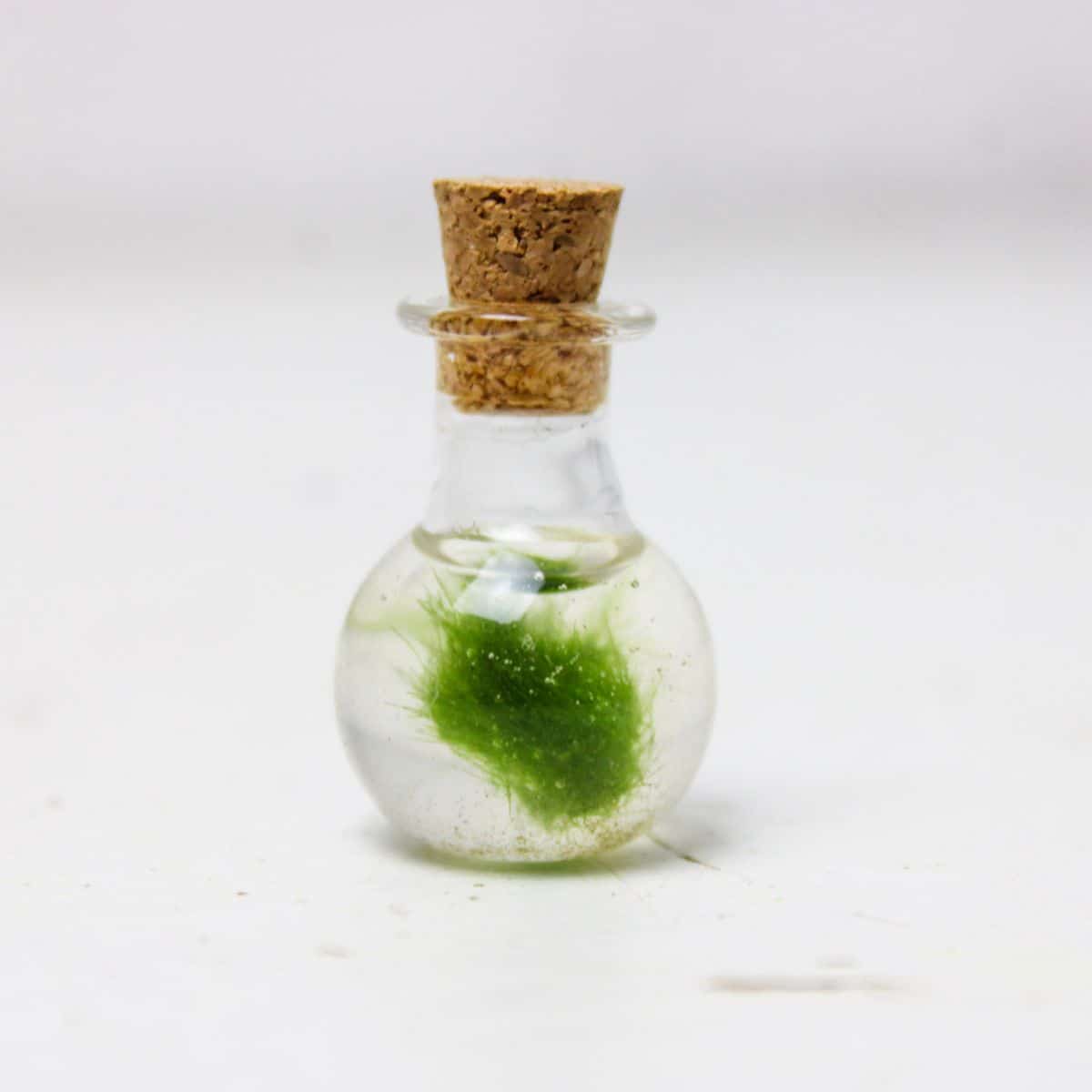
They’re simple to make, and I think they look super elegant.
All you need to do is pinch off a small bit of marimo from a larger ball, gently roll it up into a ball shape once more, and poke it down into your container.
Fill this up with filtered water, and you’ve done it! Just change the water every couple of weeks, and you can enjoy it to your heart’s content.
Mini Terrarium Supplies: What You’ll Need
Hopefully, you’re now feeling inspired to make a mini terrarium. Or twenty. This is how it starts.
We’ve covered a range of containers already, so we’ll cut to the chase with the kinds of materials and tools that all mini terrariums are going to need (or can at least take advantage of).
Mini Terrarium Plants
You’ll want plants that are genuinely small, not just young.
Lots of tropical plants look tiny when you buy them, then immediately start producing larger leaves once they settle in. Lovely in a normal terrarium. Less lovely when the new leaf has nowhere to go except directly into the glass…
For closed mini terrariums, look for compact tropical plants and (slow-growing) creeping species.
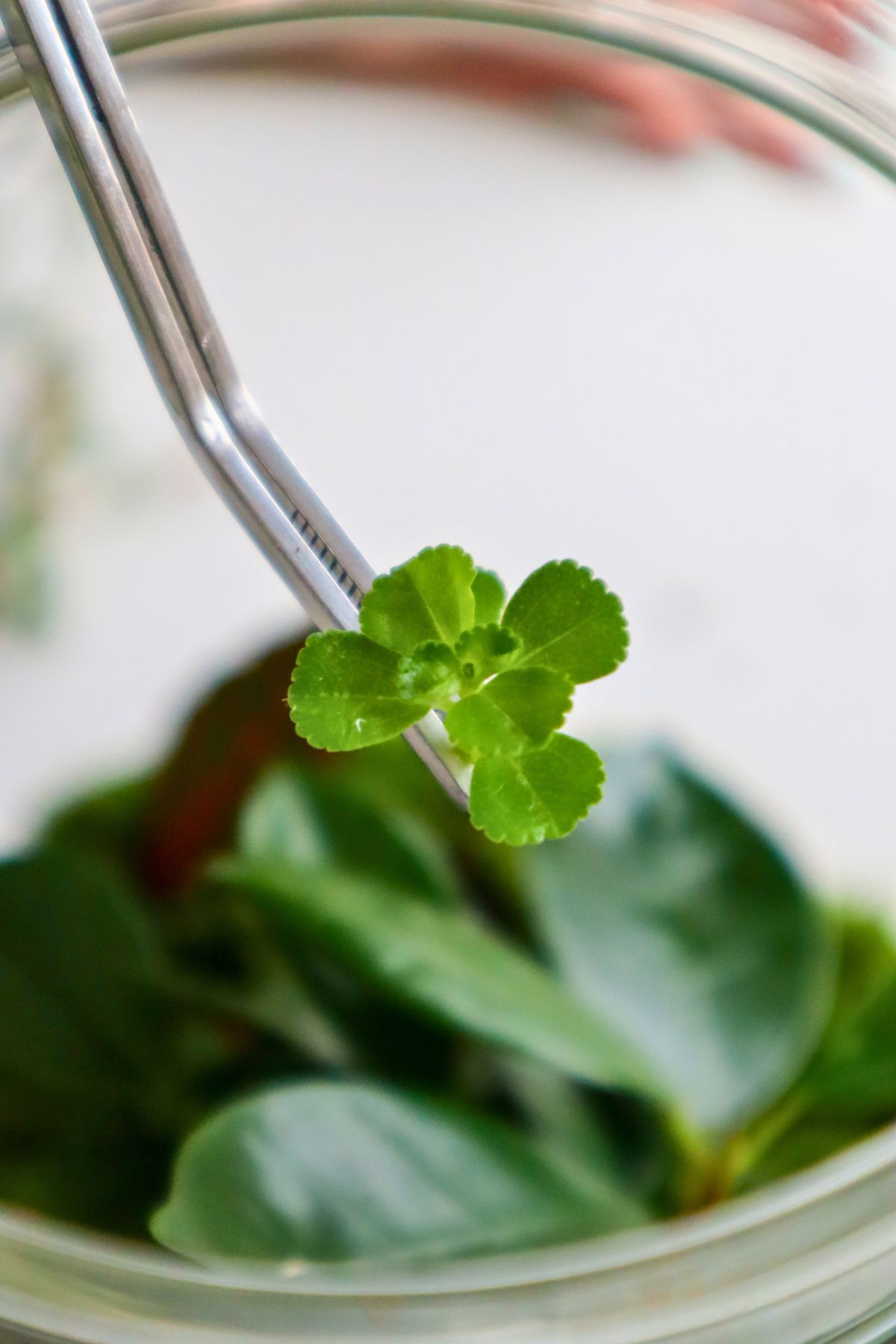
Dwarf ferns (like the Lemon Button Fern) can work nicely. Compact Peperomia are often good options, and cuttings from the likes of Pilea depressa, Pilea glauca, and Selaginella can fit in anything.
For more options, check out our guide to small terrarium plants that stay small under glass.
Moss
Moss is your best friend in a mini terrarium.
It’s perfect for creating wild grasslands or a rainforest aesthetic and fits into tiny places most things can’t. For tiny builds, moss often does more visual work than the plants.
And for the tiniest projects, sometimes it’s all that will fit…
The best species to use are typically going to be sheet moss species like Hypnum Moss or Fern Moss. They hold together better and can be separated more finely without falling apart (which the likes of Cushion Moss does immediately).

Terrarium Substrate
A good substrate matters even more in a mini terrarium because you don’t have much room to correct mistakes.
You want something moisture-retentive but airy enough to avoid becoming compacted and stale. Use a thin layer rather than filling half the container with soil. Tiny terrariums don’t need a full lasagna of substrate.
You probably don’t need a drainage layer either. Most tiny containers aren’t going to have the space for the material, and you can’t effectively keep it separated. But if you do opt for it, I’d choose a fine gravel.
Tools
Tiny terrariums are much easier with a few simple tools.
You don’t need a huge tool kit, but you do need control. Fingers are wonderful things, but not always inside a spice jar.
Useful options include:
- Tweezers for placing plants and moss.
- A small brush for cleaning the glass and smoothing the substrate.
- A funnel for adding substrate without coating the inside of the container.
- A mister or pipette for gentle watering.
- A wooden skewer or chopstick for nudging things into place.
For a full breakdown of which terrarium tools are essential, which aren’t, and how to use them, check out our terrarium tools guide.
How to Make a Mini Terrarium Work
The hardest part of a mini terrarium isn’t finding a small jar. It’s resisting the urge to fill every millimetre of it.
Small containers exaggerate everything. Making it painfully easy to overdo it on the substrate, the plants, and the hardscape (not to mention the watering).
So the best mini terrariums usually follow three rules.
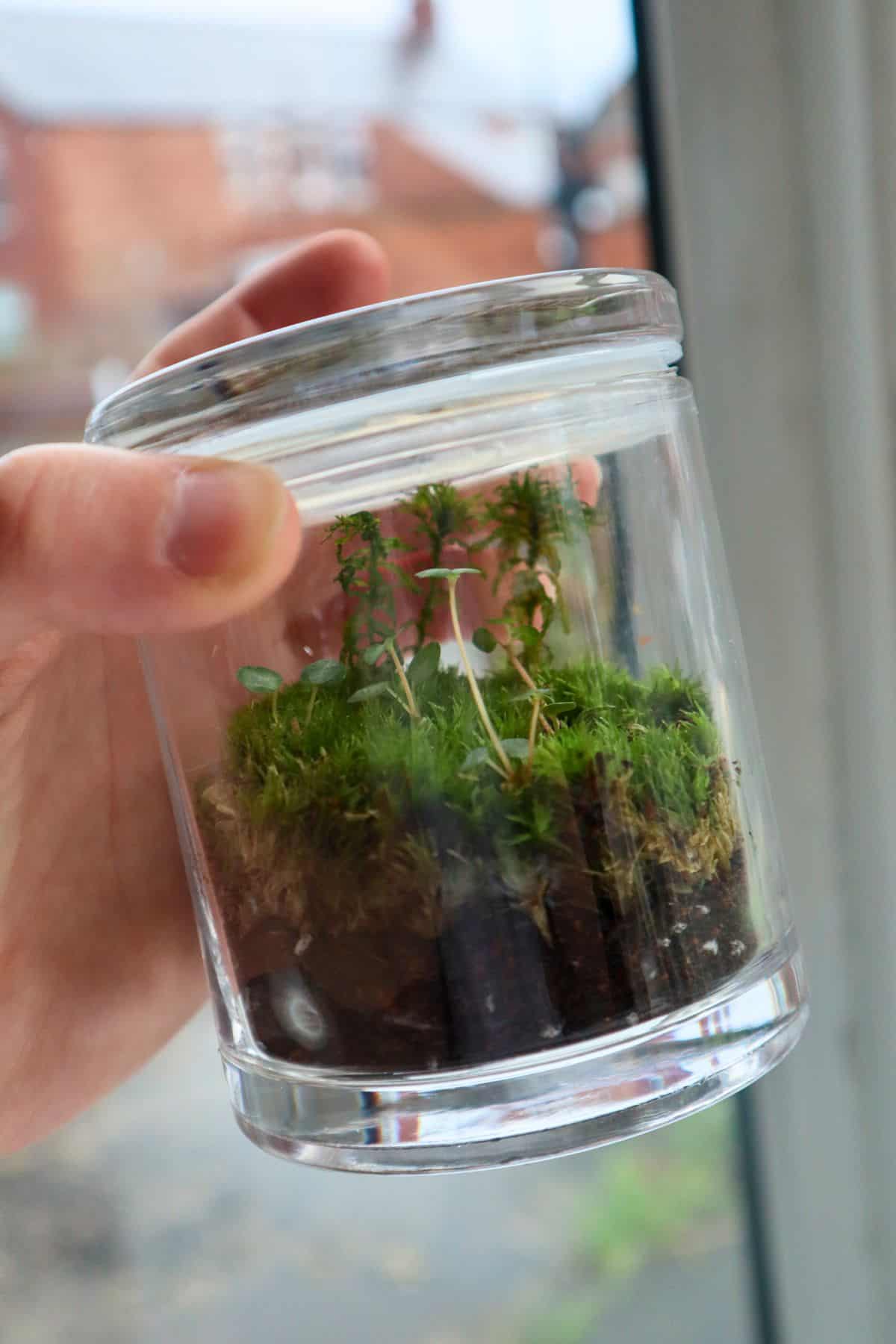
- Keep the planting simple. One small plant and a patch of moss often looks better than five tiny cuttings competing for space.
- Scale everything down. Use finer substrate, smaller pieces of hardscape, thinner moss sections, and tiny cuttings rather than whole nursery plants
- Water less than you think. Mini terrariums don’t have much buffer, so a heavy misting can quickly ruin the whole show.
That’s the trick, really.
A mini terrarium doesn’t need every feature of a full-sized setup. It just needs the right version of each one, i.e., less soil, fewer plants, smaller details, and more empty space than feels sensible at the start.
Now it’s Your Turn!
Mini terrariums are proof that you don’t need a huge glass tank to make something beautiful.
A small jar, a bit of moss, a compact plant, and a little creativity can go a long way. The key is choosing the right kind of build for the container – closed and humid for tropical plants, open and dry for succulents, or moss-only if you’re going truly tiny.
Start with what you have, keep the layers light, and don’t overwater it.
The terrarium may be mini. The consequences of turning it into soup remain full-sized…
For more normal-sized inspiration for your next build – check out our terrarium ideas post.

I made some tiny terrariums that have a thin neck. How can I water them if a mister bottle can’t be used and I can’t feel the soil to see if it is too dry? Should I use a dropper instead?
Yep – a dropper or pipette is the best bet!