
Terrariums are often sold as low-maintenance.
And once they’re settled in, they can be. But that doesn’t mean you can plonk it on a shelf, walk away, and expect nature to do the rest forever.
Most terrariums go wrong for very ordinary reasons.
Too much water, too much sun, the wrong plants, or letting small issues spiral because you didn’t catch them early enough.
In this guide, I’m going to walk through the most common terrarium care mistakes, how to spot them early, and what to do to keep your setup healthy, balanced, and looking good long-term.
Terrarium Care at a Glance
If you only remember a few things, make it these:
- Keep your terrarium in bright, indirect light.
- Water sparingly, and only when it actually needs it.
- Remove dead foliage before it starts causing problems.
- Trim plants before they turn the whole build into a jungle.
- Keep your glass container clean and clear.
- Act early when you spot mold, rot, or an obvious imbalance.
- Add a cleanup crew as early as possible.
Taken together, that’s really what good terrarium care looks like. Keeping the system balanced, spotting small problems early, and resisting the urge to overcorrect.
Most care issues come from the same handful of mistakes, so let’s work through the ones that matter most.
1. Too Much Water
This is the big one.
Overwatering is easily the most common terrarium care mistake.
A terrarium hangs onto moisture. Once the water is in there, it tends to stay in there. So while it only takes a little extra to tip things out of balance, it can take a frustratingly long time to fix.
You never want the substrate to be soaked. Lightly moist is the goal. If the soil looks dark, swampy, or properly wet, you’ve likely overdone it.
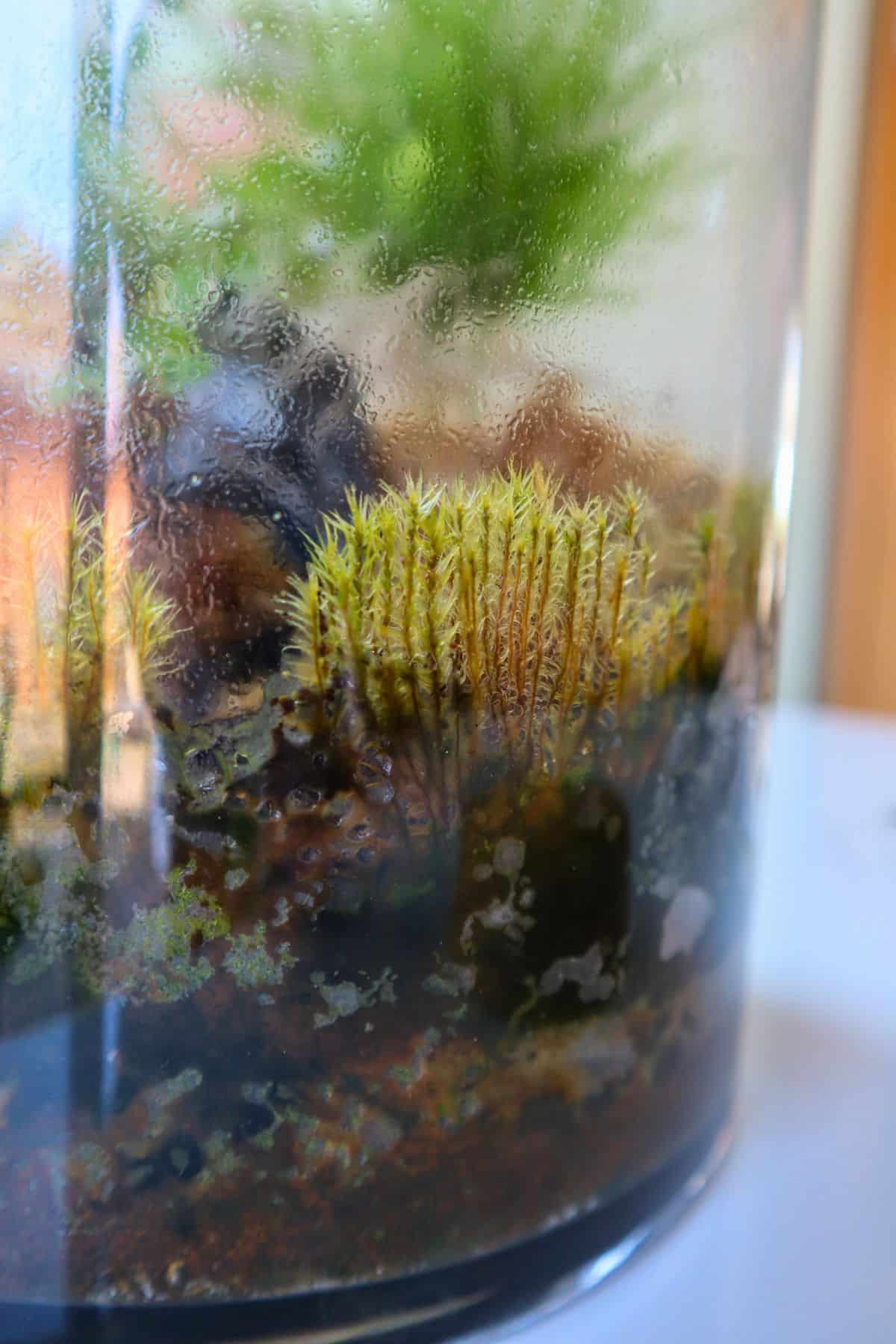
Heavy condensation is one indicator of overwatering, but it’s not the only one.
This is why I always recommend adding water slowly. A spray bottle gives you much more control than just pouring it in and hoping for the best. See my full guide on how to water a terrarium for more help.
Honestly, I’d much rather slightly underwater a terrarium and top it up later than overshoot and spend the next two weeks trying to dry the thing out again.
A drainage layer helps, sure – but it’s there as a buffer, not a backup reservoir.
2. Not Enough Water
Overwatering gets most of the attention, but terrariums can absolutely suffer from too little moisture too.
A healthy planted terrarium should usually show at least some light condensation on the glass at certain points in the day. Not constant heavy droplets, but enough to show that moisture is cycling through the system properly.
If the glass stays completely dry for long stretches, that can be a sign the terrarium is running low on moisture. You might also notice wilting, crisping leaves, pale moss, or dry-feeling substrate.
The fix is simple. Add a small amount of water (a few sprays, as we mentioned earlier) and monitor it over the next few days.
3. Too Much Sunlight
Most terrarium plants are not sun-lovers.
The kinds of plants that typically do best in terrariums (small tropical foliage plants, mosses, ferns, etc) generally prefer bright, indirect light over sustained direct sun.
Scorched leaves are the strongest indicator that your plant has had too much sun, but there are other, more nuanced indicators. Browning leaves and weak growth can be symptoms of a variety of things, but heat stress is one of them.
For most planted terrariums, bright indirect light is the safer default.
So rather than waiting to spot the negative patterns, try to make sure your terrarium is never exposed to direct sunlight. North-facing windowsills, for example, will always have indirect light.
4. Not Enough Light
Of course, too little light causes problems, too.
And personally, I think this one is way more common than people think.
Terrarium plants are often described as low-light plants, but that’s one of those phrases that gets people into trouble. Low light doesn’t mean no light. It just means they don’t want blazing sun.
If your terrarium is stuck in a dim corner and expected to survive on vibes alone, it’s probably going to struggle.
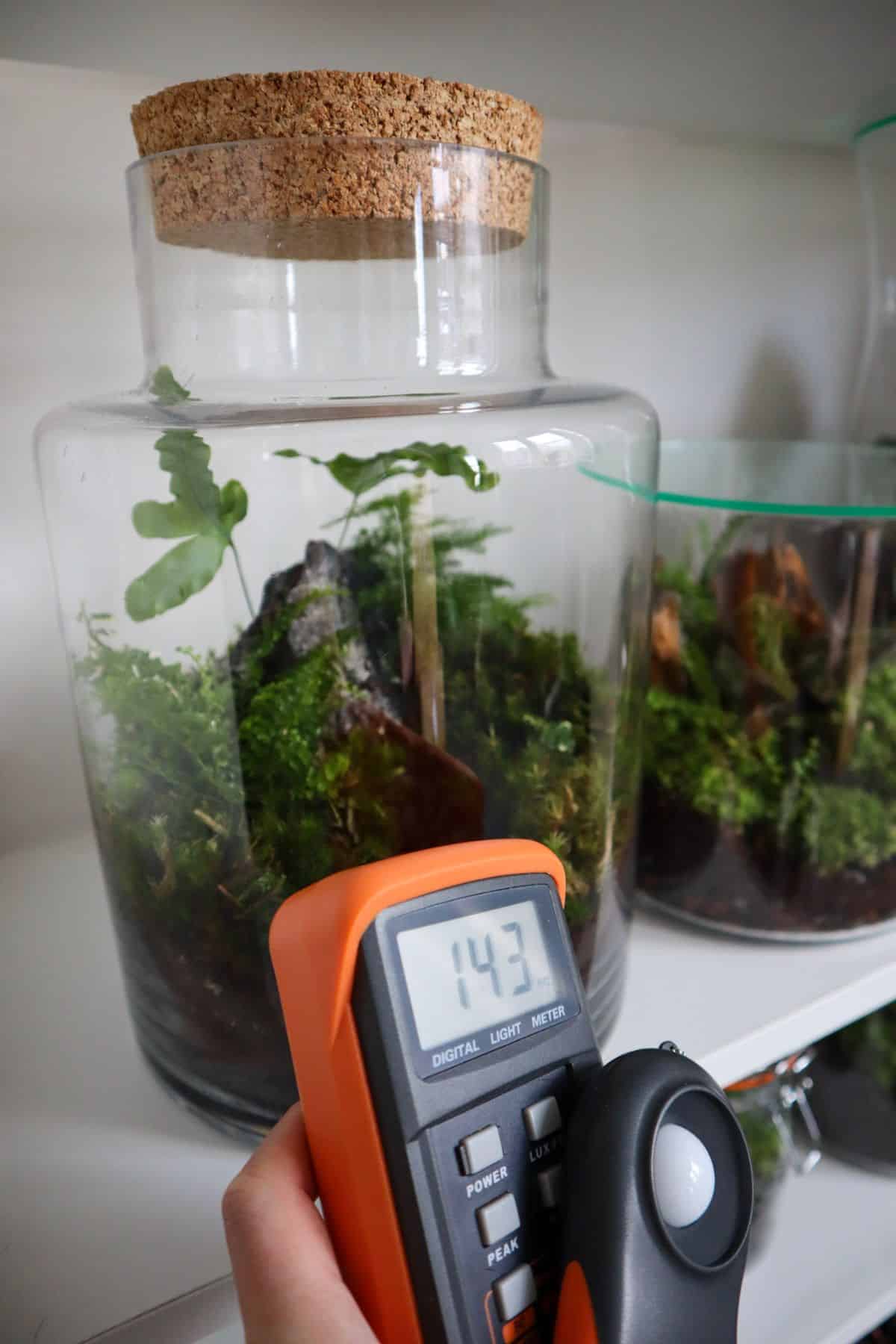
Things to look out for:
- Colors fading and moss browning.
- Slow growth and weak foliage (everything looking a bit sad).
- Leggy stems, particularly in your vining species.
For more help, see my complete guide to light for terrariums.
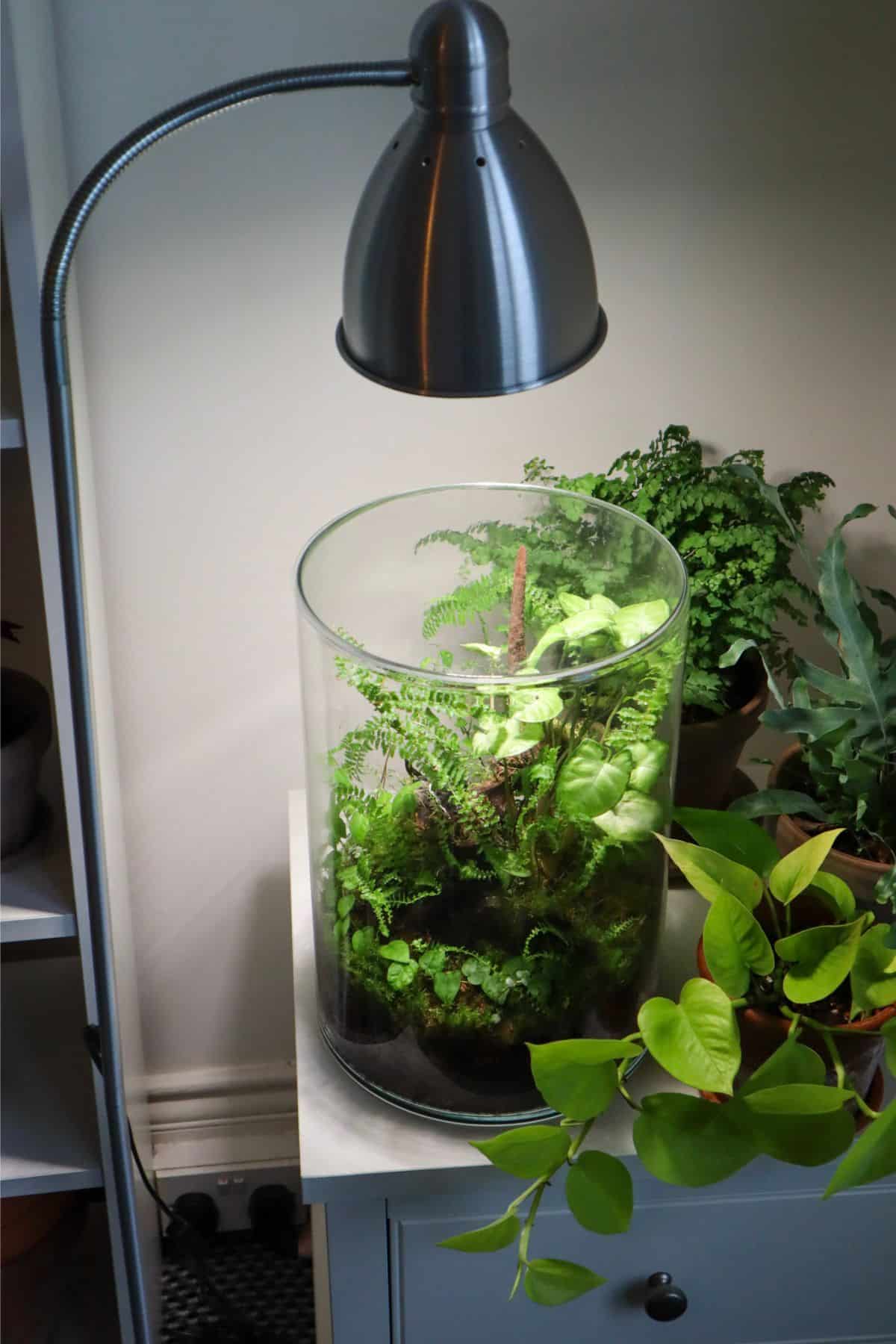
Alternatively, if your home doesn’t offer much natural light, grow lights make life much easier. They remove a lot of the guesswork.
5. Mold Getting Out of Hand
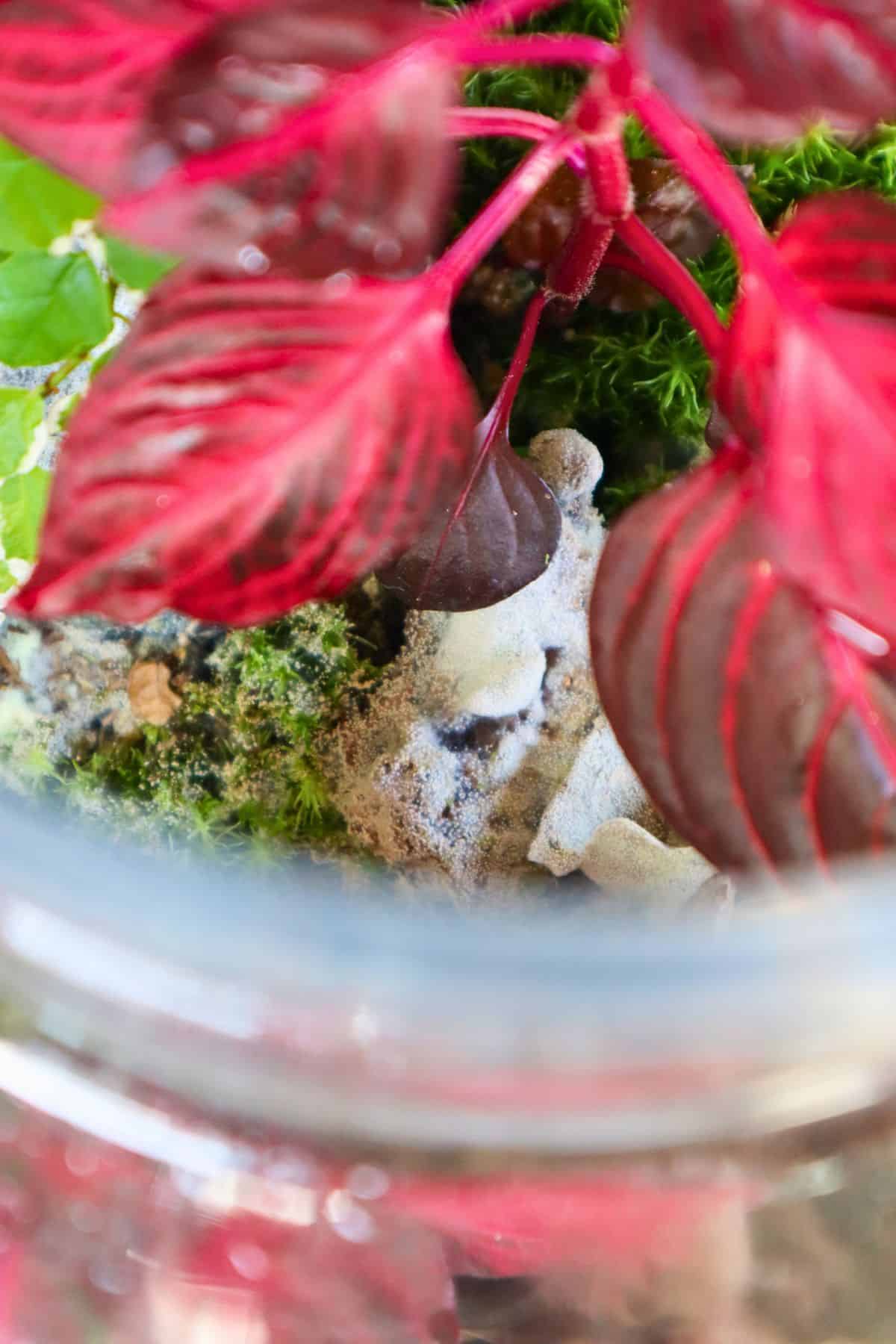
Mold is part of the terrarium experience. Not the fun part, admittedly, but still.
Terrariums are warm, humid, and full of organic material, so mold is always waiting for its moment.
Small outbreaks are common, especially in new builds, and they’re not always cause for panic. Sometimes they fade on their own as the terrarium settles in.
But there is a difference between “normal bit of mold” and “this is clearly getting out of hand.”
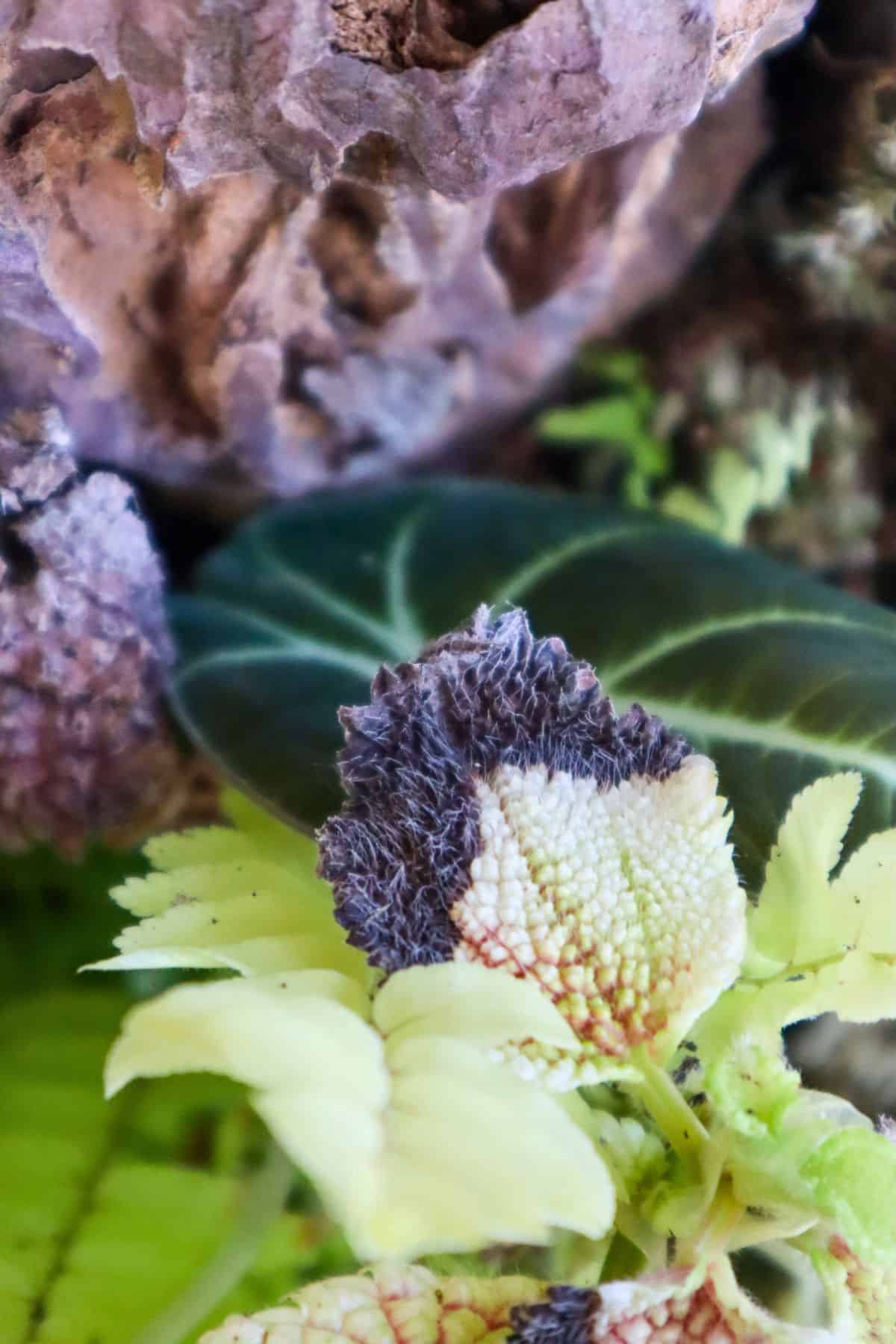
If it’s spreading across leaves, substrate, or hardscape, I’d deal with it early. Open the lid for a while to let some moisture escape. Wipe away the visible patches. Remove anything dead or decaying that’s feeding it.
If a leaf has already gone soft or damaged, I’d just remove it. No point leaving it in there to make things worse.
See my full guide on how to get rid of mold in terrariums if it’s an issue you’re dealing with.
Springtails are still the best long-term mold control I’ve found. They make a huge difference, but they’re much better at prevention than emergency clean-up after a full fungal coup.

You typically only need one culture of springtails per terrarium to get the ball rolling.
That said, adding them once you have a giant mold bloom is likely too late – prevention is better than cure in this case.
6. Removing Dead Growth
Dead leaves don’t quietly disappear in a humid, closed environment.
They rot.
And once they start rotting, they become a nice little launchpad for mold and bacteria.
Even if you have springtails in there doing their thing, a small clean-up crew can only process so much at once. One dying leaf? Probably fine. A decaying stem, mushy foliage, or a collapsing plant? That’s when problems snowball.
If you spot dead or clearly dying plant matter, get it out early. A pair of long tweezers is usually all you need.
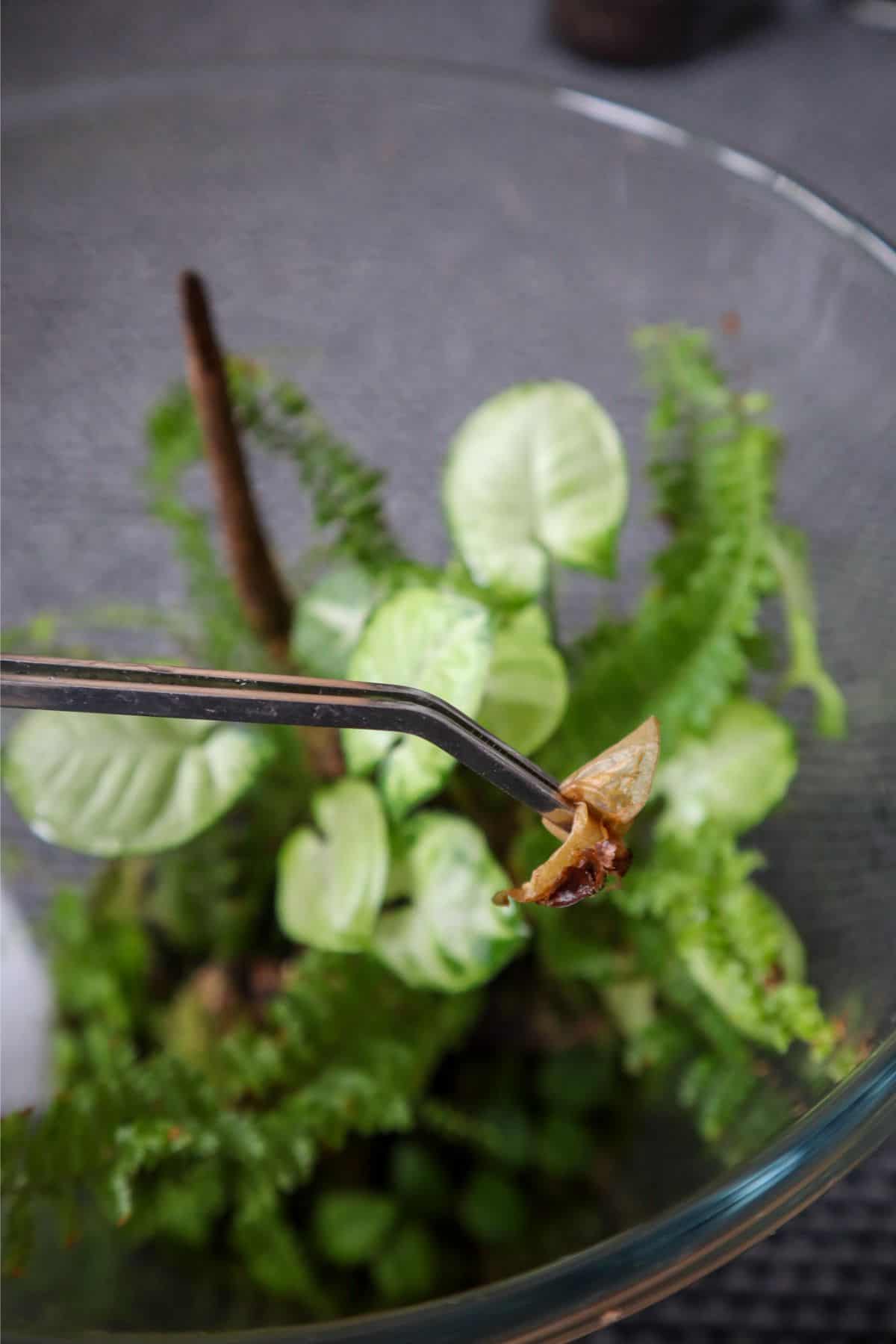
Small maintenance jobs done early save you from much bigger ones later.
7. Managing Overgrowth
Healthy growth is great… until it isn’t.
Given enough time, most terrariums will need trimming. That’s normal. A good terrarium isn’t a static environment so much as it’s a living system. Things will grow, shift, spread, and occasionally get a bit too comfortable.
That’s the tradeoff with a self-sustaining setup. The goal is long-term stability, not zero maintenance.
Plants that become too dense can block light from reaching everything underneath. Tall growers can hit the lid. Fast-growing vines can start muscling out slower plants. And leaves pressed up against the glass often end up damaged anyway, thanks to constant moisture.
So if the whole thing starts looking crowded, that’s your cue.
Trim stems back, thin out overgrowth, and don’t be afraid to replace plants that have clearly outgrown the container.

8. Basic Terrarium Maintenance
Some care jobs are not exciting, but they still matter.
Dirty glass is the obvious one. If the inside of the terrarium is coated in residue, algae, or general grime, it doesn’t just look worse – it also blocks light from getting to the plants (and makes the whole viewing experience worse).
A quick wipe with a lint-free cloth and warm purified water usually sorts it.
Where it becomes more difficult is if you use hard tap water and you end up with those characteristic white mineral marks. To get those off, you’ll need to scrape it off – and it doesn’t come off easy.
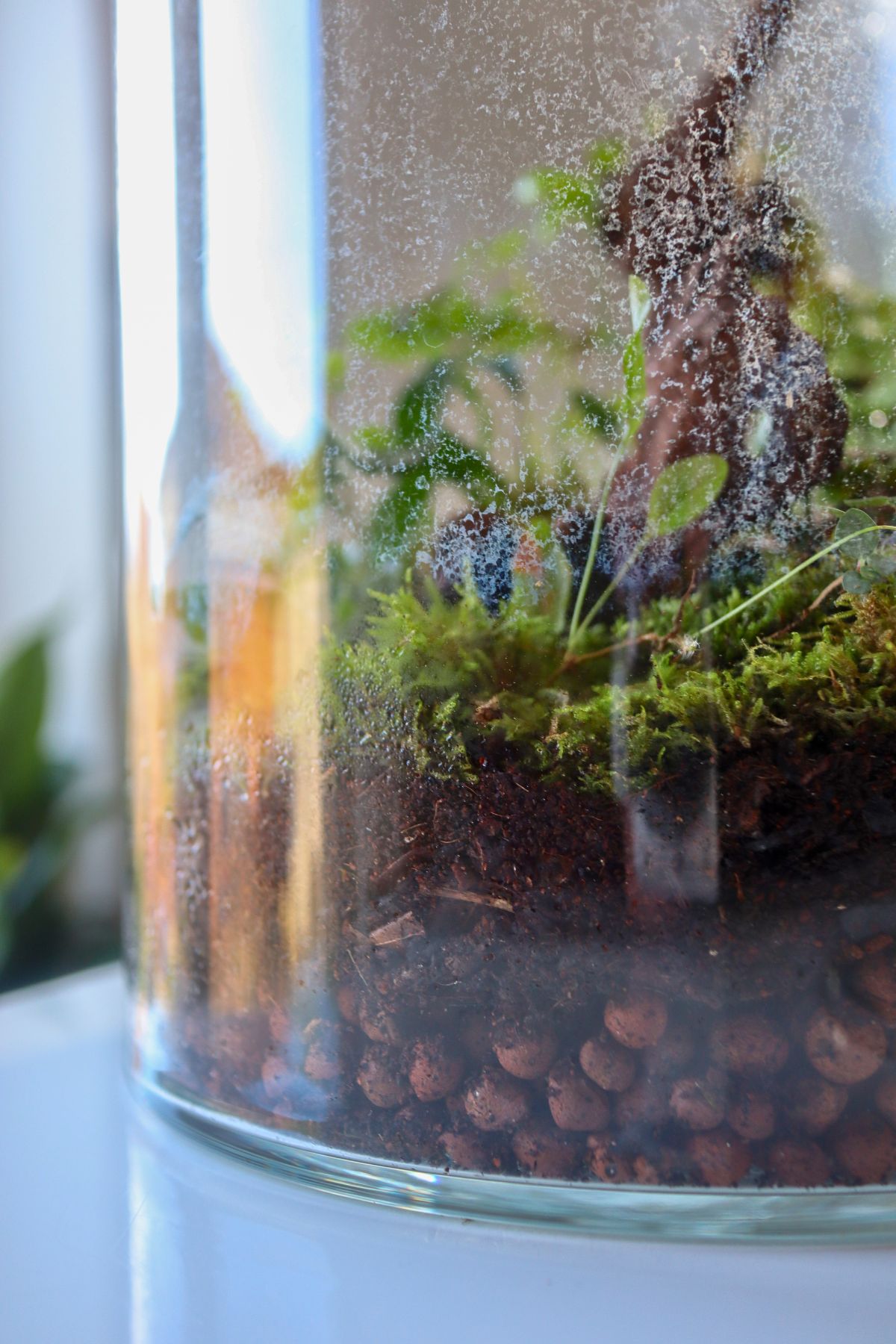
Which is why filtered, distilled, or deionized water is always best.
9. Terrariums Are Not Houseplants
A terrarium is not just a houseplant in a jar.
They behave differently, hold moisture within the various terrarium layers differently, and respond differently to care. Which means a lot of normal houseplant logic goes out the window.
You don’t put it on a fixed watering schedule. You don’t drench it every time the top looks a bit dry. You don’t keep feeding it to encourage loads of growth when the whole point is that it lives in a limited space.
Terrariums respond much better to observation than routine.
That’s really what good terrarium care comes down to. You’re watching the system and making small corrections when needed. Not following some rigid checklist because it’s been seven days, and apparently, that means watering time.
10. Plants That Suit the Setup
This is one of those mistakes that gets made right at the beginning, but only really shows up later.
Not every plant belongs in a terrarium. And even among the ones that do, not every terrarium suits every plant.
Closed terrariums generally work best with compact tropical species that enjoy warmth, humidity, and consistently moist conditions. Succulents, cacti, and other arid plants are usually a terrible fit for that environment. They might look good for a minute, but they’re not built for it.
Then there’s the size issue.
A plant can love humidity and still be a bad terrarium plant if it grows too tall, too fast, or too aggressively for the container. That’s how people end up with a build that looks fantastic at first and turns into a maintenance headache six months later.
The best terrarium plants match the setup in three ways: humidity tolerance, light needs, and growth habit.
Over to You
Good terrarium care is less about constant maintenance and more about noticing small problems before they become big ones.
Once you learn how to read the signs – moisture, light, condensation, growth, and decay – you’ll get the hang of it.
Got any terrarium care habits that work well for you? Let me know in the comments.

Thanks for any help you can give me. My mother used to sell them in her florist, but I’ve never had one till now. Mine is in a 4 ft aqaurium tank new of course. I have also done the layers as in potting mix ,sand, charcoal etc.
Hey Wayne, is there anything in particular you need help with? Feel free to post any questions in the Facebook group 😊