

Some terrarium plants are a natural fit.
For the rest, it comes down to matching the plant to the conditions, the container, and the role you need it to play in the design.
Sometimes that’s a compact fern for a humid closed jar, a creeping vine, a mossy ground cover, or a small statement plant that brings the whole scene into focus.
This guide breaks down the best options by setup type and role, so you can choose plants that actually make sense together.
The Best Plants for Closed Terrariums
Closed terrariums are where plant choice matters most.
The warmth and humidity suits plenty of tropical species, but the low airflow, limited space, and consistently moist conditions rule out just as many. That’s why most reliable closed terrarium plants fall into a few distinct groups.
We tend to favor a healthy mix of ferns, vines, mosses, compact foliage plants, and maybe a few (well-behaved) epiphytes.
- Ferns bring a variety of soft textures, and they’re naturally suited to humid conditions, e.g., Lemon Button Fern.
- Vines and creepers help tie things together and add a touch of wild growth, e.g., Selaginella and Ficus pumila.
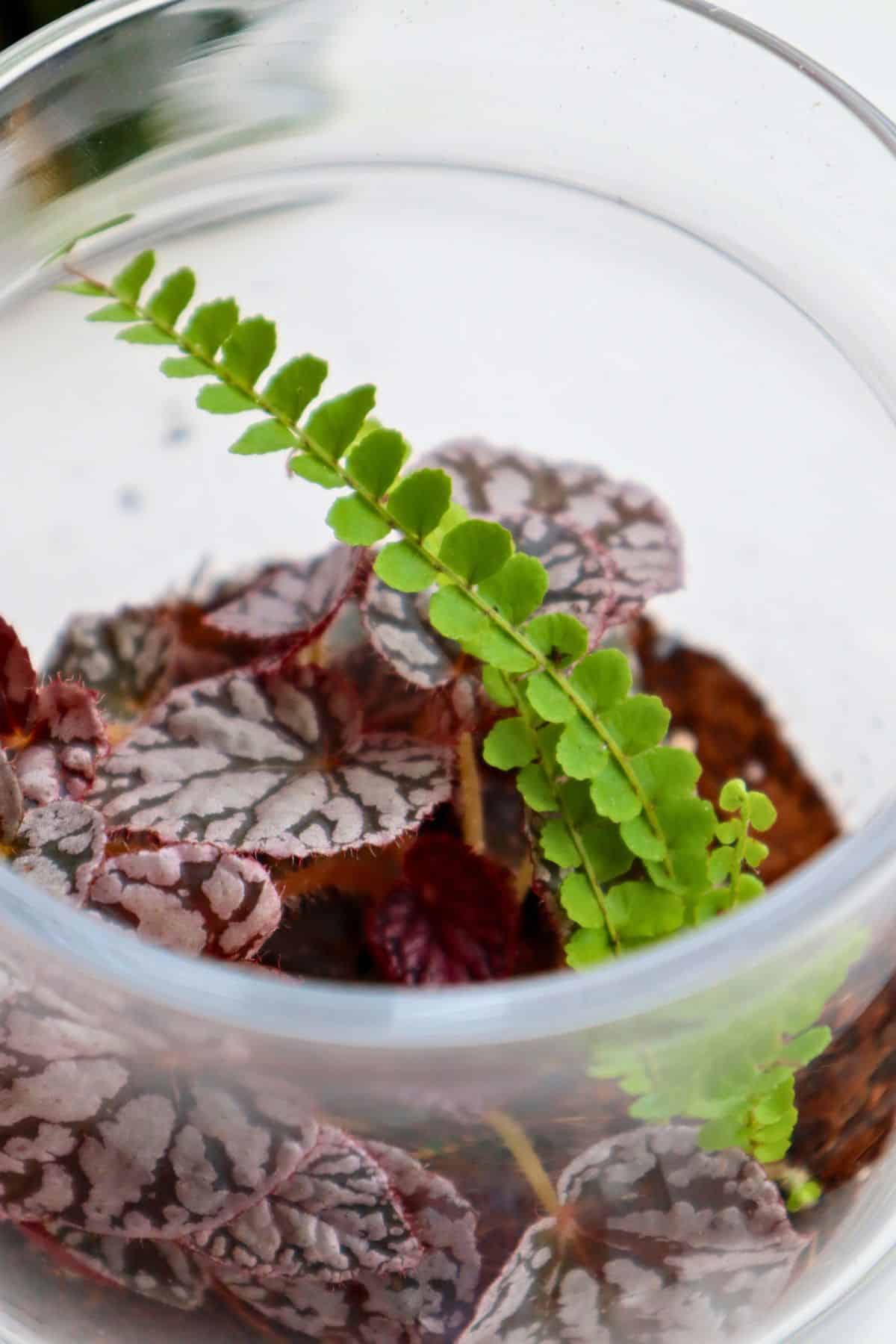
- Compact foliage plants add a pop of color, contrast, and focal points, e.g., Cryptanthus, Pilea, or Jewel Orchids.
- Mosses soften edges, add lushness to the forest floor, and make a build feel more established, e.g., Cushion Moss or Mood Moss.
The best builds usually combine at least a few of them to create something that feels natural, layered, and balanced.

Orchids and epiphytes can work, but they’re best used sparingly when attached to branches. They tend to be trickier to establish, and I’ve only found a handful of reliable species that can cope with low airflow – most often the semi-aquatic plants like Anubias.
For a more detailed breakdown of the plants that genuinely thrive in sealed setups, see our closed terrarium plant recommendations.
Reliable Terrarium Plants for Beginners
Beginner-friendly terrarium plants come in all shapes and sizes.
What they share is adaptability, forgiving growth, and a proven track record in warm, humid terrarium conditions. These are the plants I reach for again and again for my projects.
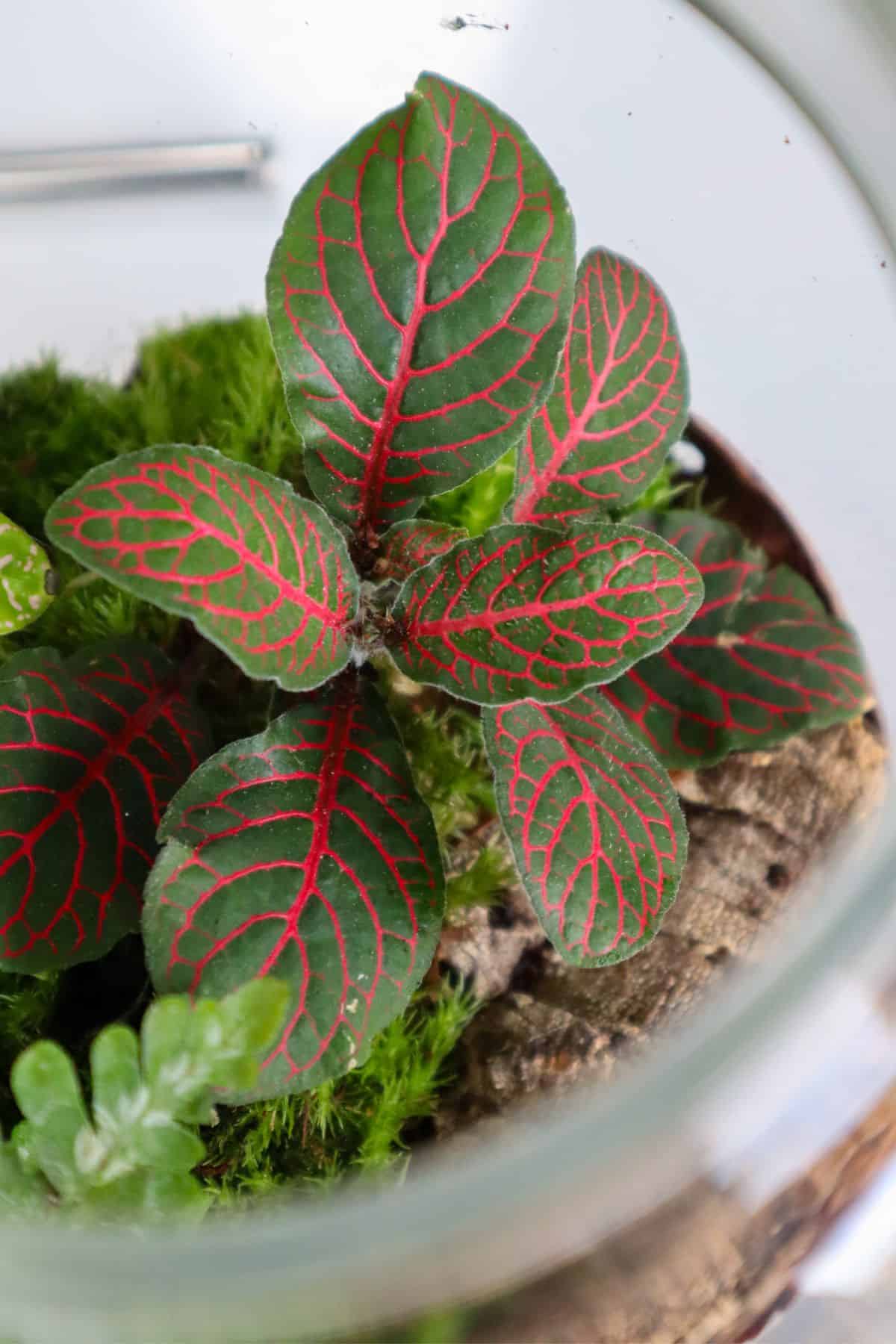
Nerve Plant – A true terrarium staple, the ornate foliage of the Fittonia is synonymous with modern terrariums.
Sure, it’s dramatic when thirsty, but that’s part of why it’s so beginner-friendly. It literally tells you when something is wrong (and usually bounces back quickly).
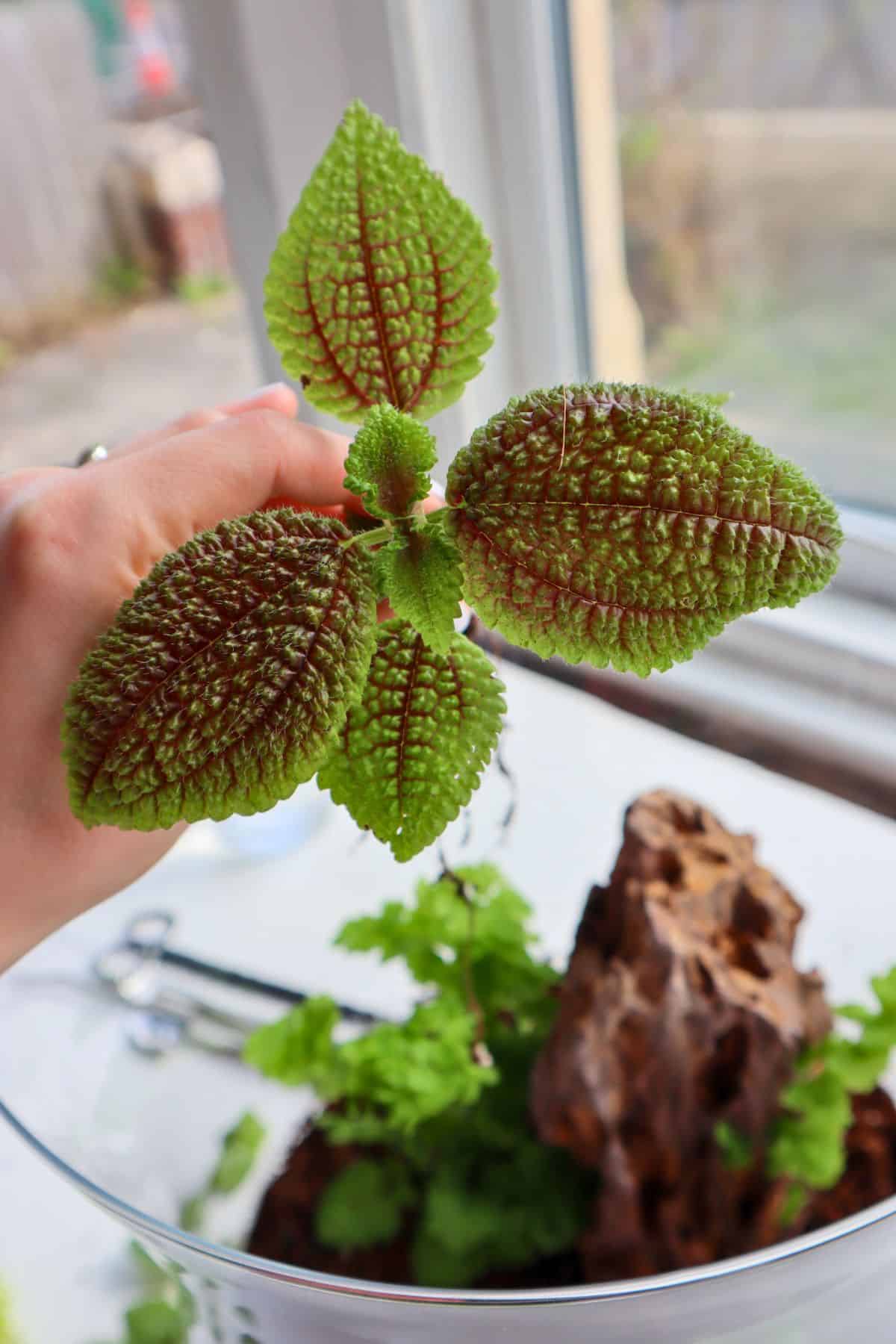
Polka Dot Plant – These vivid speckled beauties are a great pop of color in any terrarium scene. They do great in warm temperatures and a humid environment, so they’re ideal terrarium plants.
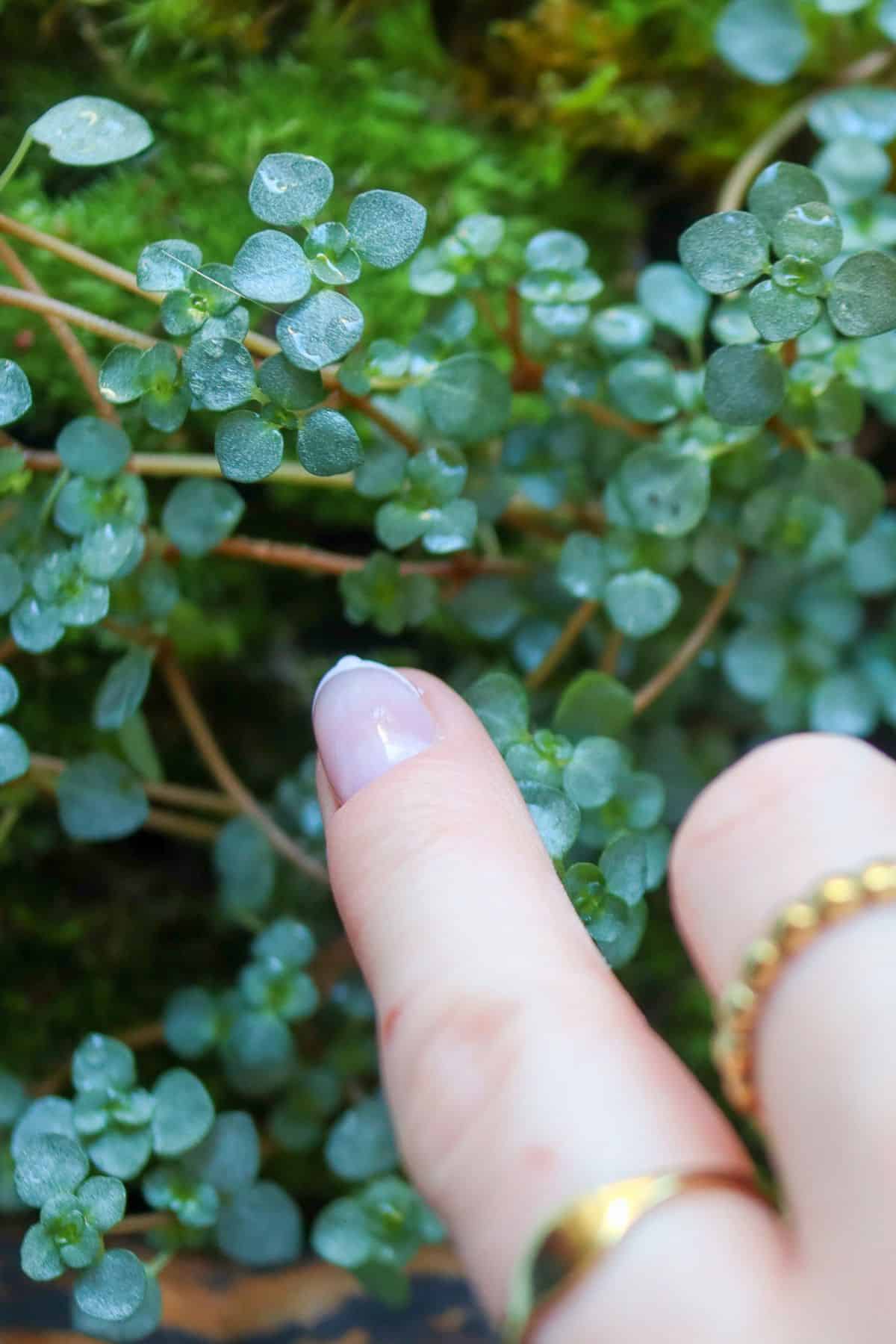
Pilea Glauca – A gorgeous aquamarine trailing vine that roots up super easy. Just pop a few cuttings wherever you’d like to add some texture, and over the coming days and weeks, they’ll root up and settle in.
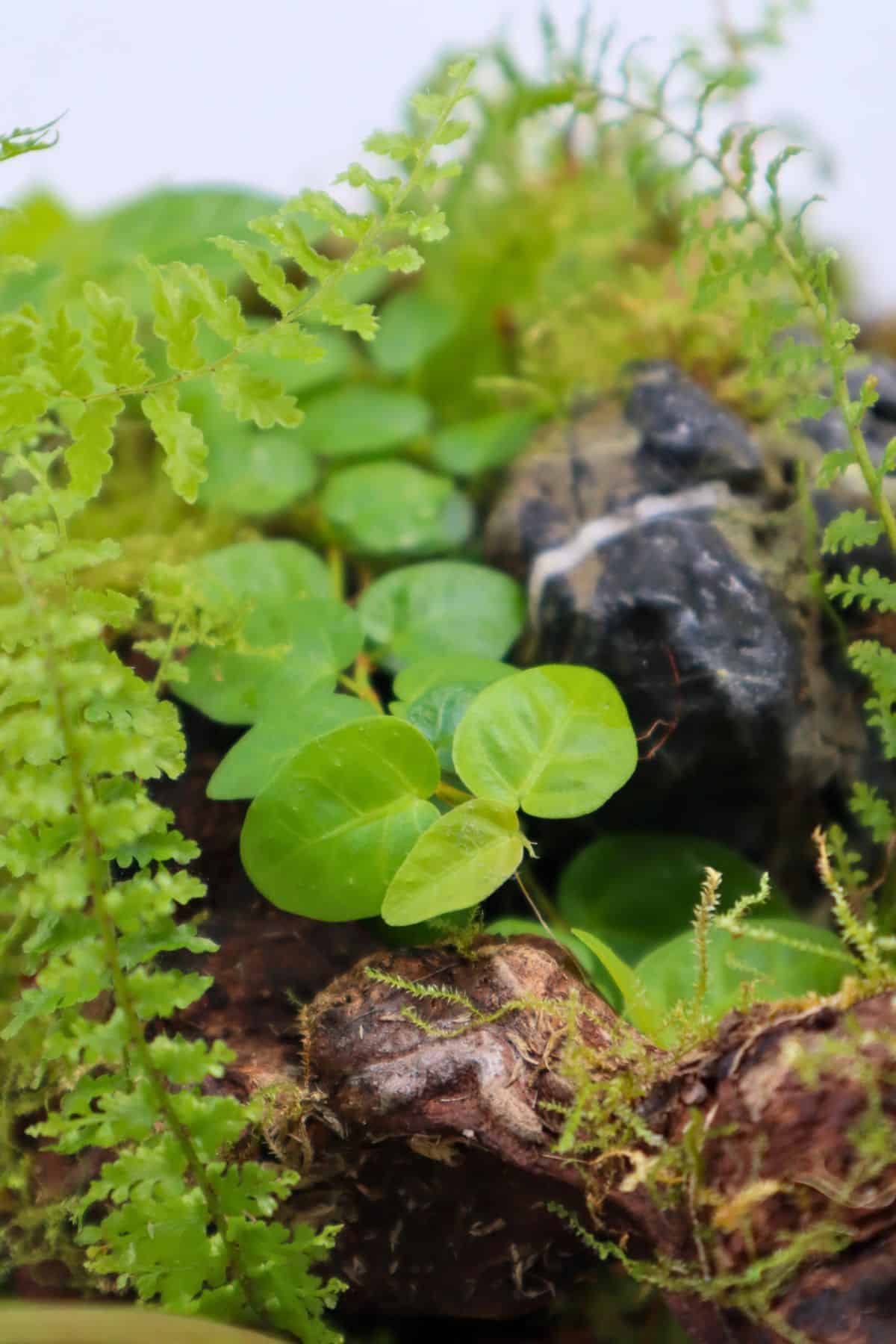
Selaginella – Somewhere between a moss and a fern, Selaginella brings the best of both worlds to a terrarium. The green foliage of this creeping vine is full of texture and color, and it’ll quickly form a dense mat over any surface it can grow.
Ficus pumila – Nothing can stop this prolific plant from working its way around a terrarium. Just pop in a few cuttings and watch them go!
Pilea – The Aluminum Plant and Friendship Plants are both great examples of miniature foliage plants that thrive in tropical conditions. Their bold, variegated leaves and vivid colors are simply stunning.
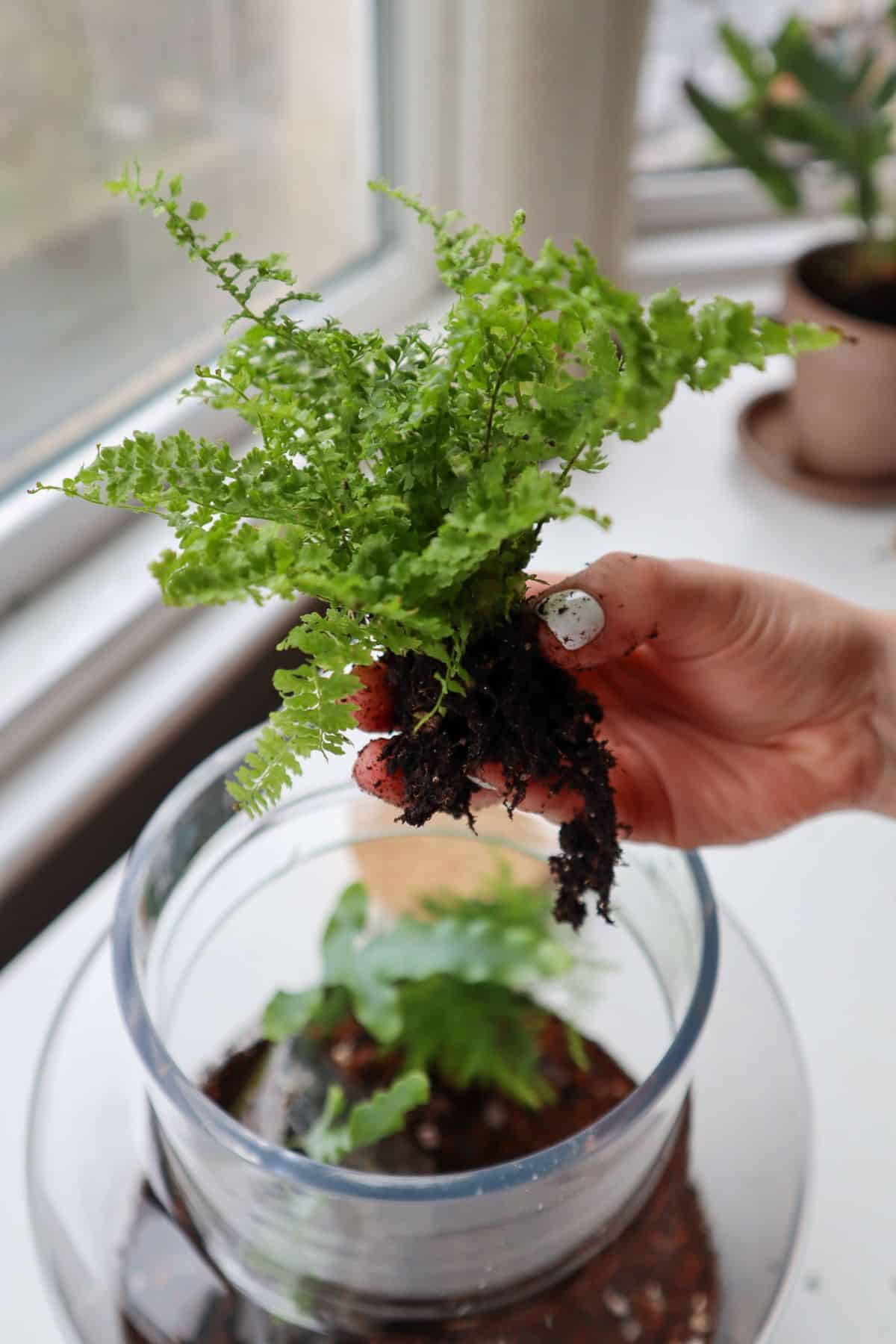
Fluffy Ruffles Fern – A compact Sword Fern variety with soft, upright fronds and just enough drama. You can separate it as much as you need to get the right sized plants for any space.
Hypnum Moss – This versatile sheet moss holds together well and is super easy to work with. It provides a nice, thick blanket of texture.

If you’re just getting started, there are plenty of other beginner-friendly terrarium plants worth considering, too.
Just be mindful of other recommendations you may find on the internet. Honestly, despite what people say online, carnivorous plants are not beginner-friendly. At all.
The same goes for fussier plants like Maidenhair Ferns, which may enjoy the humidity but can be much less forgiving in practice.
Small Terrarium Plants (That Stay Small)
Finding small plants is easy enough. It’s finding plants that stay small that’s the real challenge.
A surprising number of those perfectly petite plants at the garden centre are really just baby big plants in disguise. I’ve made that mistake more than once.
That’s why smaller-leafed, naturally compact species tend to be safer choices.

Thankfully, some truly small terrarium plants come in a variety of reliable forms:
- Dwarf varieties of large terrarium plants, e.g., the ‘Fluffy Ruffles’ Sword Fern.
- Jewel Orchids and Jewel Alocasia, e.g., the Lightning Jewel Orchid.
- Miniature vines, e.g., Peperomia prostrata and Pilea glauca.
- Miniature flowering plants, e.g., Begonia foliosa or Biophytum sensitivum.
Smaller plants also give you more freedom to build with. You can layer textures, add contrast, and create something that feels detailed without the whole terrarium becoming overcrowded.
Terrarium Plants to Avoid – Or Approach Carefully
Some plants are worth avoiding altogether, whereas others just need to be approached with a bit more care.
I see plenty of random plants get recommended for terrariums because they like humidity or look good behind glass, but that doesn’t mean they’re beginner-friendly.
The ones I’d be most cautious with are plants that need a fairly precise balance of moisture, airflow, and light.
- Prayer Plants and Jewel Orchids can work beautifully in terrariums, but they’re more sensitive to stale air and excess moisture than most.
- Air Plants are another common trap for closed setups. They’re easy to grow outside of glass, but they still need airflow and time to dry properly after watering.
- Carnivorous plants are the big one. Some species can (just about) work in specialist terrarium-style setups, but I really don’t recommend it. Venus Flytraps are especially poor candidates for typical terrariums, despite what half the internet seems determined to prove.
Whilst we’re at it, lets just avoid anything with a dormancy period.

Plants for Open Terrariums
Open terrariums are a looser, drier take on the classic terrarium setup.
Without a lid, they don’t trap moisture or humidity in the same way as closed terrariums. That makes them a much better fit for plants that prefer good airflow, faster drainage, and lower humidity.
In practice, that usually means arid plants, the sort that are perfectly happy with a bit of neglect.

A few reliable options include:
- Succulents – Echeveria, Haworthia, Sedum.
- Cacti – Hedgehog Cacti (Echinocereus), Gymnocalycium.
These plants are usually quite easy to care for, but they do come with one non-negotiable – drainage.
Arid plants really can’t handle being wet for long. Consistently moist soil is a surefire way to turn these plants into soggy mush. So, arid open terrarium layers and substrates must be fast-draining and fast-drying.
On the flip side, arid plants aren’t the only kinds of plants you can use. You can also think of open terrariums as artistic planters. In that, anything you can grow in the house can thrive in an open terrarium.
- Houseplants – Philodendron, English Ivy, Spider Plant.
- Air Plants – Tillandsia bulbosa or Tillandsia Ionantha.
Open terrariums provide a unique opportunity to grow (slightly) larger-leafed varieties or long vines that can trail beyond the barriers of the container. Just don’t combine tropical houseplants with arid plants – that rule still holds up.
Whereas Air Plants are just horticulture on easy mode!

Choose for the Setup, Not Just the Look
A good terrarium plant is really just a plant in the right place.
If it suits the setup, stays in proportion, and isn’t likely to take over in a month, you’re probably on the right track. That alone will save most terrariums from becoming overgrown, mismatched, or just quietly miserable.
Choose well, and even a simple mix of plants can look lush and balanced.

Very well explained.Thank you so much for details.
Excellent article. Thanks so much for all the information throughout the site!
Esp. found the articles on mosses helpful.
And the photos are terrific!
Thanks
Kate