

Some aquarium plants can work surprisingly well in terrariums.
Not only can they grow out of water, but they can grow outside of soil too. That means you can grow them just about anywhere in your terrarium.
However, with great versatility comes great caveats.
With these plants, humidity is the absolute be-all-and-end-all (you’ve got to supply that moisture somehow), and their planting style is a unique one.
In this guide, we’ll cover how you can use semi-aquatic plants in terrariums, which ones are best, and how to get the most out of them.
Aquarium Plants in Terrariums – How Does it Work?
Many popular aquarium plants are not strictly aquatic.
In the wild, they often grow around streams, banks, and flood-prone areas – sometimes underwater, sometimes above it.
That’s the sweet spot for terrariums.
A closed tropical terrarium can recreate those warm, damp, humid conditions while still giving the plant access to air. They get steady moisture, but they’re not trapped in stagnant water.
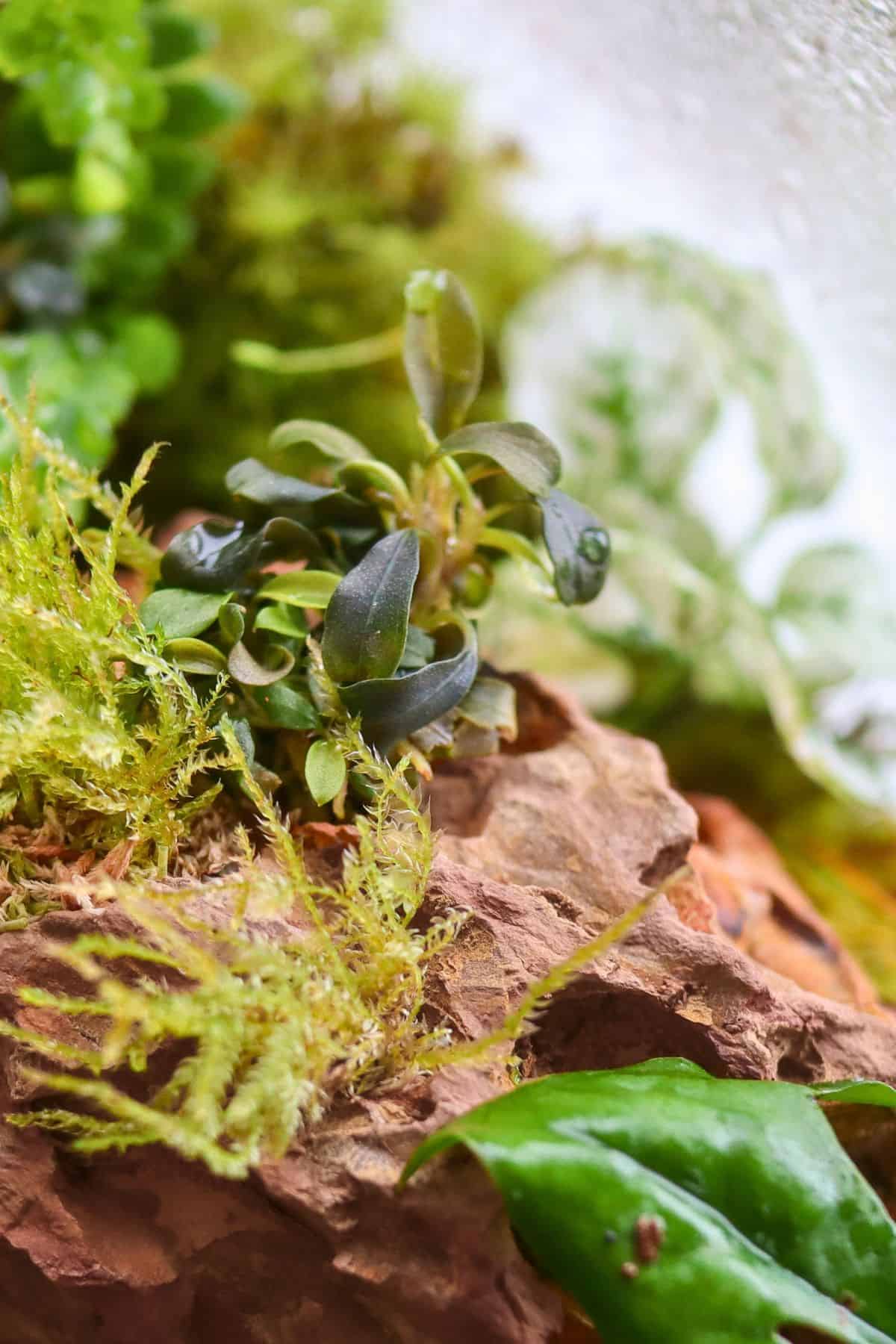
In a terrarium, these plants are growing in air, not underwater – so moisture needs to be balanced with oxygen around the roots, rhizomes, and stems.
Most semi-aquatic plants tolerate moisture far better than the average terrarium plant, but constant wetness without airflow can still lead to rot.
So the goal is not to recreate an aquarium under glass. It’s to recreate the edge of one with damp hardscape, humid air, wet pockets, and breathable substrate.
Best Semi-Aquatic Plants for Terrariums
Java Moss
Java Moss is the easiest place to start if you want that lush aquascape look in a terrarium.
It’s adaptable, forgiving, and excellent on hardscape. Pressed onto damp wood, porous rock, or sphagnum moss, it creates a wild, overgrown texture that makes a branch look like it has been sitting in a rainforest for years.
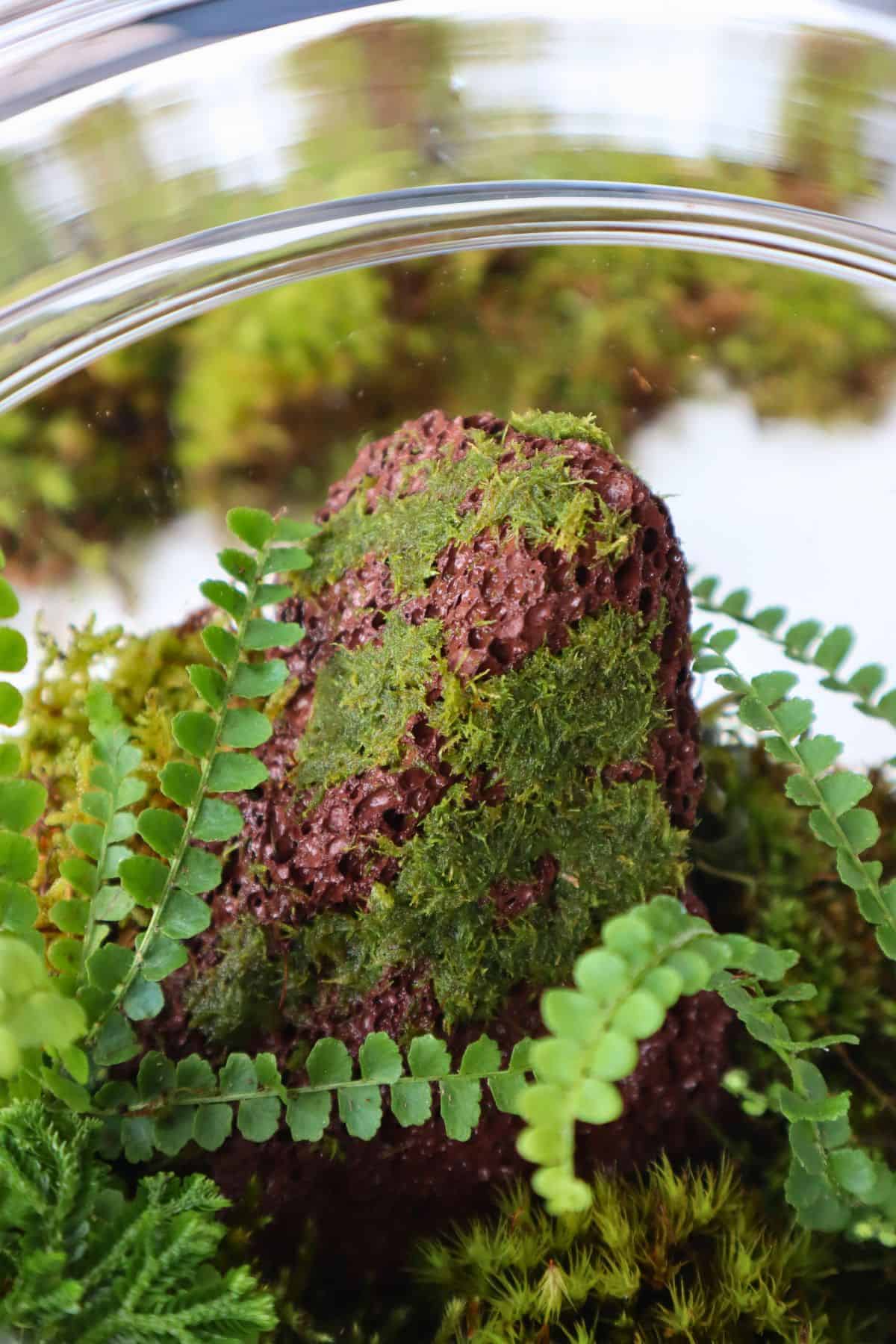
I wouldn’t usually use it as a neat foreground carpet. It can work, but it often grows too loose and messy for that role. Its strength is vertical texture. Mossy branches, rock faces, cork backgrounds, and awkward spaces where normal moss would struggle to attach.
Above water, Java Moss grows more slowly than it does underwater, which is actually useful in a terrarium. You get the aquascape look without quite so much trimming.
The main challenge is keeping it damp while it establishes.
Dwarf Anubias
Dwarf Anubias is one of the best semi-aquatic plants for adding proper foliage to hardscape.
Unlike moss, it gives you distinct leaves, shape, and contrast. The dark green foliage works especially well against pale wood, lava rock, or lighter mosses, and the dwarf forms stay small enough to use without dominating the build.
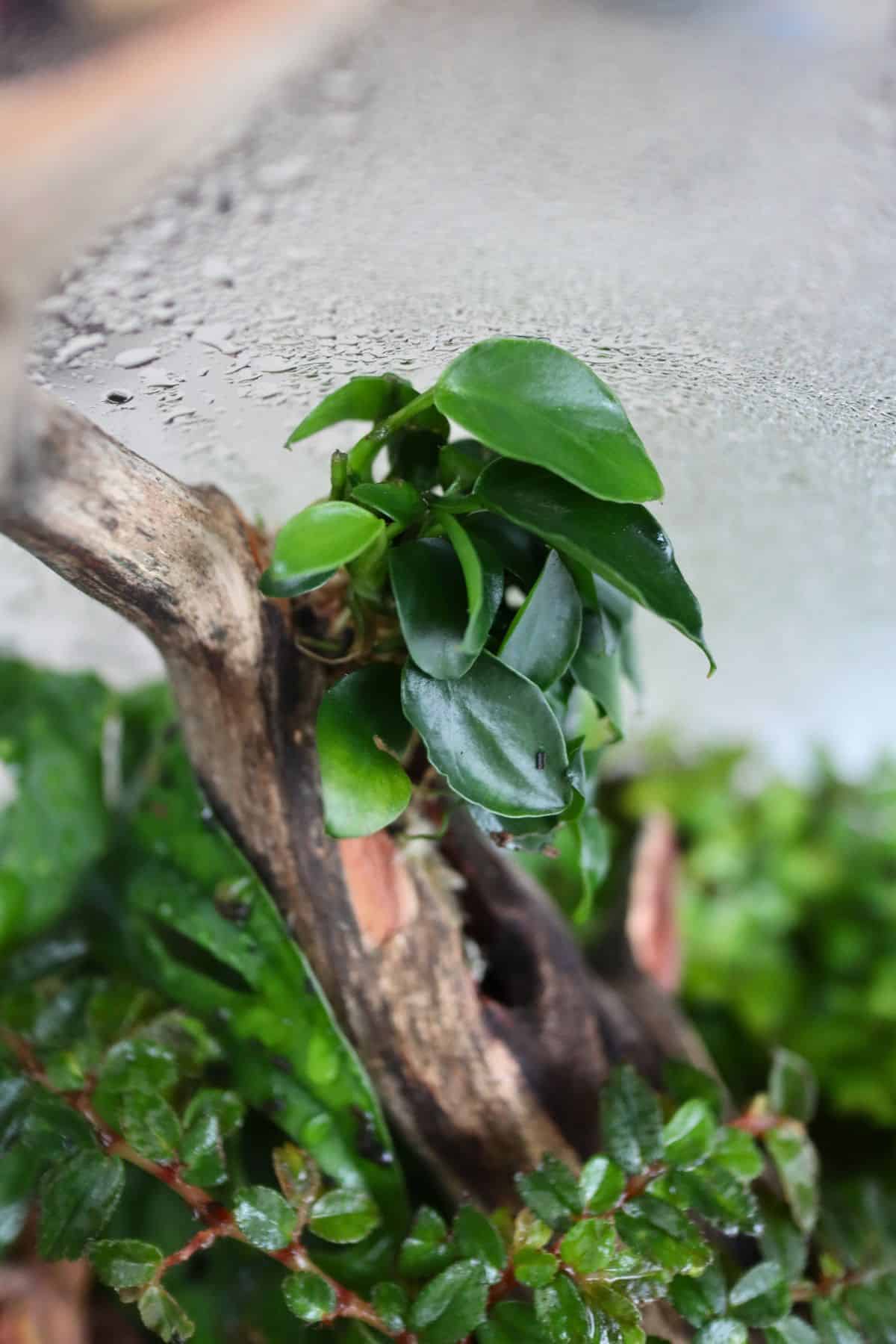
The key is not to bury the rhizome.
The rhizome is the thick horizontal stem that the leaves and roots grow from. If it’s buried in substrate, it can rot. Instead, wedge the plant into a hardscape crevice, attach it to wood, or sit it on the surface where the roots can find moisture but the rhizome stays exposed.
Dwarf varieties like Anubias nana ‘Petite,’ ‘Mini,’ ‘Coin,’ and ‘Bonsai’ are the most useful choices for terrariums.
Bucephalandra
Bucephalandra is another excellent hardscape plant for humid terrariums.
Many Bucephalandra species naturally grow attached to rocks and wood in wet, humid streamside environments, which makes them a natural fit for emersed terrarium growing.
Bucephalandra is especially useful when you want small, dark, textured foliage.
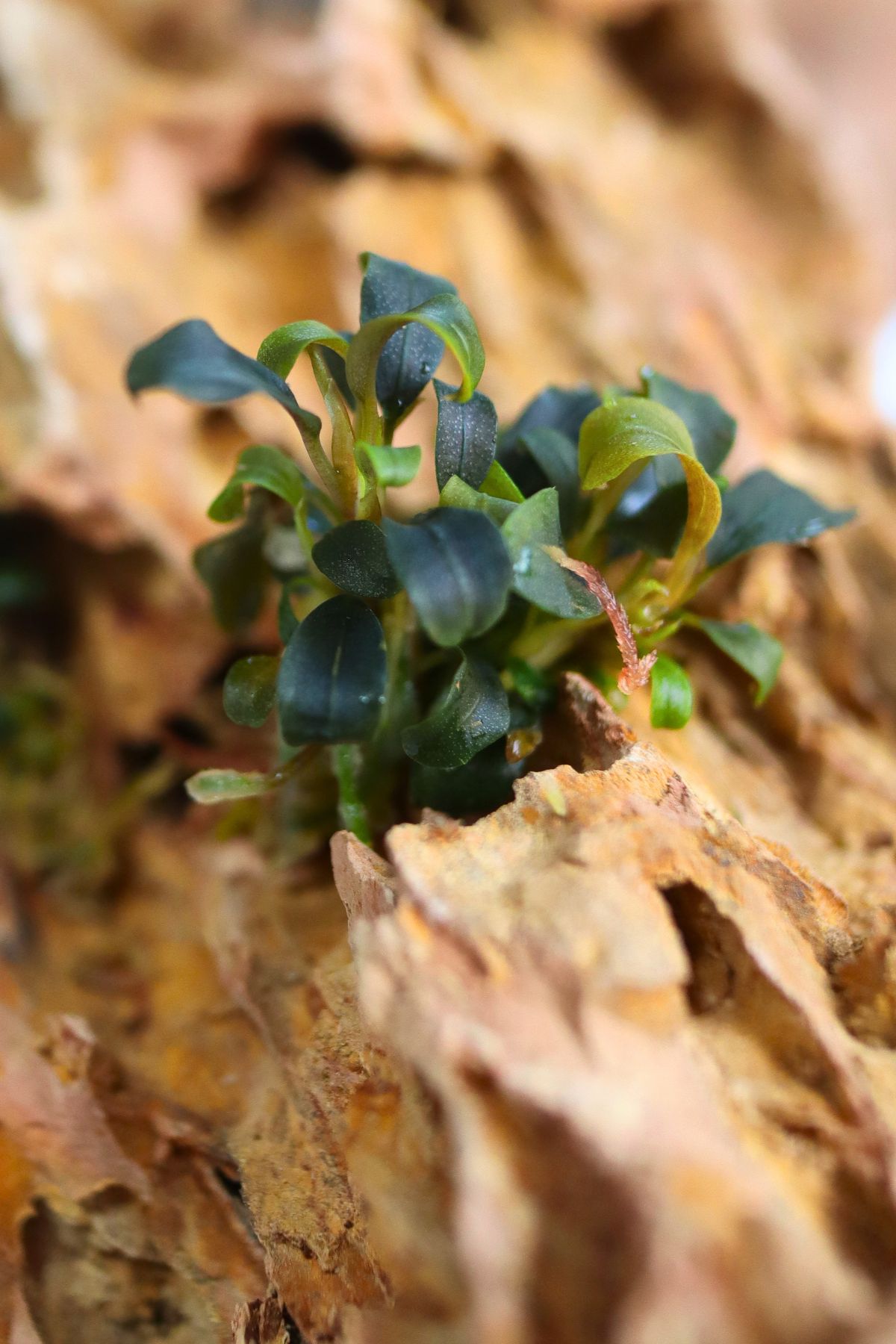
Many varieties stay compact, grow slowly, and bring a more unusual look than the usual terrarium greens. The leaves can be narrow, rounded, wavy, metallic-looking, or slightly iridescent, depending on the variety.
It’s not a fast plant, and it may take time to adjust after being moved from aquarium conditions. But once settled, it can make a beautiful feature plant.
Christmas Moss
Christmas Moss does a similar job to Java Moss, but with a bushier, more structured look.
Its branching pattern gives it a fir-tree-like texture, which makes it feel more textured than Java Moss. It works beautifully on wood, lava rock, and damp backgrounds where you want visible moss texture rather than a flat green layer.
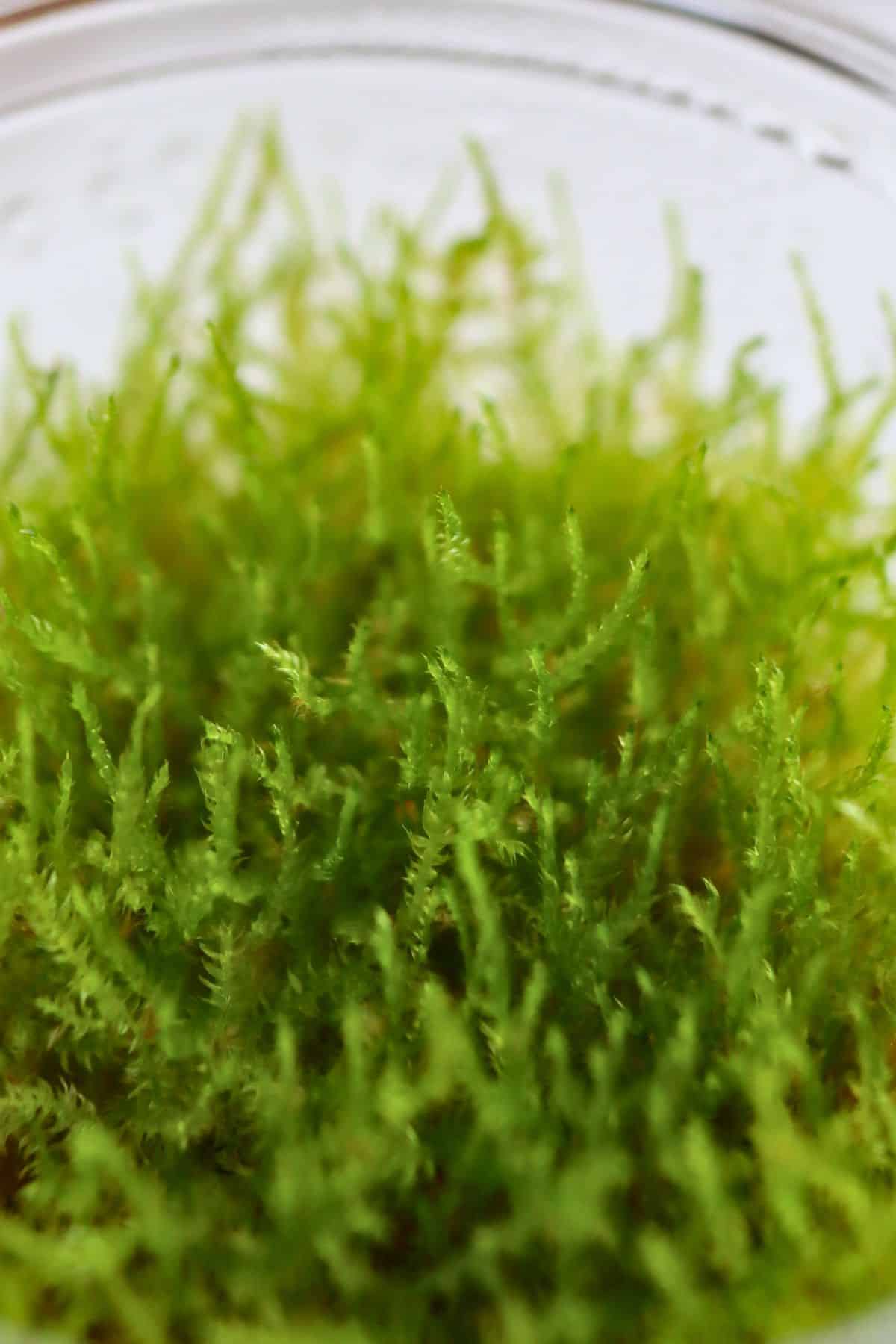
It can also be used as a carpet in very humid setups, but it needs reliable moisture. In a mixed terrarium, that can be the tricky part. Christmas Moss may want more regular misting than the other plants around it.
I’ve made this mistake of overwatering a terrarium trying to keep this happy…
That’s why I’d use it most readily in moss terrariums, tank-style tropical builds, or regularly misted setups (especially those on automatic misters).
Bolbitis heteroclita ‘Difformis’
Bolbitis heteroclita ‘Difformis’ is the tiny fern option.
It has a softer, more delicate look than Anubias, with small, divided fronds that feel more like miniature woodland growth than aquarium planting.
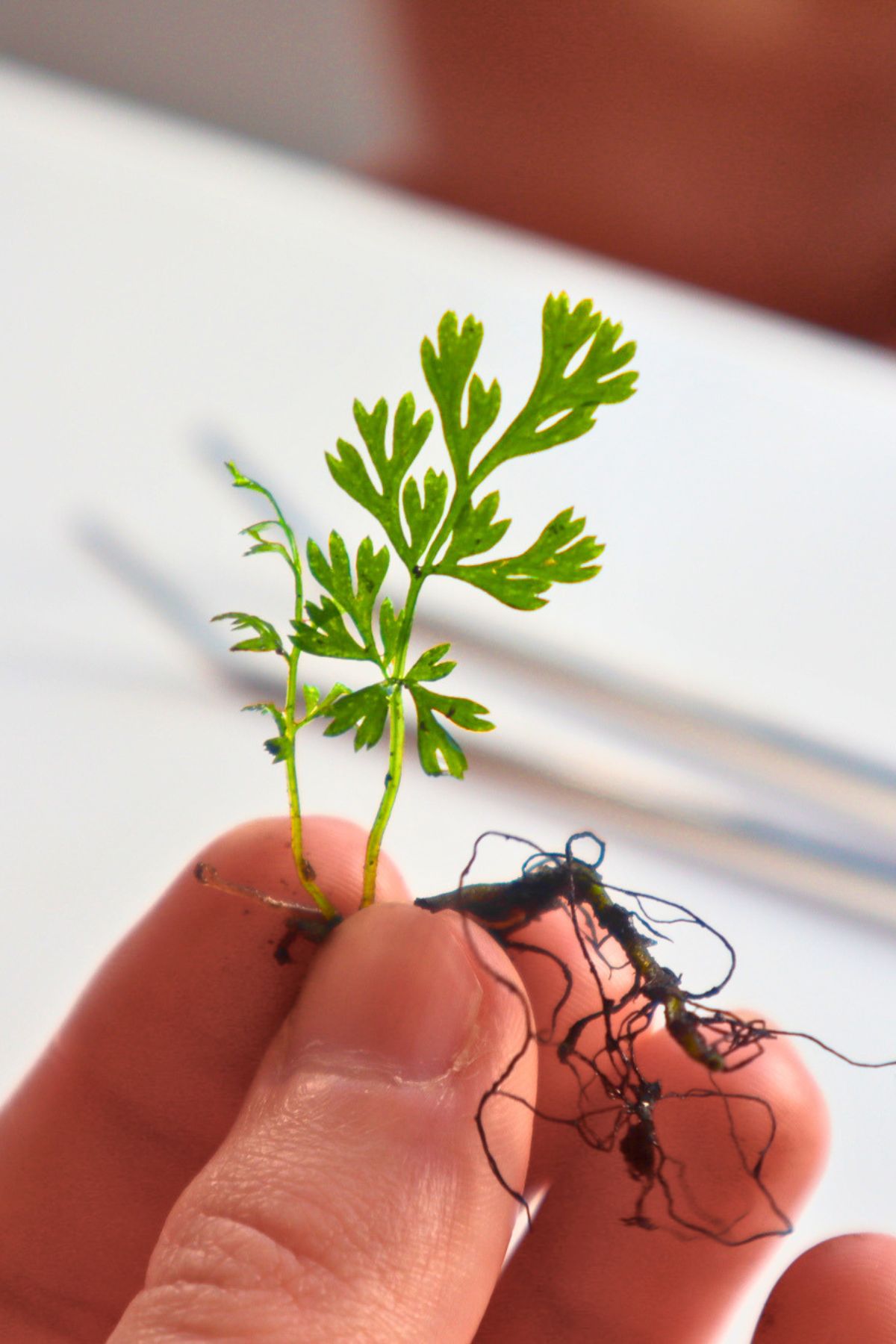
Despite being sold as an aquatic fern, it doesn’t want to sit in stagnant water in a terrarium. Treat it more like a moisture-loving miniature fern – high humidity, even moisture, soft indirect light, and a breathable planting pocket.
It grows slowly, but that’s a good thing in small terrariums.
Cryptocoryne
Cryptocoryne is the odd one out.
It’s better thought of as a rooted marginal plant – something for damp substrate, wet edges, and paludarium-style transitions. That makes it useful, but not quite as plug-and-play.
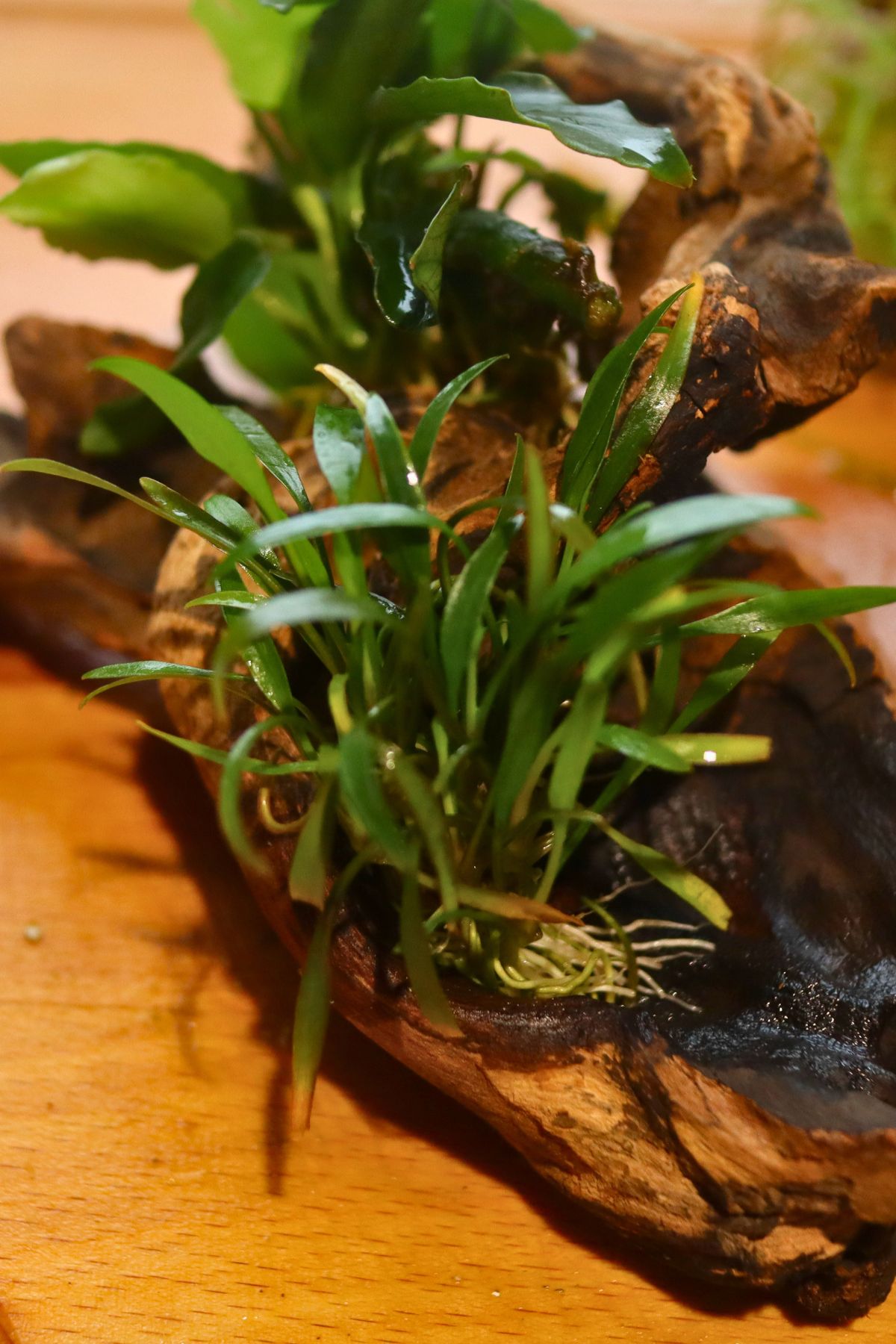
Cryptocoryne often needs time to adapt from submerged aquarium growth to emersed terrarium growth, and that transition can be messy. Some leaves may melt back before the plant settles in.
That doesn’t always mean it has failed.
Give it a stable, moist root zone, high humidity, and time to regrow in its new form. Small varieties are best, especially for foreground planting or damp pockets in larger tropical builds.
How to Use Semi-Aquatic Plants Properly
Semi-aquatic plants work best when they’re used in specific wet, humid microclimates.
They’re not always the easiest plants to make work, but they can do things most normal terrarium plants can’t. Softening hardscape, making bare wood look alive, and filling awkward crevices.
But the best approach really depends on the plant.
Mosses like Java Moss and Christmas Moss are usually best attached to wood, rock, or damp backgrounds. They don’t need planting in soil. They need surface moisture, high humidity, and something damp to cling to.

A thin layer of sphagnum moss underneath can help a lot here. It acts like a small moisture reservoir, keeping the moss damp without forcing you to overwater the whole terrarium.
Epiphytes like Anubias should also be attached to hardscape, but for a different reason.
They have a thick rhizome that should not be buried. Wedge them into a crevice, tie them to wood, or tuck them against damp sphagnum so the roots can access moisture while the rhizome stays exposed.
Rooted plants like Cryptocoryne are different again. These belong in moist substrate, not on hardscape. They’re best used in damp foreground pockets, wet edges, or paludarium-style transitions.
That’s the main rule across the board. Moist, not swampy. Semi-aquatic plants like moisture, but they still need air.
Final Thoughts
Semi-aquatic plants are absolutely worth using in terrariums, but only when you place them with intention.
They’re not just normal terrarium plants that like more water. They’re plants from wet, humid, transitional places, and they tend to work best when you recreate that “edge-of-water feeling.”
Java Moss and Christmas Moss are perfect for turning wood and rock into something aged and alive. Dwarf Anubias gives you compact, low-light foliage without needing soil. Bolbitis adds tiny fern texture where larger plants won’t fit. Cryptocoryne brings that planted-bank look, provided you give it time to adapt.
Keep the mosses damp. Keep the rhizomes unburied. Keep the rooted plants in moist, breathable substrate.
Everything has its place, as long as you place it correctly.
