

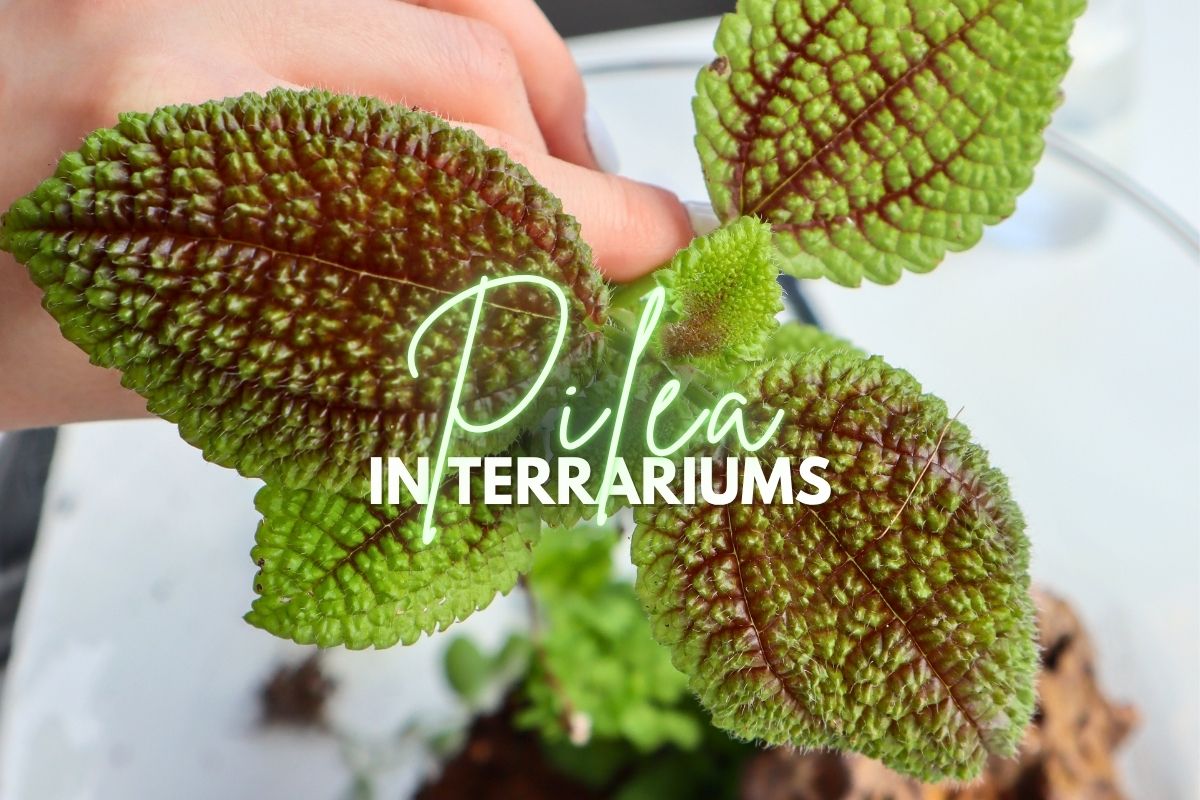
Pilea might be the best all-round genus for terrariums.
They cover a rare amount of ground. Neat little feature plants, creeping foreground growers, soft trailing species, and a few genuinely brilliant miniature options.
Most enjoy the warm, humid conditions that terrariums naturally provide. Handy, that.
The trick is choosing the right Pilea for the role. Some are perfect for small closed builds. Others need more space, more trimming, or a specific position where they can trail without swallowing the scene.
In this guide, I’ll walk through the best Pilea for terrariums, and where each one tends to work best.
1. Pilea depressa
Verdict: One of the best Pilea for dense terrarium ground cover.
Pilea depressa is super easy to use in a closed setup.
It’s small, trailing, bright green, and surprisingly tenacious. The leaves grow tightly along creeping stems, creating a soft network of foliage that can quickly cover the foreground.
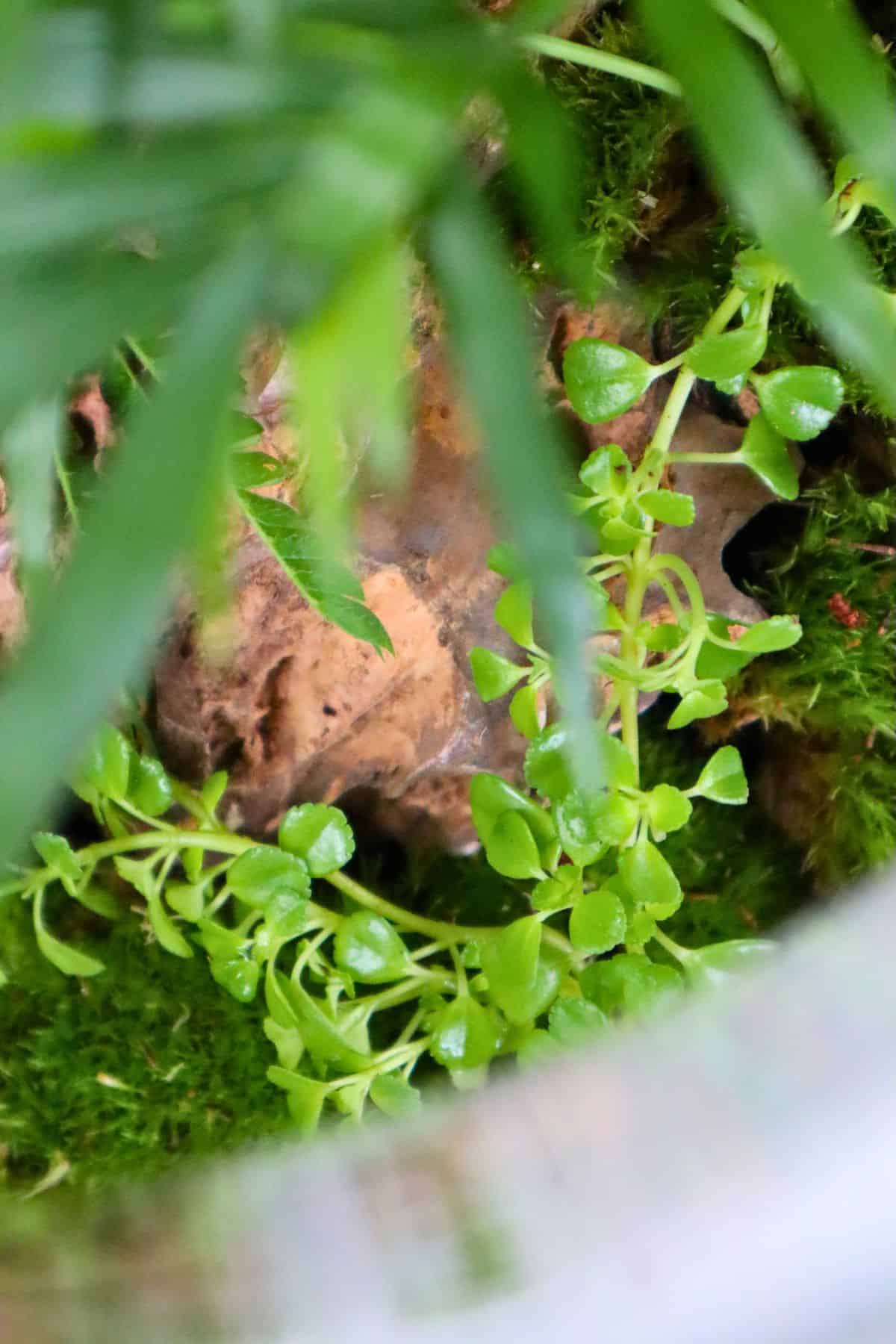
It’s especially useful in smaller terrariums because the leaves stay nicely in scale. You get a lot of visual texture without the plant making the whole container feel crowded.
That said, it can grow quickly when it’s happy. Sometimes too quickly.
Thankfully, it’s very easy to trim. Snip off the excess, and you can usually reuse the cuttings elsewhere in the terrarium. In warm, humid conditions, Pilea depressa roots readily.
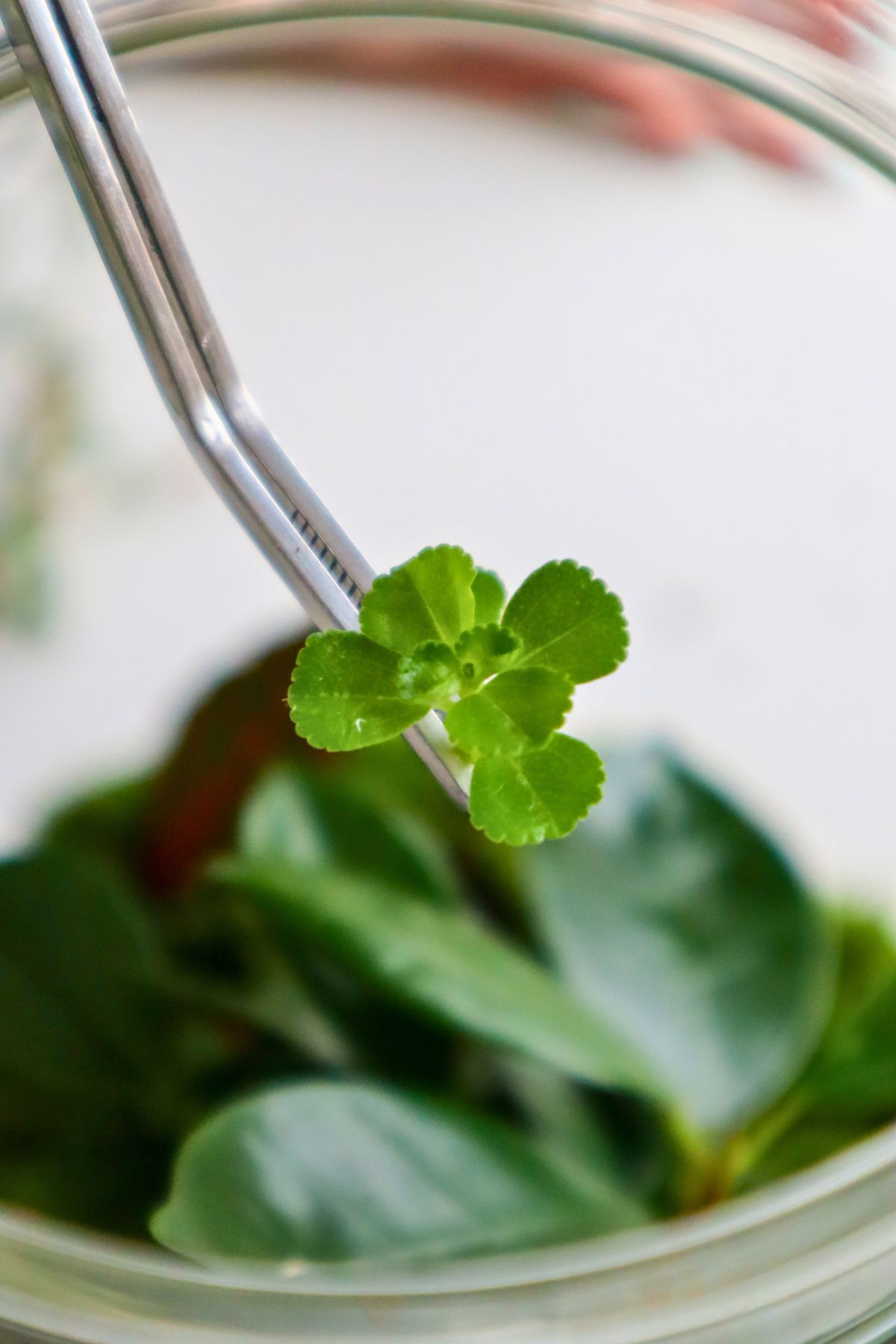
A fresh cutting, a humid container, and a bit of contact with the substrate (or even moss) is usually enough.
2. Pilea mollis ‘Moon Valley’
Verdict: The best Pilea for bold foliage texture.
Pilea mollis ‘Moon Valley’ is the dramatic one.
The leaves are bright green, deeply quilted, and full of crater-like texture. Hence the “Moon Valley” name. The species name mollis refers to the soft hairs on the leaves, which add even more texture up close.
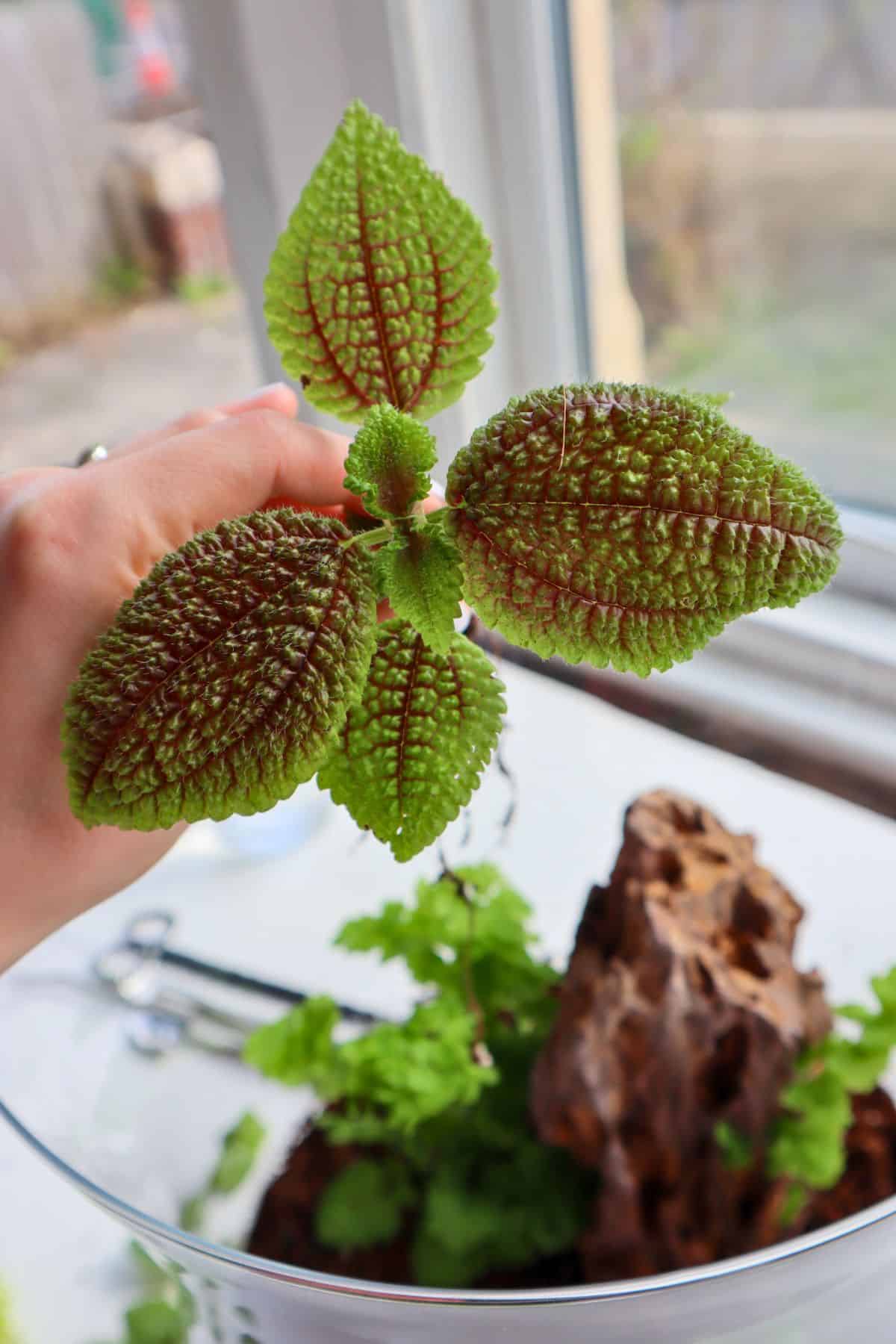
No plant does quite the same thing visually.
In a terrarium, Moon Valley Pilea is best used as a feature plant. It’s not a subtle creeping filler. It’s there to be noticed.
That makes it especially useful when your terrarium needs contrast.
Against moss, smaller-leaved vines, or smoother tropical foliage, Pilea mollis brings bold structure. It gives the planting a clear focal point without needing flowers, color tricks, or a ceramic mushroom carrying the whole composition.
It’s all leaf texture. And it works.
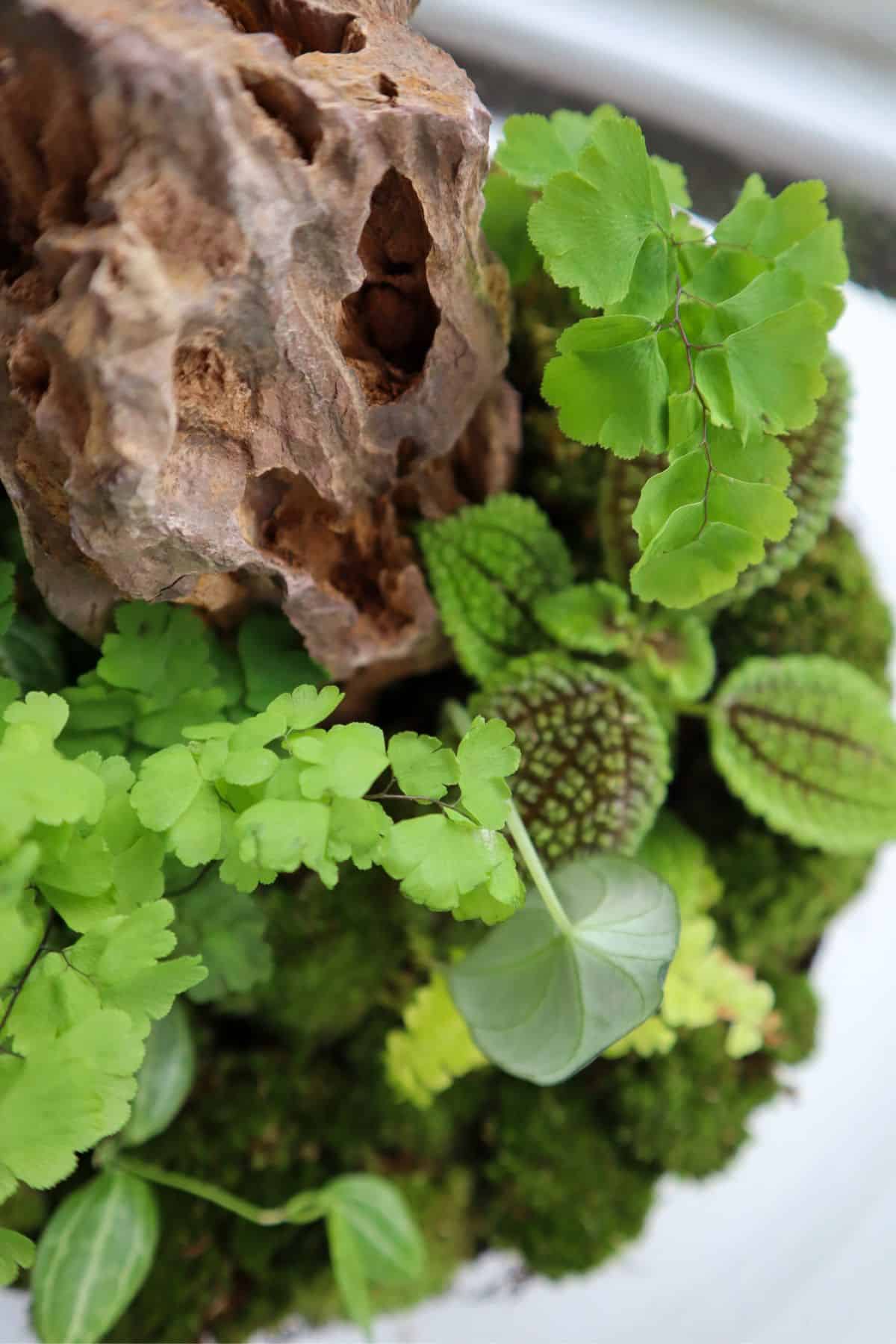
Moon Valley Pilea can stay reasonably compact, but it’s not tiny. In a very small terrarium, it can feel oversized.
3. Pilea glauca
Verdict: The best Pilea for delicate trailing texture.
Pilea glauca is the daintier, moodier cousin of Pilea depressa.
It has tiny metallic gray-green leaves on warm reddish stems, which gives it a completely different texture from the brighter, plumper look of Pilea depressa.
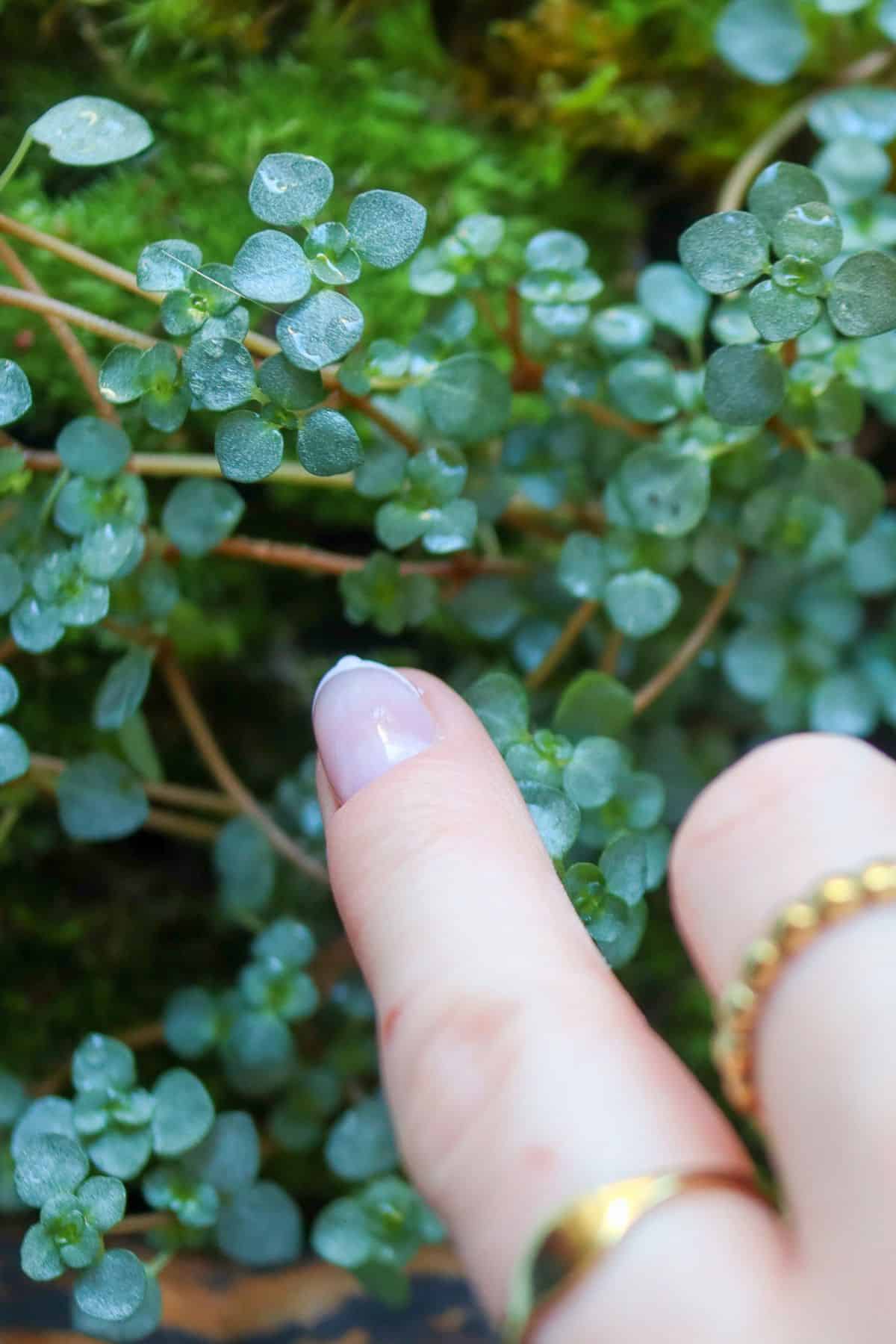
You might also see it sold as Pilea Aquamarine, Pilea Silver Sparkle, Pilea glaucophylla, or Pilea libanensis.
Nobody seems entirely sure what to call it (I just call it my favorite).
Thankfully, the plant itself is much less complicated.
Pilea glauca is perfect for terrariums because it gives you fine texture at a very small scale. The leaves are tiny, delicate, and slightly silvery, so it brings a softness that feels different from the usual glossy green foliage.
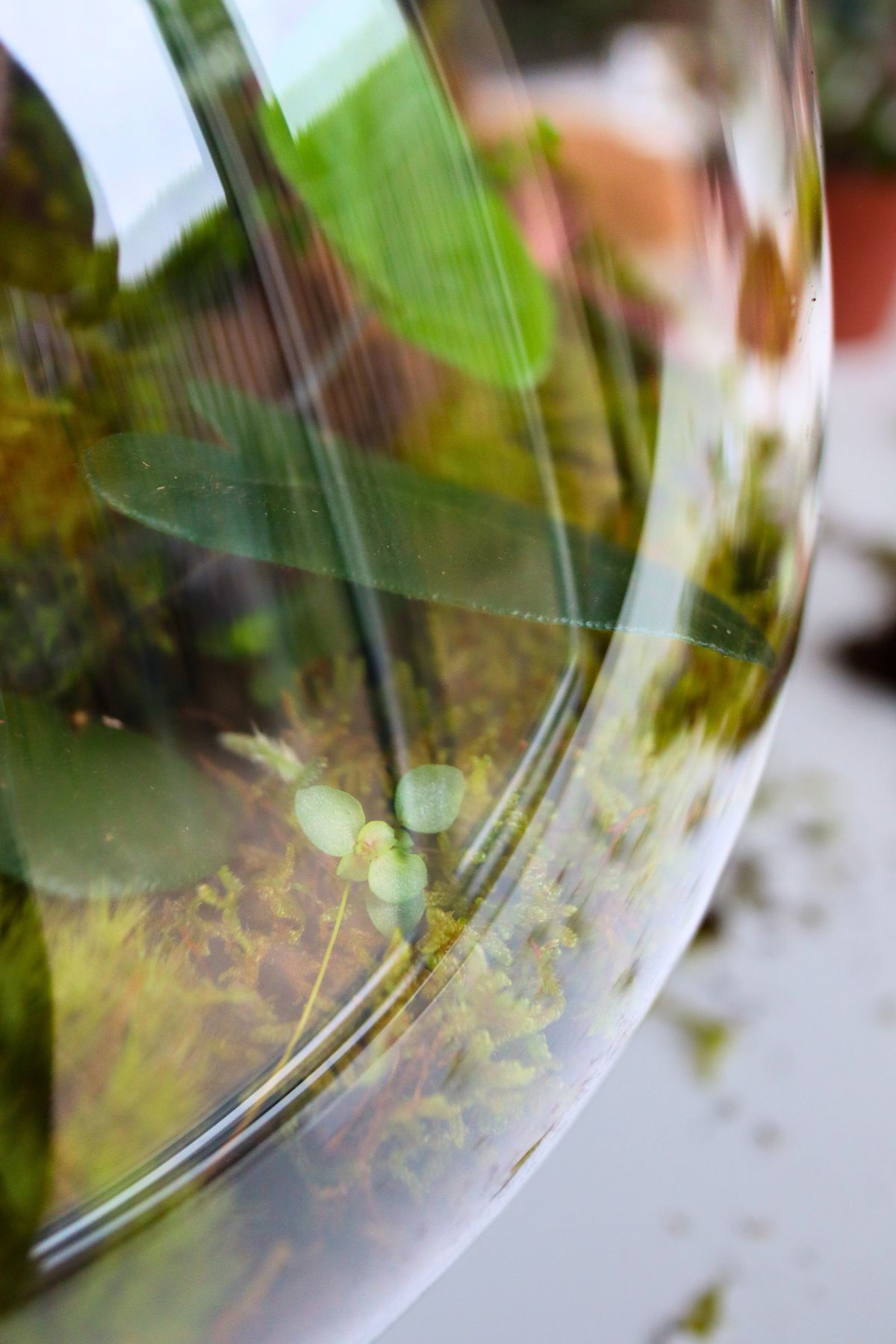
It also roots very easily in a humid terrarium. A healthy cutting placed into warm, moist conditions will often root directly into the substrate.
I’m not usually precious with it.
4. Pilea involucrata
Verdict: A bold midground Pilea for larger tropical builds.
Pilea involucrata is the classic Friendship Plant.
Though, because this is Pilea, the naming situation is more confusing than it needs to be.
Pilea involucrata is often mixed up with Pilea mollis. Both can have textured leaves, and both are sometimes dragged into the vague “friendship plant” conversation, but they’re not the same plant.
Pilea involucrata usually has rounder, plumper leaves with rich bronze, burgundy, and silvery tones.
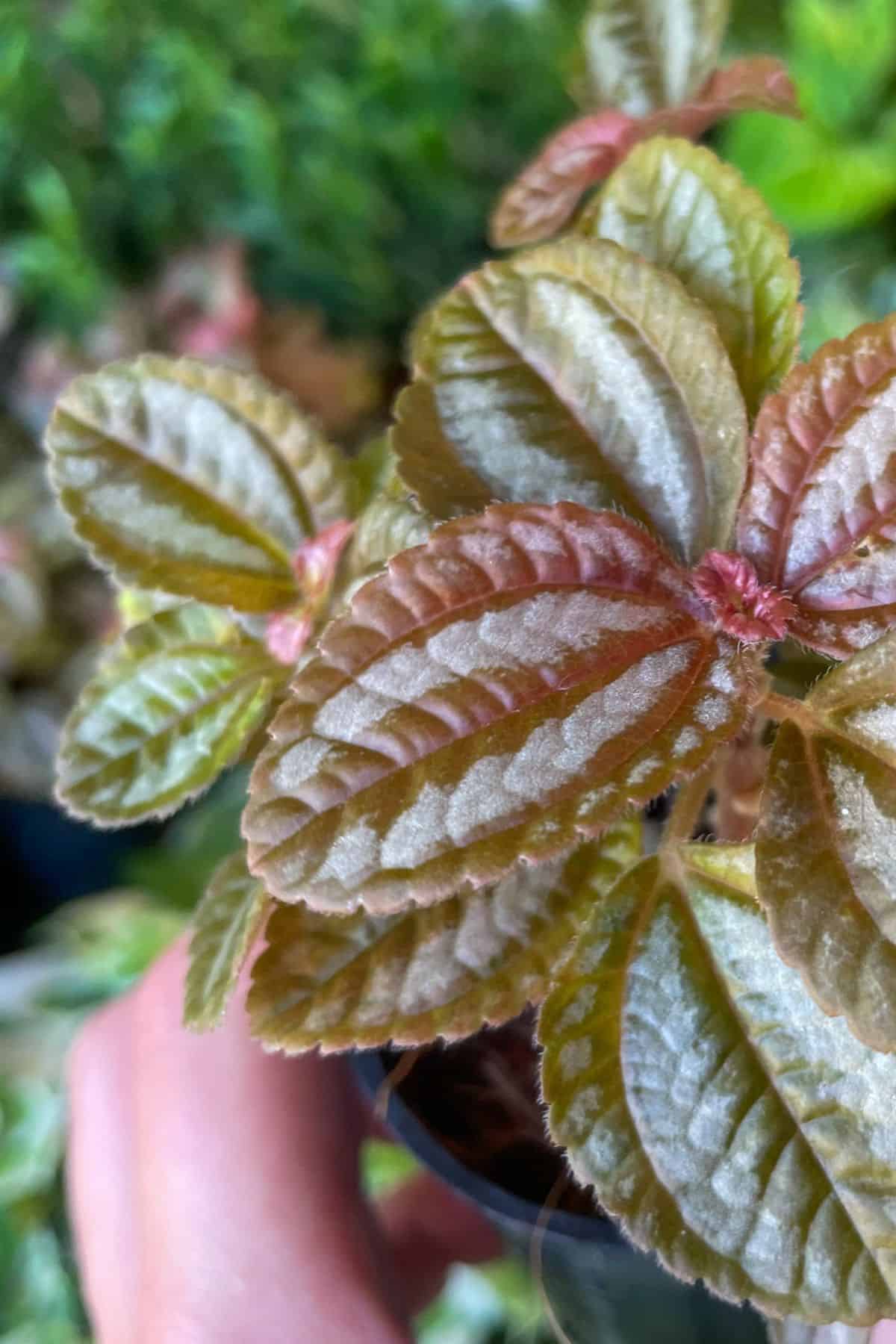
Pilea involucrata is useful when you want color and texture without going full Moon Valley drama. It has a more subdued, metallic look.
Less “neon crater plant,” more “tiny forest-floor jewel.”
That makes it a good midground plant in larger tropical terrariums.
It doesn’t shoot upward like some houseplants, but it can spread and bulk up over time. It grows by putting out new stems and leaves around the base, creating a fuller, layered effect.
It’s lovely in the right space. Use it where you want bronze, burgundy, or silver tones, especially beside simpler green foliage.
5. Pilea cadierei
Verdict: The best Pilea for clean silver foliage contrast.
Pilea cadierei, the Aluminum Plant, is all about the foliage.
The leaves are green with raised silver markings that look almost painted on.
It’s obviously very pretty, but it does bring a slightly unnatural vibe in my opinion. Perfect for some clean contrast, but perhaps not one for a naturalistic-looking setup.
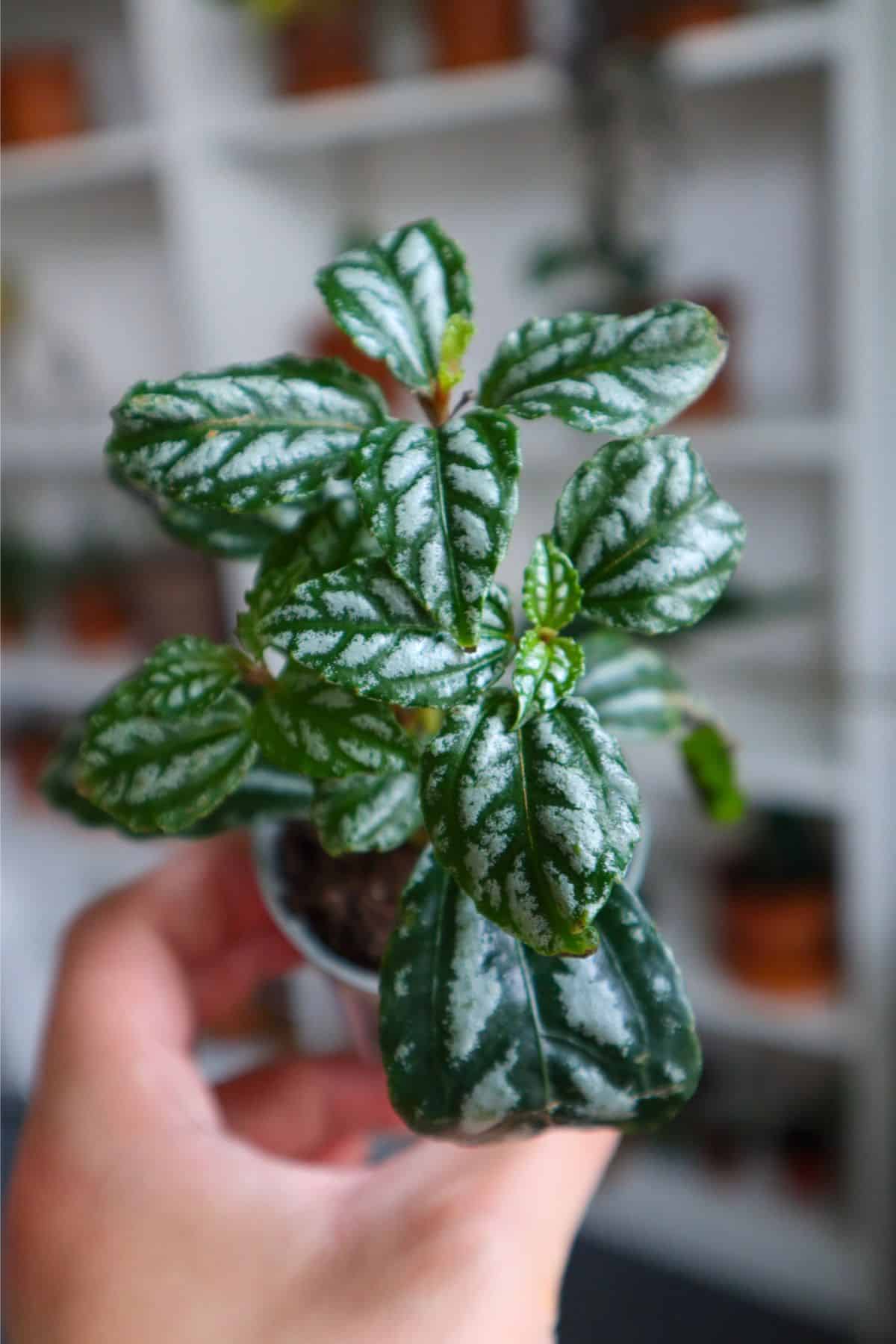
I’d also be slightly more selective with Pilea cadierei than the trailing species.
It grows more like a small shrub than a creeper. It forms compact clusters with overlapping leaves, and you can pinch it back to keep it shorter and bushier. But it’s not as naturally terrarium-scaled as Pilea depressa or Pilea glauca.
I’d use it in larger terrariums, roomy closed builds, or open tropical setups where the silver foliage has space to do something useful.
Final Thoughts on Pilea
Pilea are some of the best small plants you can put in a tropical terrarium.
The trick is choosing the right growth habit for the space, rather than treating every Pilea as interchangeable.
Use the tiny trailers where you need coverage and movement. Use the bolder species where you want structure, contrast, and a little drama.
Give them bright indirect light, steady moisture, high humidity, and a light terrarium mix with enough air around the roots, and they usually behave beautifully.
Compact, textural, easy to propagate, and generally very willing.
Which is more than can be said for plenty of terrarium plants.
