

Terrarium kits are made to make your life easy and save you money.
Everything is found in one place; there’s no need to buy more than you need, and absolutely no paying for separate postage.
Sounds perfect to me!
And in some cases, it genuinely is. But closed terrariums are a little more particular than most kits let on, and that’s where expectations (and outcomes) can start to drift.
This page is here to help you decide whether a closed terrarium kit actually makes sense for your situation – and what to look out for if you go that route.

Why Use a Terrarium Kit?
There’s a good reason closed terrarium kits are so tempting.
They lower the barrier to entry, remove a lot of early decision-making, and make the whole process feel approachable (especially if you’ve never built a terrarium before).
For many people, kits offer:
- Convenience over customisation.
- Confidence over experimentation.
- A clear starting point instead of a blank slate.
If your goal is to build something small, contained, and decorative without getting lost in the details, a kit can feel like the safest option.
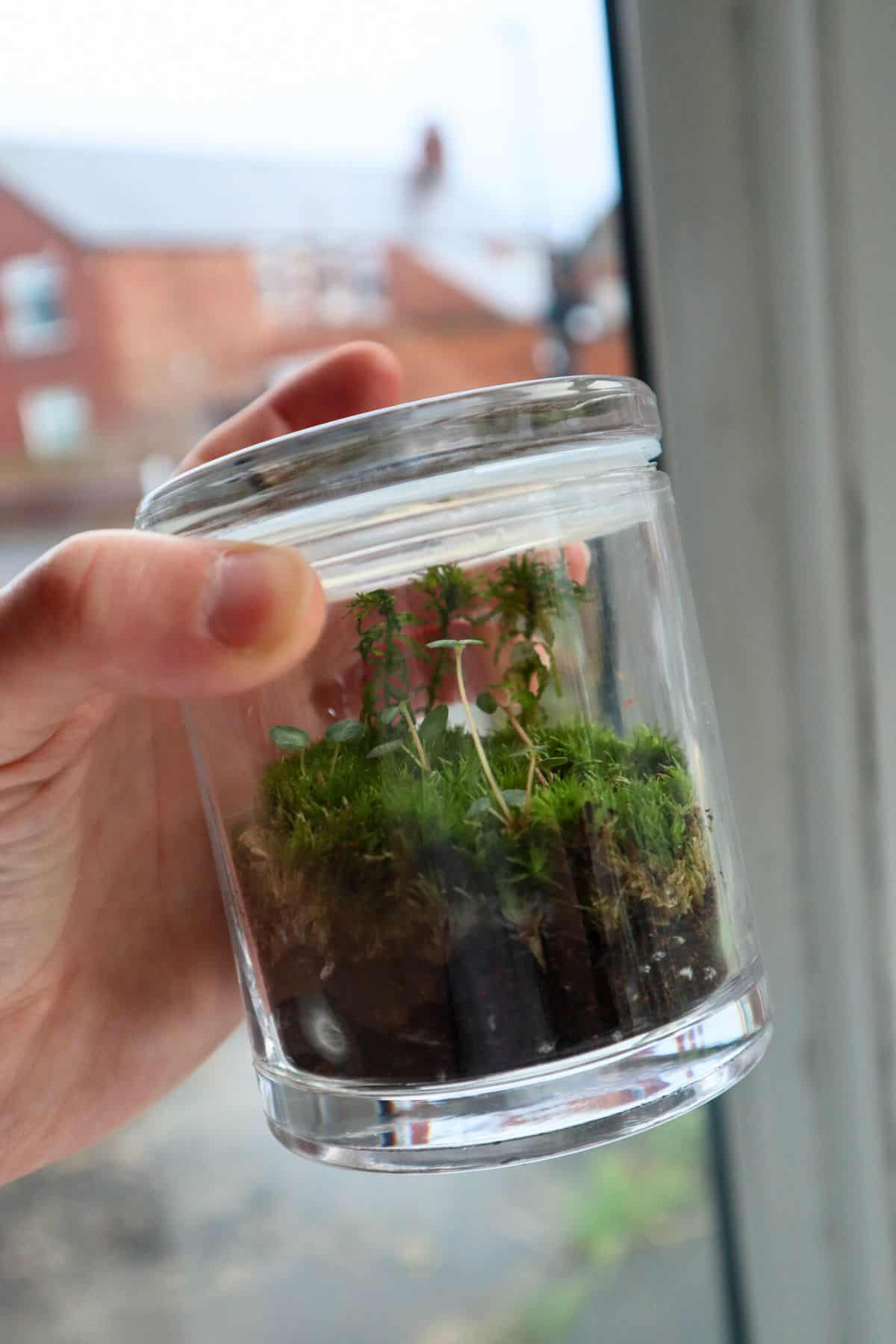
The catch is that closed terrariums aren’t just decorative objects – they’re sealed systems. And not every kit is designed with that in mind.
Where Terrarium Kits Commonly Fall Short
Most closed terrarium kits are designed to look good out of the box, not necessarily to age well over time.
They’re often assembled around first impressions – tidy layers, eye-catching plants, decorative extras – rather than how a sealed environment actually behaves once it’s left alone.
In practice, problems tend to show up in a few predictable places:
- Generic plant choices that look compatible at first but don’t share the same tolerance for constant humidity or low airflow.
- Decorative filler materials that add visual appeal but contribute little to drainage, structure, or long-term balance.
- Straight up wrong materials for live terrariums (e.g., preserved moss).
- Cheap containers that don’t truly seal – you don’t want to leak humidity, water, or anything else, really.
None of these problems are necessarily obvious on day one.
They usually appear weeks or months later. Once condensation starts cycling, plants settle into growth (or stall), and the terrarium begins behaving like the closed system it is.
That’s why understanding what to avoid is often more important than knowing what to buy.
Terrarium Kit Red Flags
If you’re evaluating a closed terrarium kit – now or in the future – these are the clearest warning signs that it hasn’t been designed with a sealed environment in mind.
- Succulents or cacti included. Arid plants and closed terrariums simply don’t mix. Constant humidity and low airflow will eventually rot them out – often slowly enough that you don’t realise what’s happening until it’s too late. If you see these in a “closed” kit, it’s a hard no.
- Venus Flytraps or other highly specialised plants. While technically possible, these plants come with very specific care requirements and prefer open containers. They’re an unnecessary complication for a sealed build, and pretty demoralising to work with (I’ve learned the hard way).
- Foraged materials sold as kit components. Unsustainably collected mosses, wood, or stones taken from natural environments aren’t something we’re comfortable supporting (regardless of how nice the finished kit looks).

In fairness, most of these issues stem from a misunderstanding of how sealed terrariums actually function over time, rather than from bad intentions.
But it’s still worth evaluating them properly.
When a Terrarium Kit (Actually) Makes Sense
Despite the drawbacks, closed terrarium kits absolutely have their place.
They can be a good fit if:
- You’re buying a gift and want a contained, one-off project.
- The terrarium is for a classroom, workshop, or short-term display.
- You’re not interested in tweaking, upgrading, or rebuilding later.
In those cases, convenience matters more than optimisation – and that’s totally fine.
Problems only tend to arise when kits are treated as long-term, low-maintenance systems without understanding their limitations.
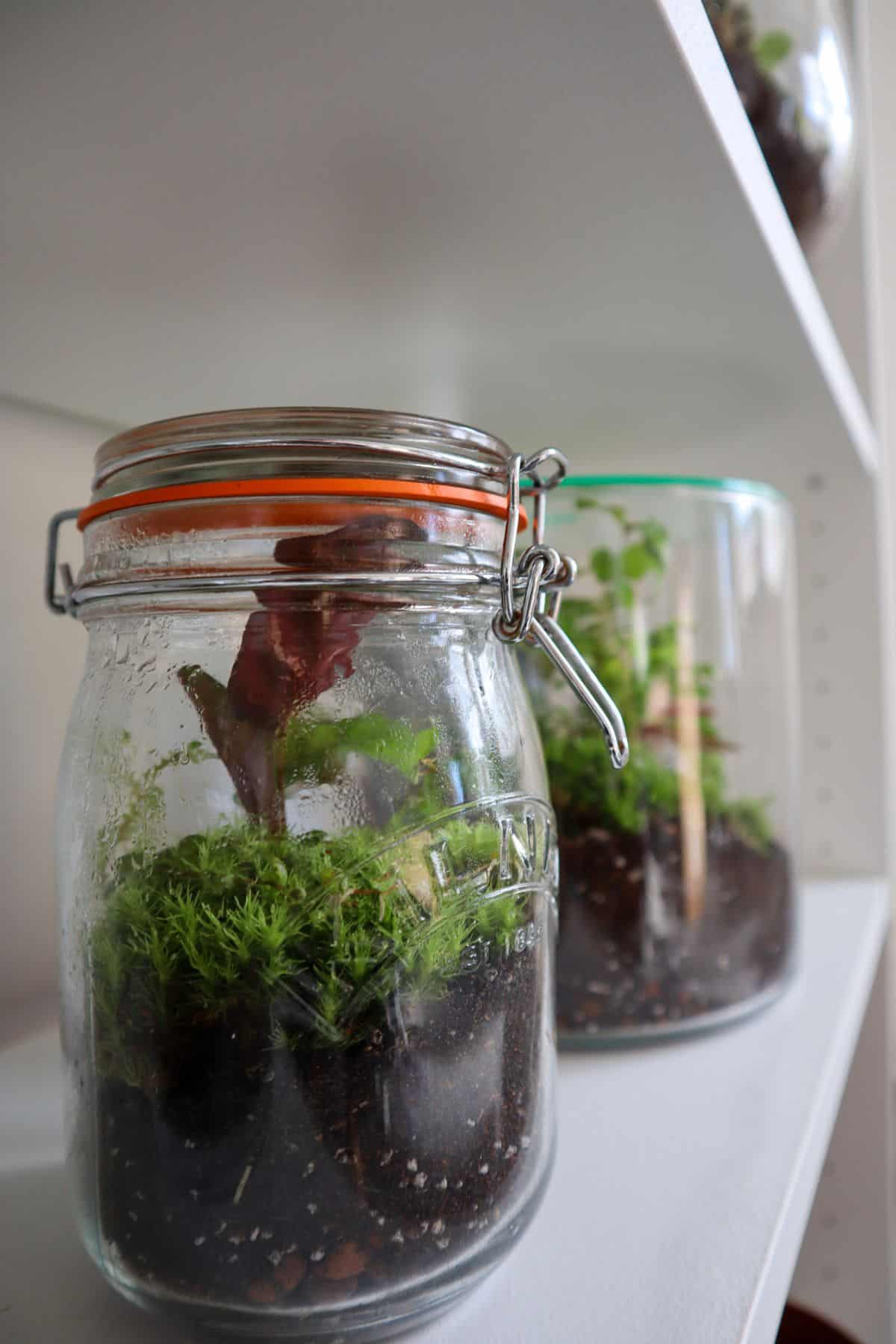
Building a Closed Terrarium Without a Kit
Many people start with a kit and eventually move away from them. I see it happen all the time.
Not because kits are inherently bad (they’re really not), but because as curiosity and confidence grow, going the DIY route offers much better:
- Control over plant compatibility.
- Customization options to make it your own.
- Ability to scale up or adapt over time.
Instead of paying for convenience, you’re choosing components intentionally, based on how closed terrariums actually behave, rather than how they’re packaged.
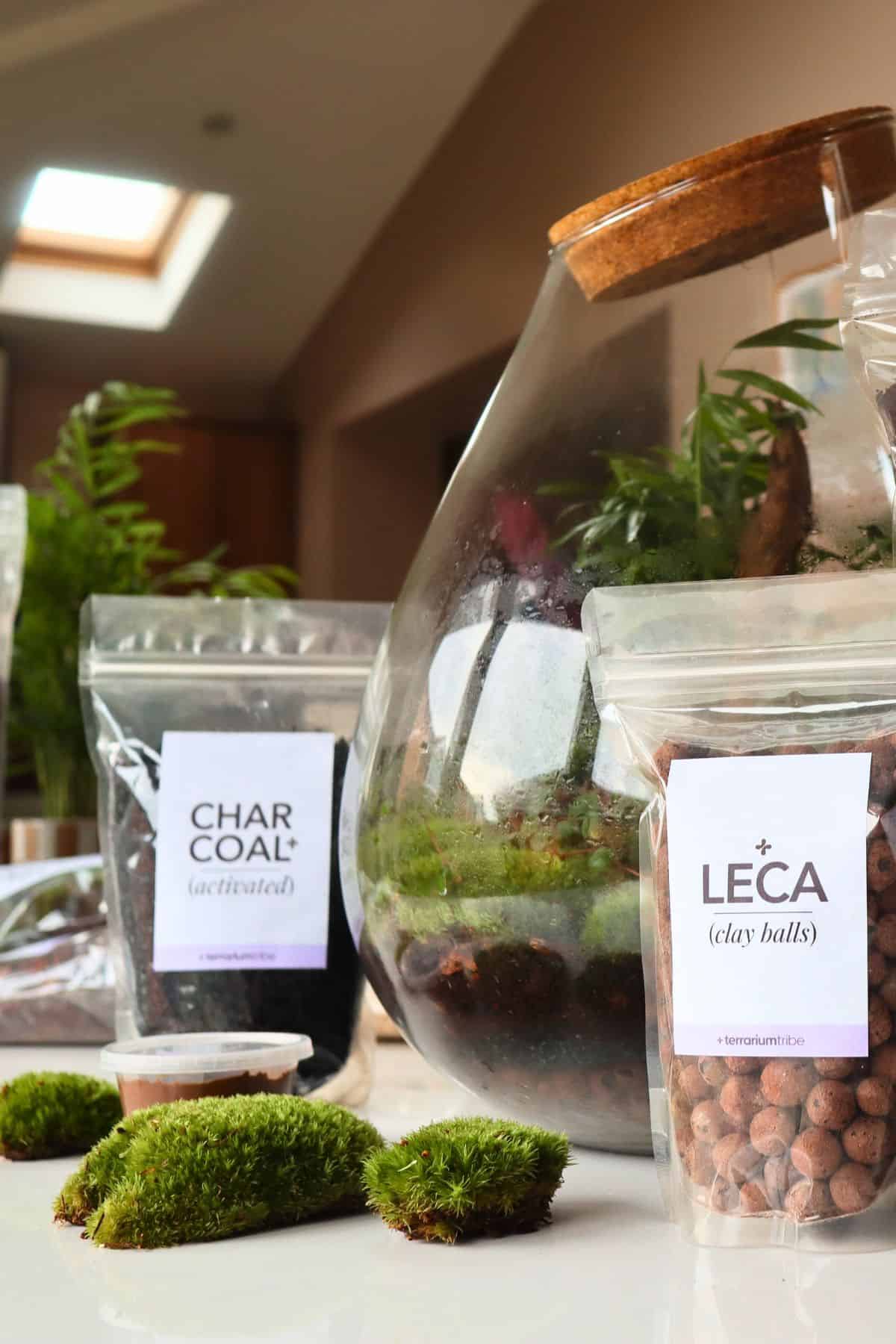
Kits are a great starting point, but building with carefully selected terrarium supplies is what gives you long-term control.

Your website was very helpful. Thank you