

You know you need springtails for your terrarium.
The less obvious part is whether you need temperate springtails, tropical springtails, or whether the difference matters at all.
On paper, it sounds simple. Tropical springtails for tropical terrariums, temperate springtails for cooler setups.
Except that’s not really how it plays out in practice.
In this guide, we’ll be comparing the two popular options and helping to push you in the right direction for your particular build.

Temperate vs Tropical Springtails: The Quick Answer
For most terrariums, temperate white springtails are the best starting point.
They’re hardy, easy to culture, widely available, and reliable in humid planted setups. Despite the name, they’re not just for cool environments. They can do perfectly well in tropical terrariums and bioactive vivariums.

Tropical springtails can work beautifully too, especially in very warm, wet setups, but the label is less precise than it sounds.
The term “tropical springtails” can refer to several different species, so the exact behavior depends on what you’re actually buying.
My recommendation: Temperate springtails are the safest all-rounder. Tropical springtails are useful for more specialist setups that are warmer and wetter than usual.
But, I wouldn’t sweat the difference too much – both will probably work just fine in a humid setup.
What’s the Actual Difference?
The frustrating thing is that “temperate” and “tropical” are not always clean scientific categories in the terrarium trade.
In reality, they’re more like practical shop labels.
Temperate white springtails are usually Folsomia candida, the classic white springtail culture used across terrariums and vivariums. Whereas there isn’t necessarily a default species of tropical springtails.
That said, I do see some differences between the temperate and tropical white species I’ve kept.
Visually, tropical springtails are smaller and a bit more ant-like. They have more obvious antennae, whereas temperate springtails have a longer, thinner body (like a mini caterpillar).

Depending on the species of tropical springtails, you may also see differences in reproduction rate. Though anecdotal evidence online seems to be split between which is faster (I personally didn’t notice a difference).
Which Springtails Should You Choose?
Okay, so let’s keep things simple.
The overwhelming majority of sellers offer just the two main types anyway.
- Tropical White Springtails – usually labeled as a general Collembola sp.
- Temperate White Springtails – usually the Folsomia candida species.
These are the classic, tried-and-tested species of springtails for terrariums that are always a good starting point.
Which you choose seems largely dependent on whose experience you believe in most and which looks the most appealing to you.
On the temperate front, Folsomia candida are the gold standard springtails. They’re hardy and will make light work of any terrarium mold. This is the type we sell on our store.
In the broad Collembola species, you can get a variety of colored “tropical” springtails from pink to silver. Alternatively, Sinella are somewhat common and offer more tropical choices.
We tried out Bilobella braunerae, which are a fantastic bright orange.
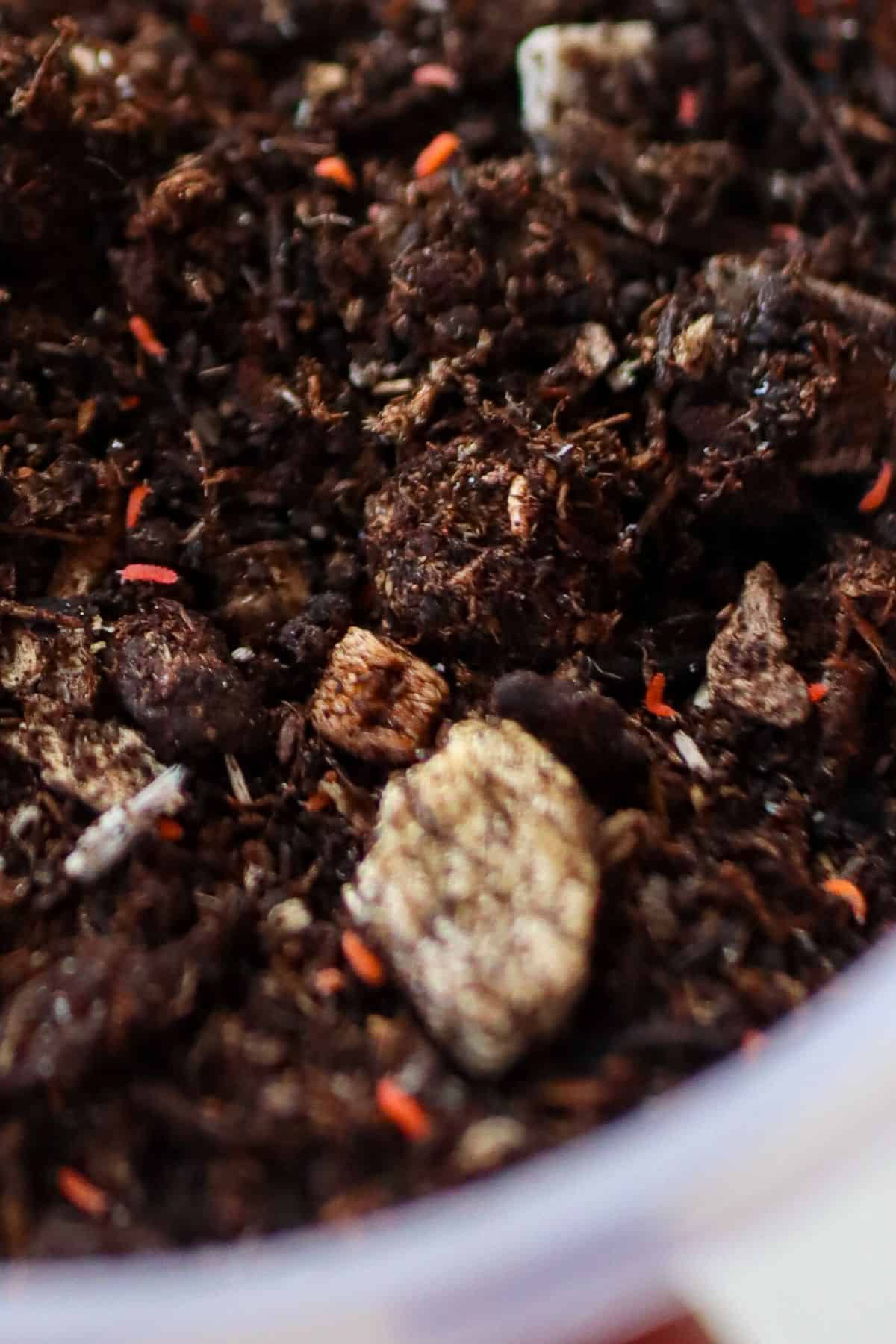
Of course, with there being thousands of species of springtail, there are lots more that will work and are on offer from specialist sellers.
Over to You
Well, I couldn’t really get to the bottom of who decides on a tropical or temperate designation.
Personally, I’m beginning to suspect that the temperate and tropical designations only exist as a crude way of distinguishing between two different varieties of the same species.
Both are employed for the same things – as a cleanup crew and as feeders – and they’re honestly used interchangeably. It’s mostly down to personal preference and a bit of luck. I’m sure you’ll find success culturing springtails of either persuasion.
They should all do the job just fine in a terrarium.
What’s your verdict on temperate vs tropical springtails? Let me know in the comments.
