

Something for the safari seekers amongst us.
Zebra Isopods offer an exciting opportunity to get up close and personal with a herd of stripey wonders.
Albeit, super tiny ones.
If you’re looking for an easy entry into the world of isopod pets (or just want a cool new addition to your collection) Armadillidium maculatum ‘Zebra’ is a fantastic choice.
Read on to find out how to best use and care for this magnificent beast.

Terrarium Tribe is reader-supported. When you purchase through links on our site, we may earn an affiliate commission (at no further cost to you). 💜
Zebra Isopods Overview
Zebra Isopods are an OG of the isopod world.
One of the first isopods to be kept as a pet and enjoyed for their care and aesthetics, rather than just being a cleanup tool in a terrarium/vivarium.
Though they belong to the same family as the common pill bug (Armadillidium maculatum), it’s easy to see why this particular variation stood out to prospective keepers.
With their classic black and white stripes, they’re going to pair well with any environment.
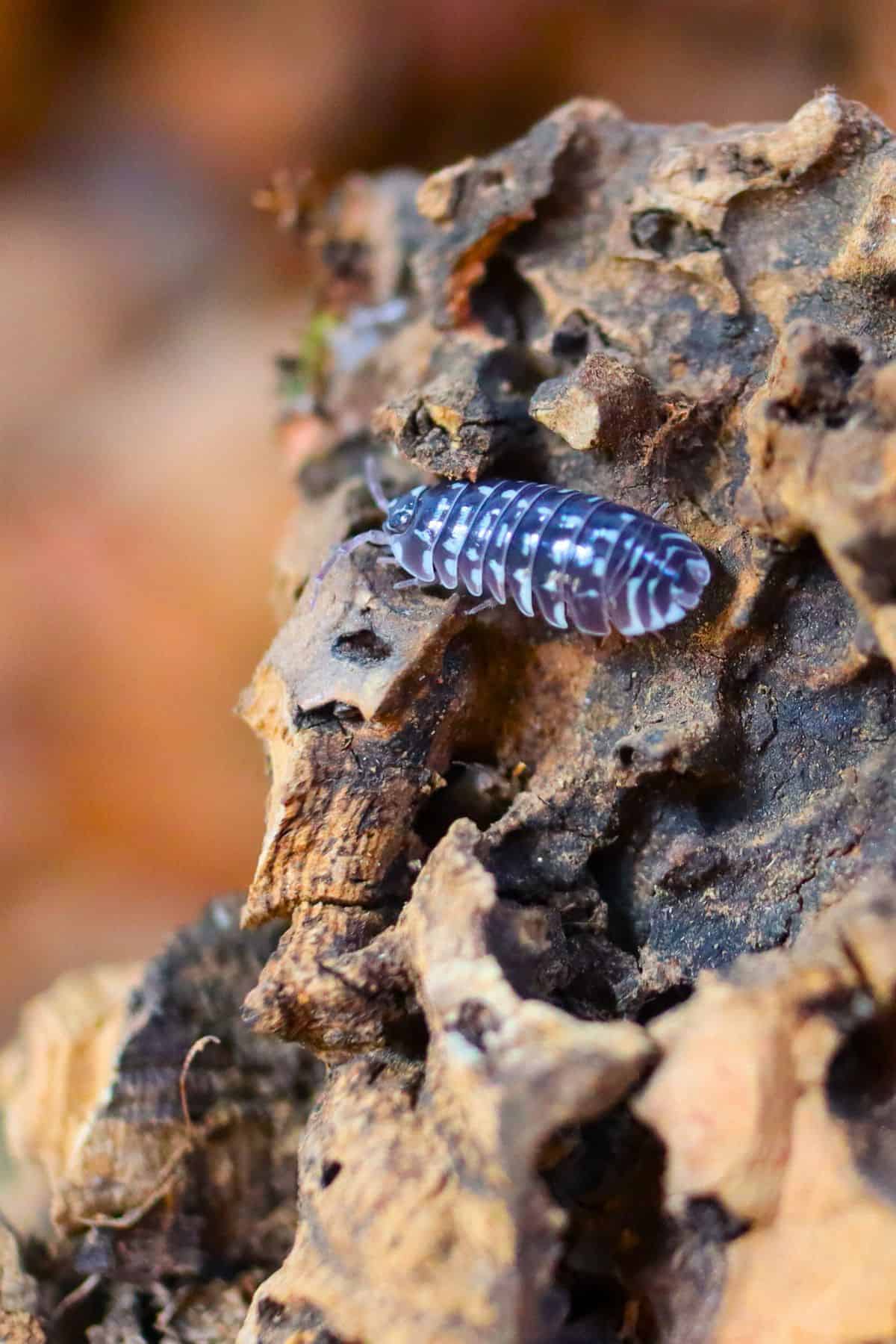
Within the broader landscape of different isopod species, Zebras sit comfortably in that sweet spot between beginner-friendly and genuinely interesting to keep.
They’re structured enough to feel “classic,” but active enough to make a planted setup feel alive.
Benefits of Zebra Isopods
Zebra Isopods continue to be one of the most popular species on the market, so they must be doing something right.
Here are some of their standout features.
- Easy to care for – Overall, Zebra Isopods are pretty resilient and have very straightforward care requirements. They make a great first isopod for beginners.
- Aesthetic – What can I say? These stripey wonders are simply gorgeous, and there are both Chocolate Zebra Isopods and Yellow Zebra Isopods too!
- Active – Part of being able to enjoy a stunning isopod pet is being able to actually see them… Thankfully, Zebra Isopods are very active and not too shy once they’ve settled in.
- Affordable and easily available – One of the perks of being popular is that Zebra Isopods are easy to come by and remain one of the cheapest varieties on offer.
- Easy to handle – As one of the slower and larger isopod varieties, they’re not too difficult to manage if you’d like to handle one or two at a time.
Convinced? Grab a culture of established Zebra Isopods from our shop.

Zebra Isopods Care
Habitat
The overall size requirements of the enclosure are somewhat dependent on the size of the colony, but seeing as these isopods are on the larger side – it follows that you’ll need a reasonably sized container, too.
They also need plenty of ventilation, so you’ll need to opt for a container with a partial seal, or you’ll need to get drilling to make your own vents…
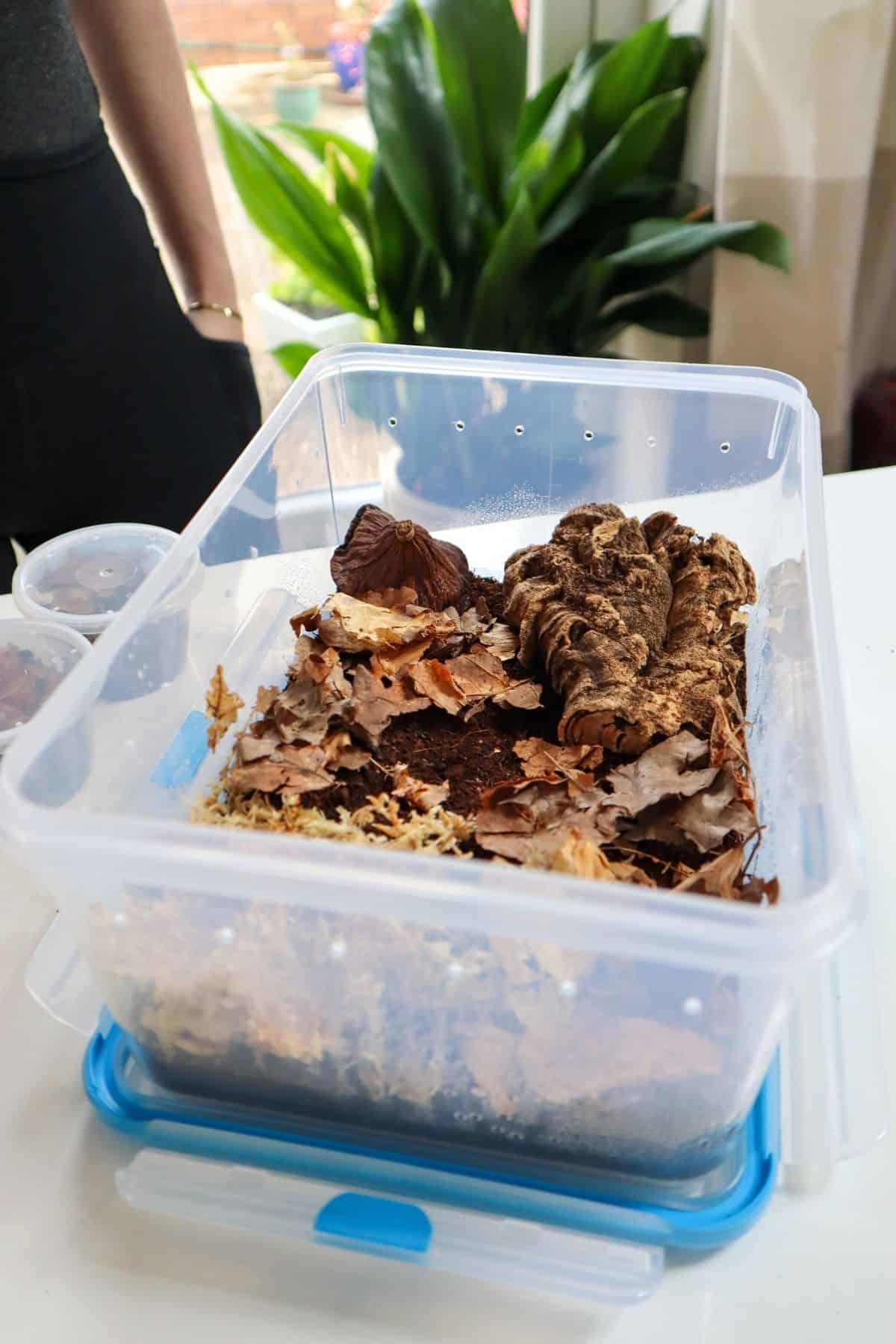
Though they’re not amazing climbers, feel free to cover any vents with a fine mesh to prevent any jailbreaks.
Their mature size, high activity, and need for ventilation mean they’re not a great fit for the smallest of containers (both literally and figuratively). Tiny Tupperware boxes or planted bottle terrariums just aren’t going to do the trick with these larger critters.
We always recommend you pop some cork bark in their habitat, too.
It’s the ideal natural hiding space for them, that doubles as a long-term snack too.
Substrate
For substrate, a classic tropical terrarium mix is always a great choice.
Something with plenty of coco coir and sphagnum moss for moisture retention and a nice loose texture for burrowing, covered with leaf litter for nutrition and hiding spot opportunities.

I like to use earthworm castings in all my substrates, and that can really help as a source of nutrition for both plants and isopods.
Zebra Isopods do appreciate a moisture gradient if possible, meaning a section that’s a bit drier for them.
Which can be tricky when misting (especially with automated misting systems), but some creatively placed hardscape items should be able to shield a chosen area.
Temperature and Humidity
Zebra Isopods do prefer warmer conditions, but nothing crazy.
Ideally, between 75-80°F (21-26°C), so slightly above a typical room temperature.
This should be easily achieved in most vivariums with artificial lighting and/or heat mats. But, if they’re in a smaller container (or it’s a cold Winter), then it’s best to keep them somewhere warm or pop them on a heating mat.
On the humidity front, I think it’s helpful but probably not a dealbreaker.
After all, they need good ventilation and, ideally, a dry area, too – neither of which is conducive to high humidity.
Food
As part of a bioactive setup, the container should have plenty of decaying organic material in the substrate to drive that nutrient process.
That should form the backbone of the feeding process.
Leaf litter is the easiest and most effective way to provide this, but driftwood can help a lot, too, e.g., cholla wood branches.
Though you can (and should) supplement where possible. This is much more necessary if kept in smaller, isolated containers, where you’ll likely have to feed them several times a week.
- Fish food flakes are an easy and convenient supplement. They’re full of protein, and you can always have some to hand.
- Vegetable cuttings are another good option. Pretty much anything you have leftover from your chopping board should do. Just don’t overdo it; just add a little at a time, or the mold growth might outpace your isopods.

- Dedicated isopod food is arguably the best. The formulations will differ depending on the source, but they’re usually well-optimized for isopod health. Our isopod food blend is a concentrated source of nutrition that can keep them going for ages.
Unfortunately, Armadillidium maculatum is known to snack on moss and softer plants occasionally, so they’re arguably not the best choice for terrariums.

See my guide to isopod dood for more on what you can feed them.
How to Breed Zebra Isopods
Zebra Isopods are easy to reproduce overall.
Provided you have a big enough colony that’s happy and healthy, nature should take its course without any outside influence.

Over to You
Do you keep Zebra Isopods? I’d love to hear how they’ve performed in your setup.
If you’re comparing stripey isopod species, you might also want to see how Panda King Isopods differ in temperament and care, or explore our Yellow Spotted Isopod care guide for another Armadillidium option.
And if you’re ready to start a colony of your own, you can browse our full isopod collection in the shop.
