

Sure, Pothos will grow in a terrarium. That much is rarely the issue.
The issue is that warmth and moisture tend to encourage exactly the behaviour most terrarium builds are trying to keep under control – long vines, aerial roots, and a general disregard for scale.
But that doesn’t necessarily make it a bad choice. Just makes a conditional one.
In the right setup, Pothos adds quick coverage and a lush, trailing look. In the wrong one, it becomes the whole terrarium, whether you planned for that or not…
In this guide, we’ll cover when Pothos works in a terrarium, which varieties are easiest to manage, and when you’re better off choosing something else.
Can Pothos Grow in a Terrarium?
Yes, Pothos can grow in a terrarium. Perhaps too well.
It generally handles warm temperatures and elevated humidity well, and it roots very readily (all down the vine), so getting it established in a terrarium is comically easy.
Once they’re established, it’s time to buckle up and watch them go.
Most Pothos varieties are vigorous vines. Give them warmth, moisture, and decent light, and they do exactly what you’d expect – root up, and start claiming territory.
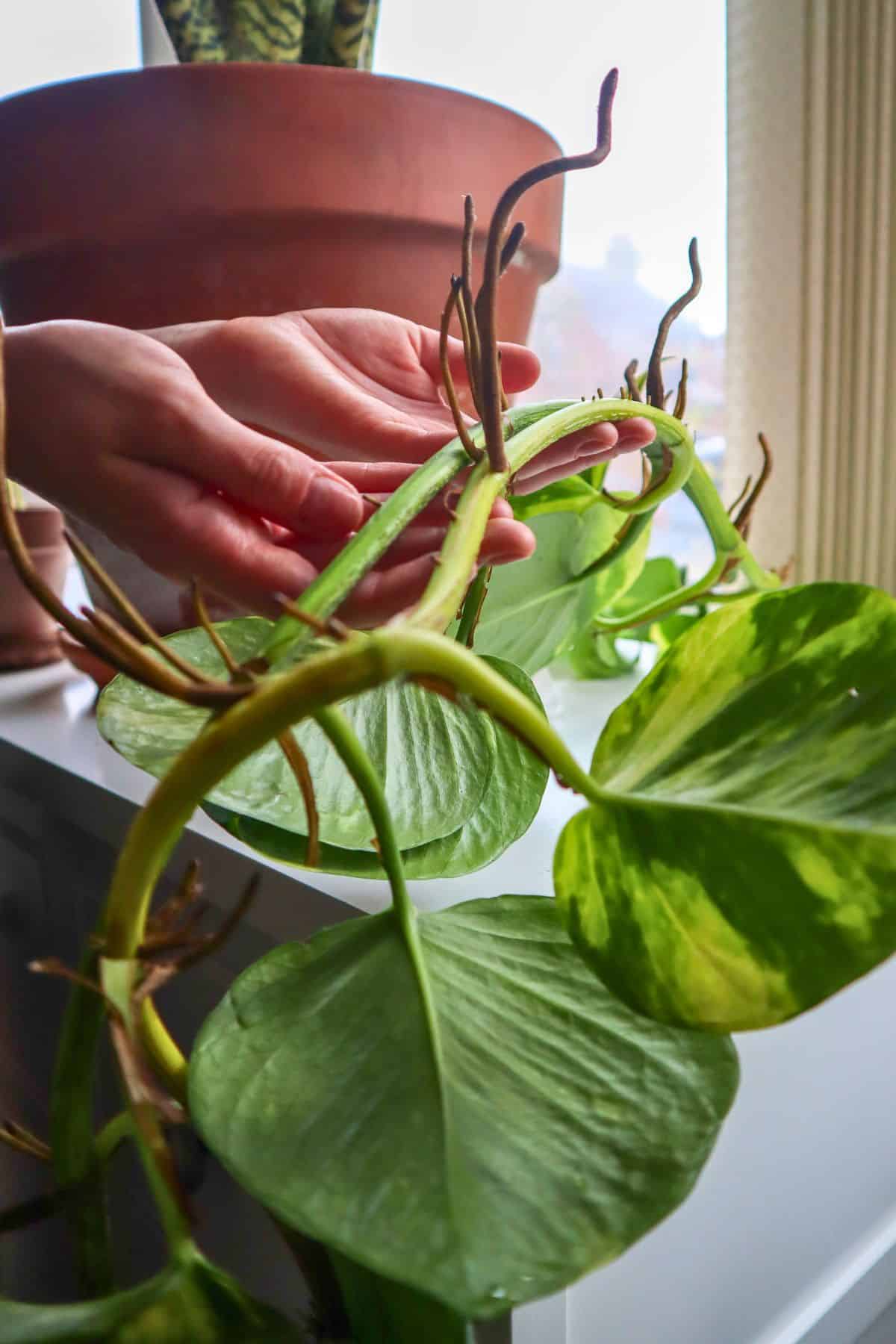
That can be useful in a larger tropical build. In a small terrarium, it usually becomes a maintenance project.
So yes, Pothos can grow in a terrarium. Whether it should depends much more on size, setup, and how much pruning you’re willing to do.
Where Pothos Actually Works Best (Suitable Setups)
Pothos usually works best in larger tropical builds with some room to move.
That might mean a spacious closed terrarium, a tall tropical vivarium, or a ventilated enclosure. Any setup where the plant can trail or climb without immediately pressing itself against the glass.
Sure, a sealed terrarium gives Pothos the humidity it enjoys, but it also speeds up the growth problem. In warm, enclosed conditions, Pothos often establishes fast, produces larger leaves, and starts crowding everything around it unless you trim it back regularly.
That doesn’t mean you can never use Pothos in a closed terrarium. You absolutely can. But it helps to treat it as a managed plant, not a low-maintenance background filler.
In theory, an open terrarium can work too, but I struggle to imagine what that looks like practically… won’t it just be a giant plant in a glass pot?
Honestly, in small terrariums, it’s usually the wrong choice.
If your goal is a neat, finely scaled display, Pothos will rarely be the terrarium plant that helps you get there. Whereas, if your goal is a lush tropical build that you are happy to edit as it grows, it starts to make much more sense.
How to Keep Pothos Under Control in a Terrarium
This is where most of the success or failure happens.
Pothos works best in a terrarium when you treat it as a controlled element, not the main event.
Here’s what helps.
1. Use small cuttings, not a mature plant
Starting with a rooted cutting or a small juvenile section gives you more control over scale.
Dropping a full nursery Pothos into a terrarium usually feels oversized from day one. Whereas a cutting settles in more naturally and lets you shape how it grows within the layout.
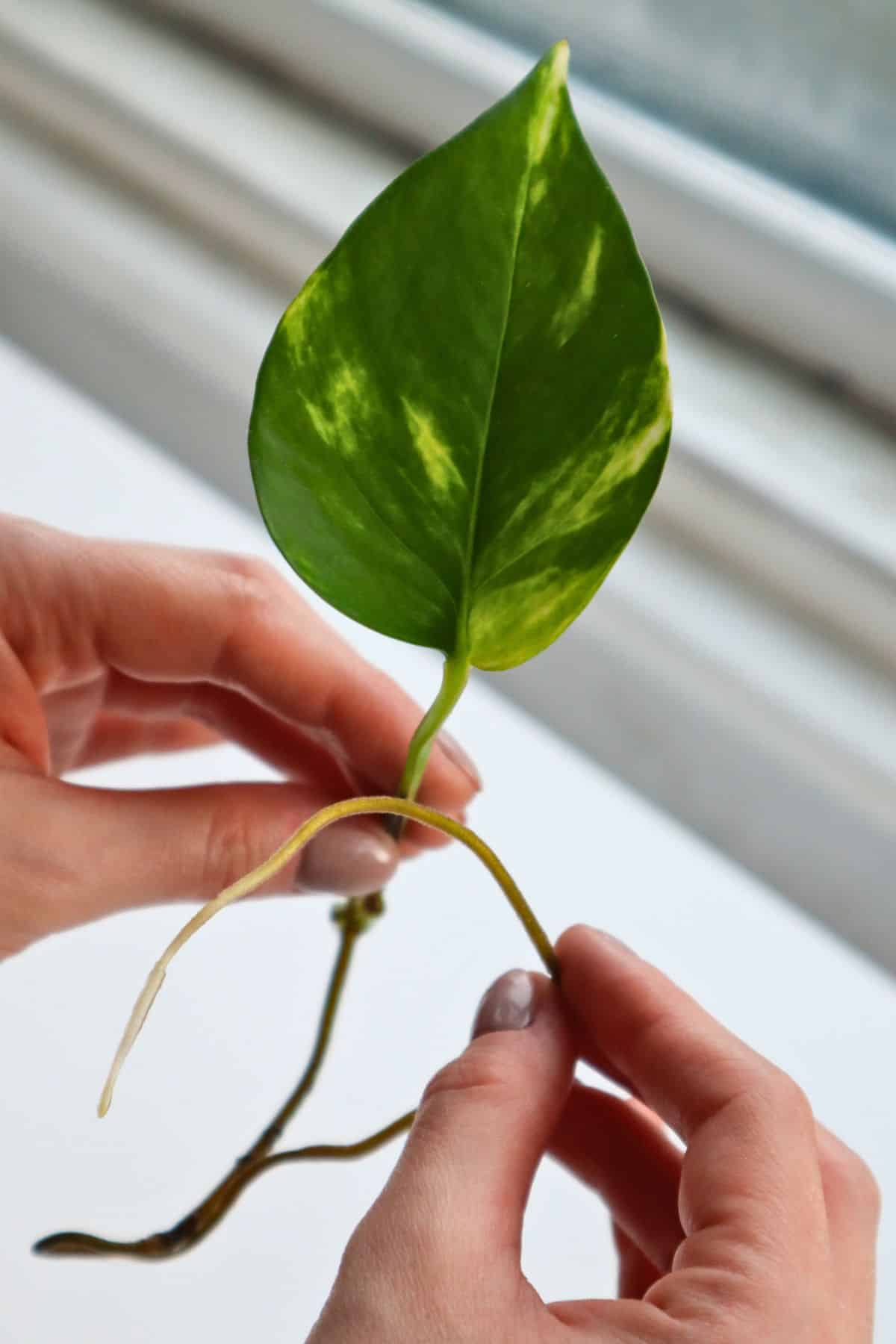
It at least buys you some time to enjoy it before you need to start physically restraining it.
2. Prune early, not late
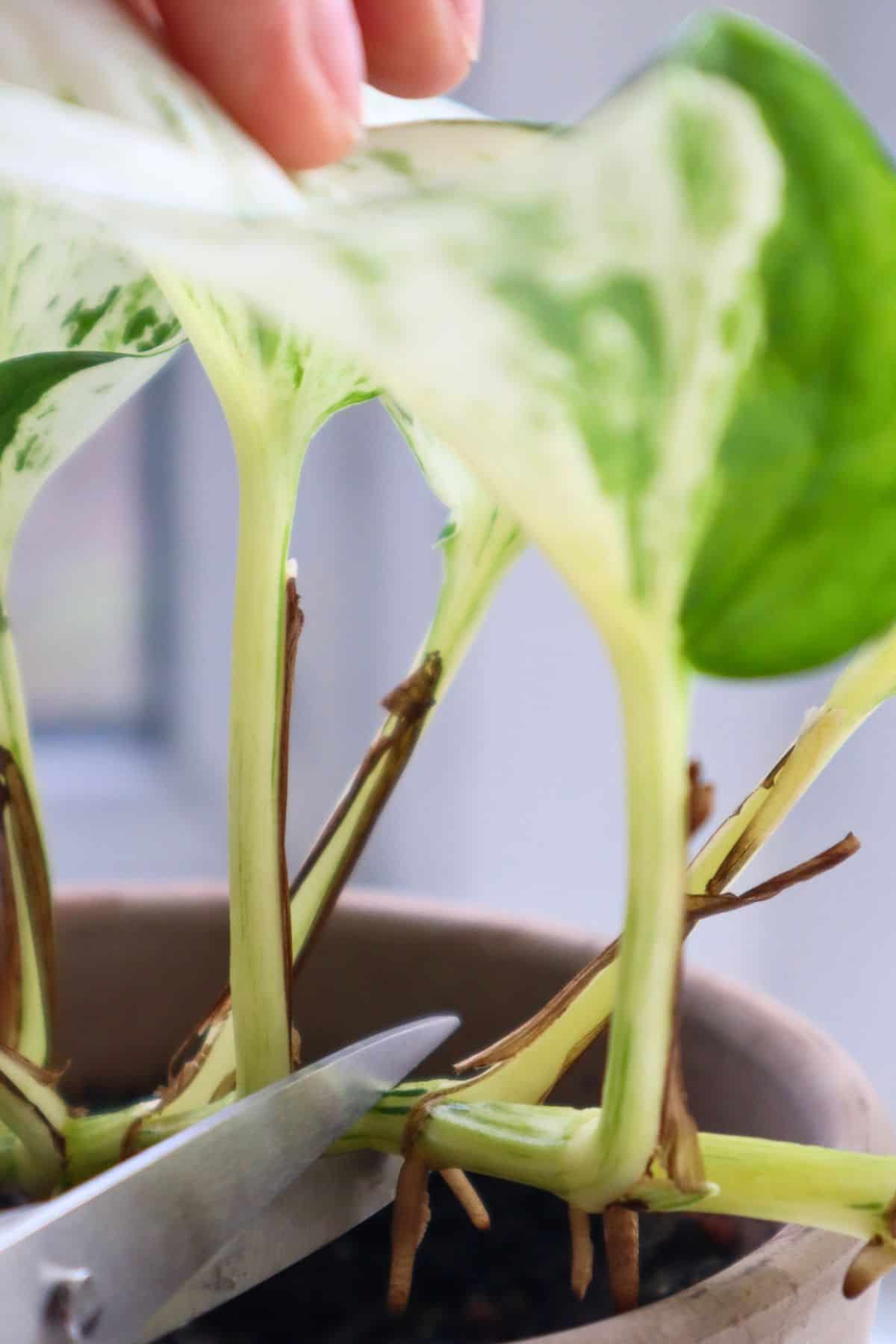
With Pothos, small corrective trims are much better than heroic rescue missions.
Once it starts producing long vines and larger leaves, it can make the terrarium look crowded very quickly. Regular pruning keeps the shape tighter and helps preserve a better sense of scale.
If you leave it too long, you usually end up having to cut back much harder than you wanted.
3. Keep it away from true miniatures
Pothos and miniature terrarium plants rarely feel like equals for long.
If you’re planting with tiny ferns, small mosses, foliage plants, or delicate creeping species (you know, generally more suitable terrarium plants), Pothos will often end up visually dominating the composition.
It’s usually better paired with sturdier tropical plants that can hold their own.
4. Don’t rely on it for a “finished” look
Pothos is often best treated as a temporary plant in a terrarium.
It fills gaps quickly and gives a terrarium that lush, established look early on. But in most setups, it is on a countdown. Sooner or later, it will need cutting back, removing, or rethinking before it starts dominating the space.
What Makes a Pothos Variety Better for Terrariums?
If you’re choosing Pothos for a terrarium, the best variety is usually not the rarest or the flashiest.
It’s the one that stays manageable the longest.
That generally means looking for:
- Smaller leaves.
- Tighter internodes (the space between root notes).
- Slower, bushier growth.
In practice, growth habit matters more than collector appeal.
A slightly less flashy Pothos that stays dense and compact will usually work better in a terrarium than a beautiful, fast-growing one that immediately tries to dominate the whole build.
Light also matters here. Many heavily variegated pothos varieties look fantastic at first, but they need stronger, brighter indirect light to hold that contrast. In a decorative terrarium indoors, that’s not always easy to provide consistently.
The result is often a plant that survives just fine but gradually loses the very thing you chose it for.
Best Pothos Varieties for Terrariums
Not all Pothos behave the same way, and that’s where this gets more interesting.
Some are still too vigorous for most enclosures. Some are a bit bushier, slower, or tighter in habit, which makes them easier to work with in a confined space.
These are the ones I’d look at first.
N’Joy Pothos
‘N’Joy’ is one of the better Pothos choices for terrariums.
Compared to a classic ‘Golden Pothos,’ it tends to have shorter internodes and a bushier overall habit. That gives it a denser, more compact look, which works much better in a planted enclosure where long bare stretches of vine can quickly feel messy.
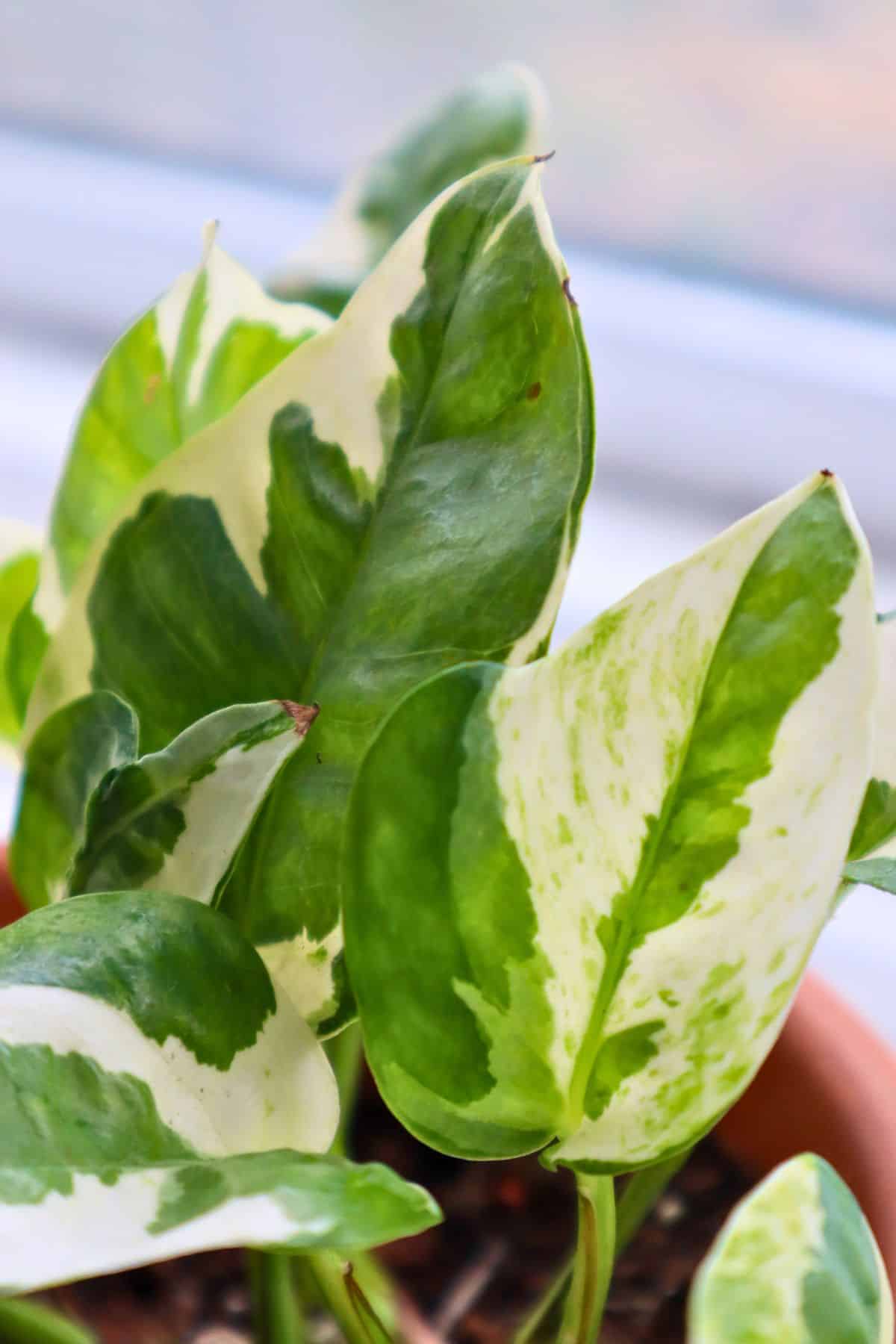
The variegation is attractive too, but not in a way that feels overdone.
That said, it’s still a Pothos. It still grows. It still won’t stay miniature forever. But if you want a variegated Pothos that feels a bit more controlled, this is one of the stronger options.
Pearls and Jade Pothos
‘Pearls and Jade’ has a similar appeal.
It tends to stay a bit tidier than the more aggressive trailing types, and the variegation has enough detail to look interesting without immediately taking over the whole visual balance of the terrarium.
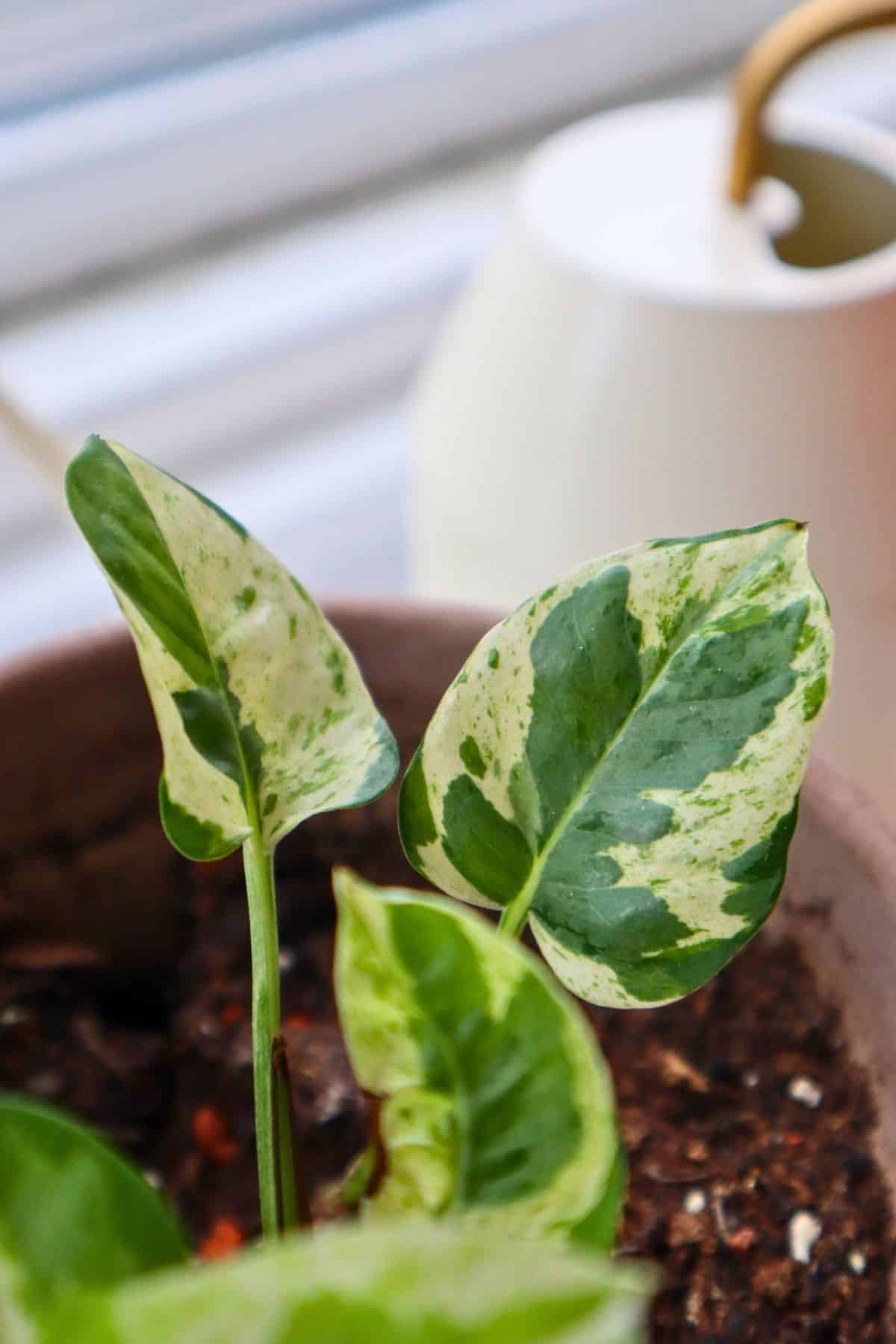
It’s still not what I’d call a true miniature plant, but it can work well when you want a Pothos look in a somewhat more restrained form.
Like most variegated types, it’ll do best with decent light. In dimmer setups, the pattern can lose some of its crispness over time.
Manjula Pothos
‘Manjula’ is probably one of the most terrarium-friendly Pothos options.
It tends to grow more slowly than the classic vigorous forms, and its short internodes give it a fuller, more compact feel. That makes a real difference in an enclosure, because it buys you time.
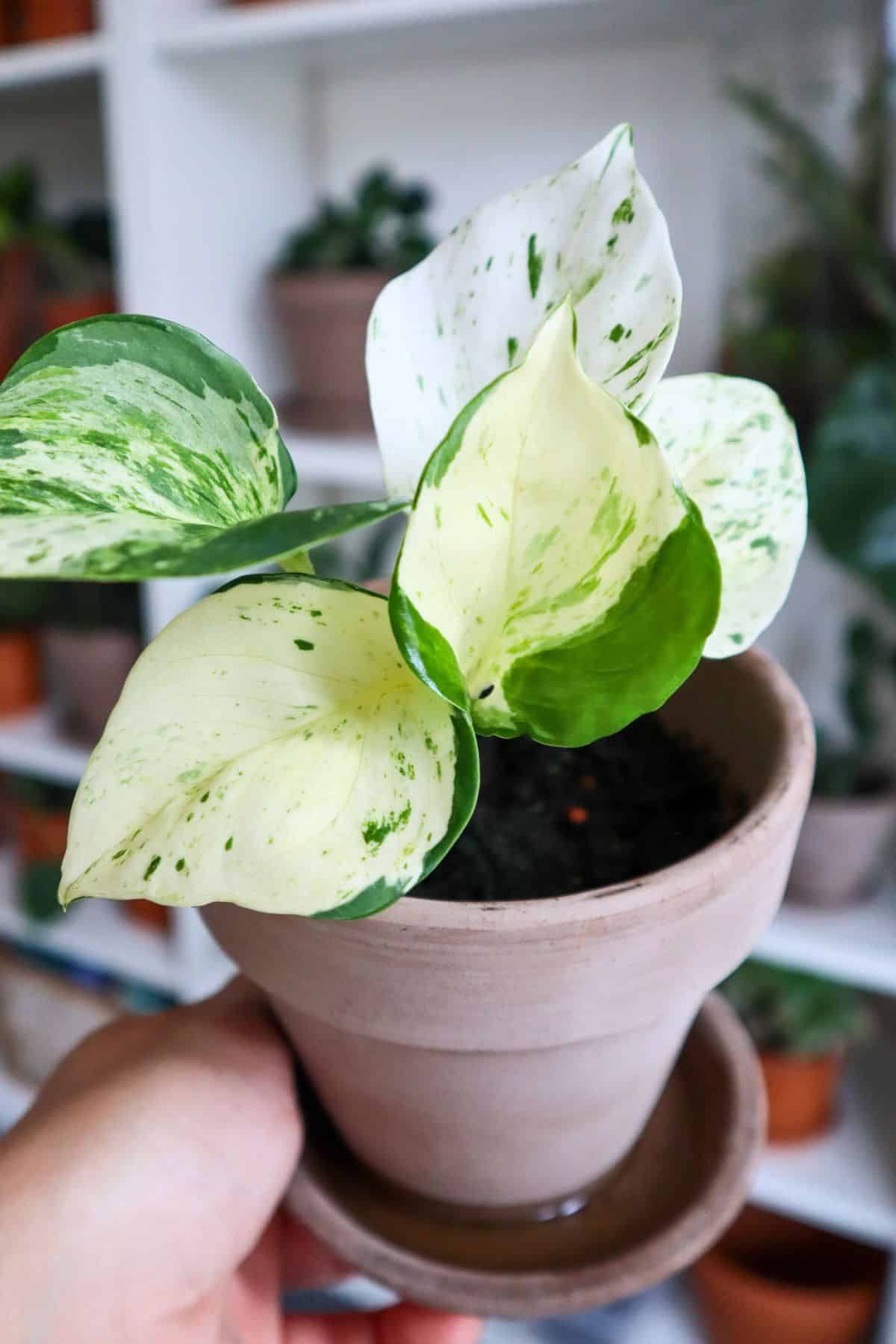
You get the shape and texture of Pothos without the same immediate sense that it’s trying to escape.
The leaf shape is softer and broader, too, which can look especially nice in tropical builds.
Of all the common Pothos varieties, this is one of the few I would actively consider for a medium-sized decorative terrarium.
Cebu Blue
‘Cebu Blue’ isn’t always the first plant people think of here, but it can be a good option in the right build.
The leaves are narrower and more refined than those of a typical Pothos, which gives it a lighter look in terrarium planting. That can help a lot if you want a trailing or climbing plant without the broad, obvious “houseplant” feel.
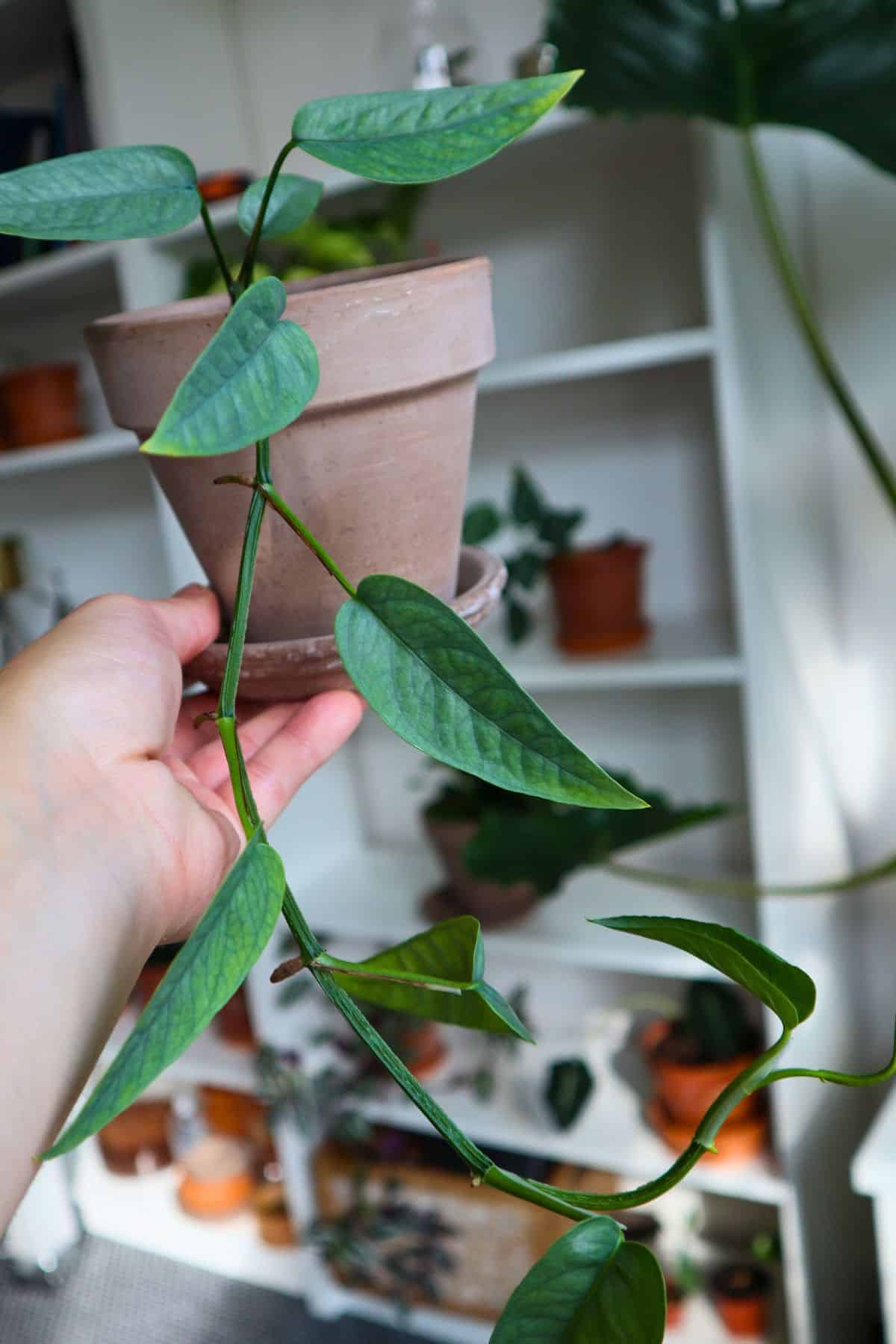
It still needs room, though.
This is better in taller terrariums, paludariums, or vertically structured tropical setups where it has something to climb or drape across naturally.
More Difficult Pothos Varieties to Manage
Some Pothos types are beautiful, easy to grow, and still not especially practical in a terrarium.
Usually, the issue comes down to one of three things:
- They grow too fast.
- The leaves get too big.
- They need stronger light to keep their best color.
Golden Pothos
‘Golden Pothos’ is the classic for a reason.
It is reliable, attractive, and extremely easy to grow. It is also very quick to look oversized in a terrarium.
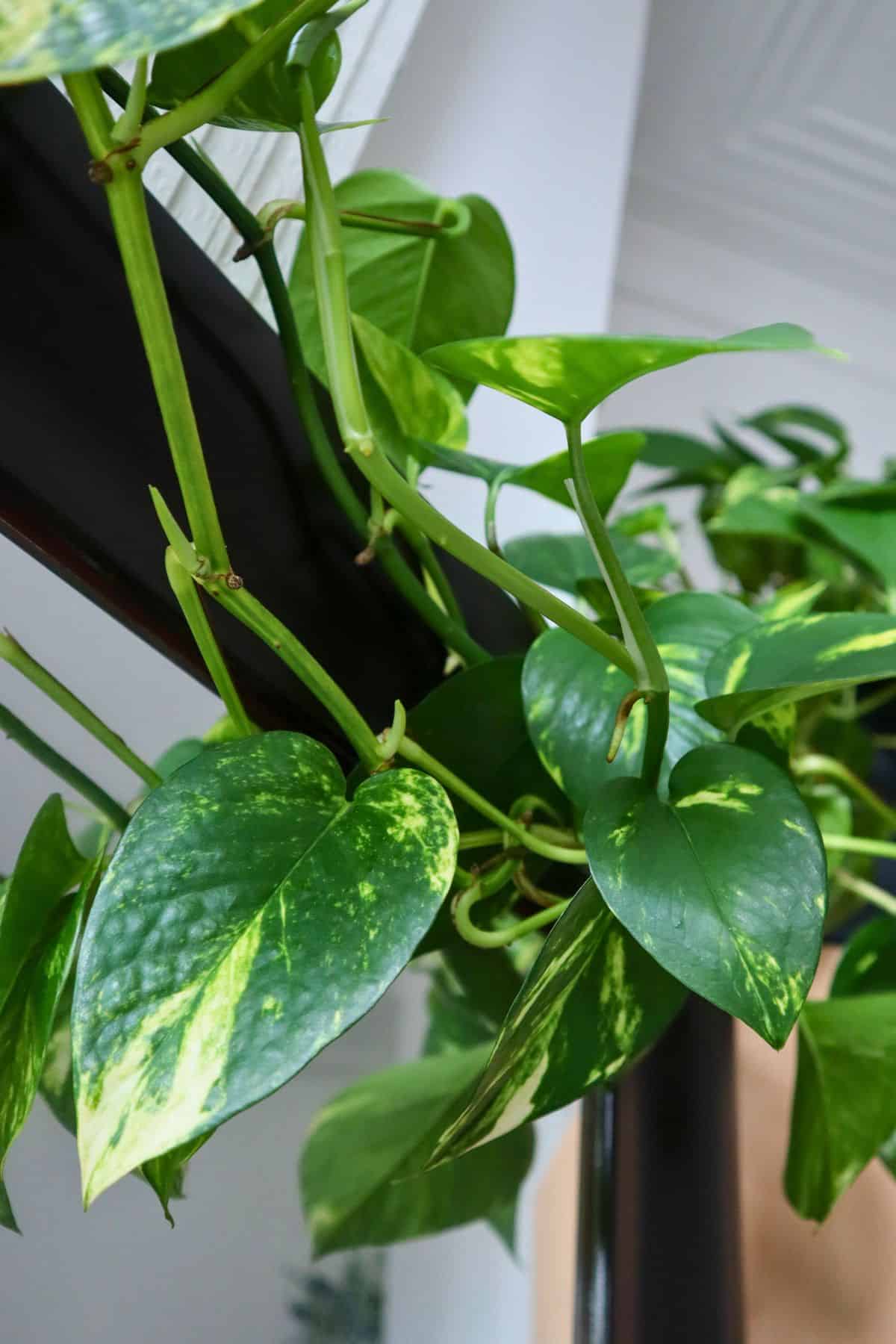
In a large enclosure, that vigor can be useful. In a smaller one, it tends to look out of scale before long. It’s one of the easiest Pothos to grow, but one of the hardest to keep looking proportionate.
Neon Pothos
‘Neon Pothos’ can look brilliant in a terrarium at first. That bright chartreuse color really stands out against darker moss, wood, and tropical foliage.
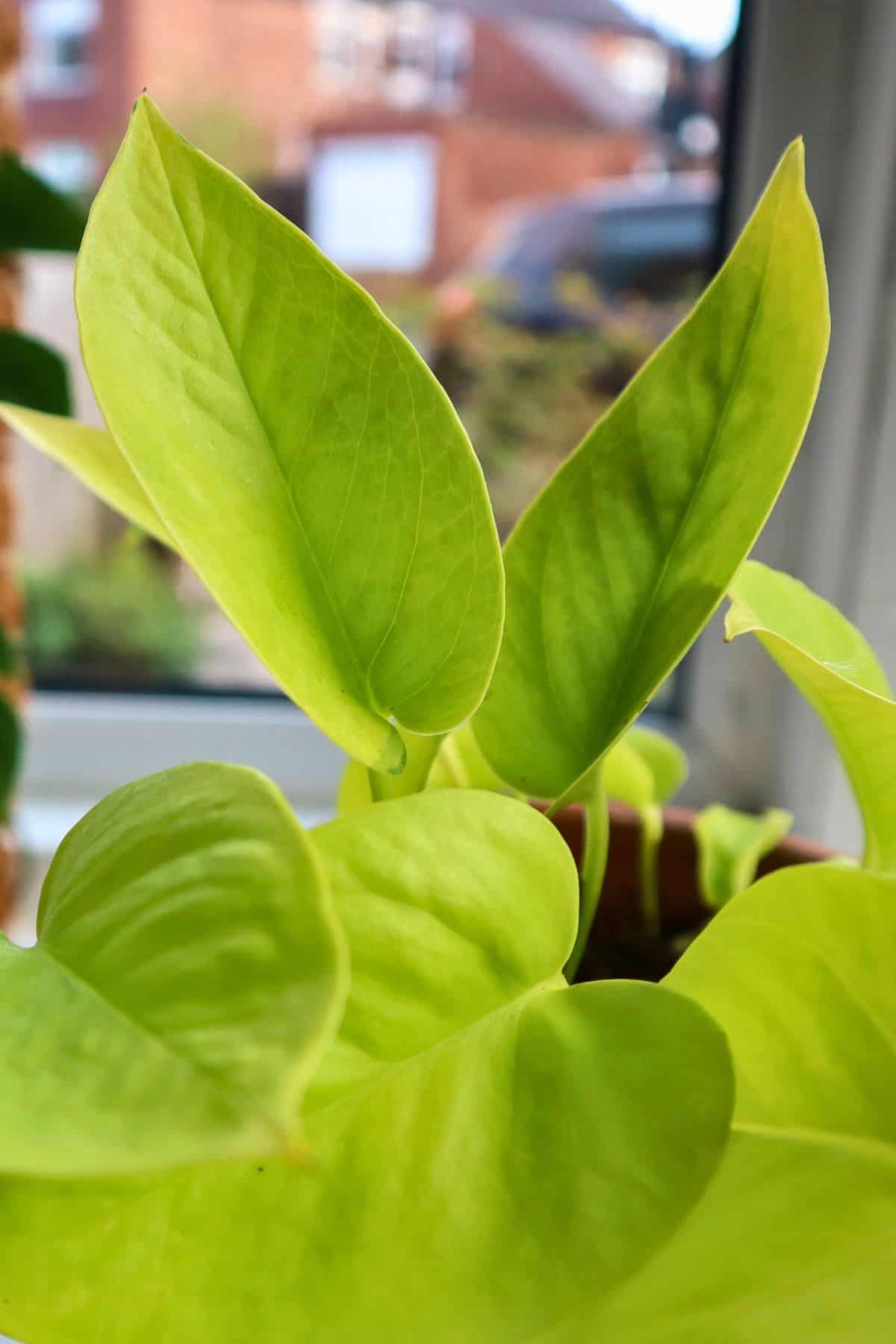
The catch is light.
To keep that vivid color, the Neon usually wants strong, bright indirect light. In many indoor terrariums, especially closed decorative ones, it can be harder to provide consistently than people expect.
So while it can grow well, it may not always keep the exact look you bought it for.
Marble Queen Pothos
‘Marble Queen’ is gorgeous, and the cream-heavy variegation can look incredible in the right planting. But those pale tones generally need stronger light to stay crisp and pronounced.
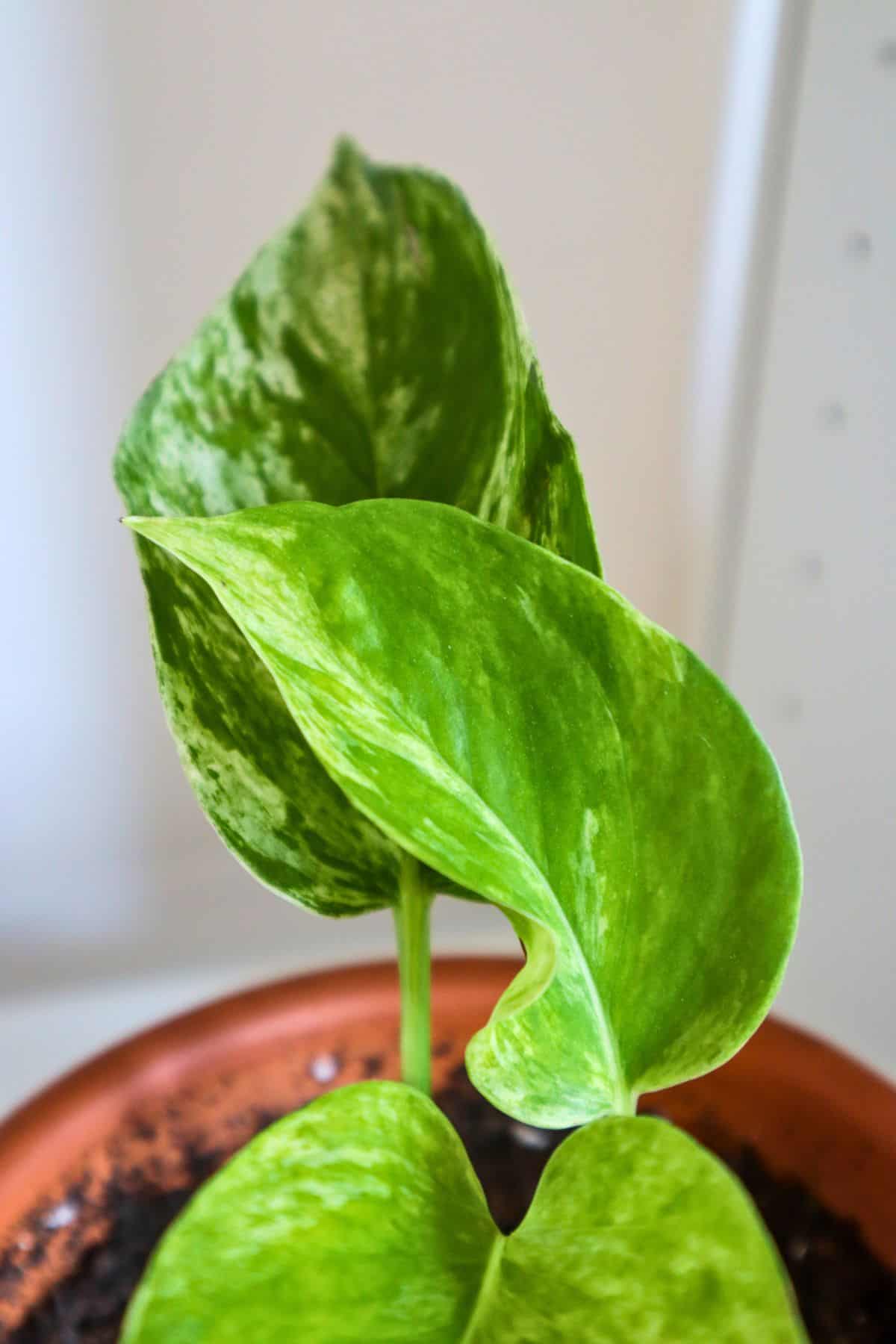
It’s also on the bigger side. It’s more like a scaled-up Pearls and Jade, so it’s inherently going to be the more difficult version of the two in most terrarium setups.
Final Thoughts
Pothos can absolutely work in a terrarium. You just need to know what you’re getting yourself into first.
In most cases, Pothos is best treated as a situational large terrarium plant, not a default terrarium plant.
Choose compact varieties where possible. Use it sparingly. Prune it early. And be honest about whether the enclosure has enough room for a plant that’s infamous for its growth rate.
Used well, Pothos can add an easy lushness to a terrarium.
Used carelessly, it soon becomes the whole terrarium.
