

Isopods are often talked about as if they’re interchangeable, but species choice quietly shapes how a setup behaves.
Some isopods stay small and hidden, while others spend their time out in the open. Some breed explosively, while others remain slow and stable. Moisture tolerance, activity level, size, and temperament can vary just as much as color.
There’s a lot to consider, is all I’m saying.
This page brings together some of the most commonly kept isopod species and morphs, focusing less on hype and more on how they behave in real setups.
Once those patterns click, the whole landscape of isopods starts to make sense.
Types of Isopod (and What They Tend to Be Like)
While individual species and morphs can look wildly different, many isopods share the same underlying habits because genetically they belong to the same genus.
Once you start recognising those genus-level patterns, unfamiliar names become much less intimidating.
You can usually make a fair guess at how an isopod will behave, how active it might be, and what sort of presence it tends to have, even if you’ve never kept that exact species before.
It’s less about memorising names, and more about spotting the patterns.
Below are some of the most commonly kept isopod groups, along with the traits they tend to share.
Armadillidium Isopods
If you picture a classic “pill bug,” you’re probably thinking of an Armadillidium.
Species in this genus are often where people first encounter isopods. They’re generally hardy, forgiving of small mistakes, and slow enough in their habits to feel manageable.
Their rounded bodies allow them to roll into a tight ball when disturbed – we’ve all seen that familiar pattern growing up.
In practice, Armadillidium species are generally calm and steady. Population growth tends to be gradual, with activity settling into a predictable rhythm over time.
Common Armadillidium species and morphs include:
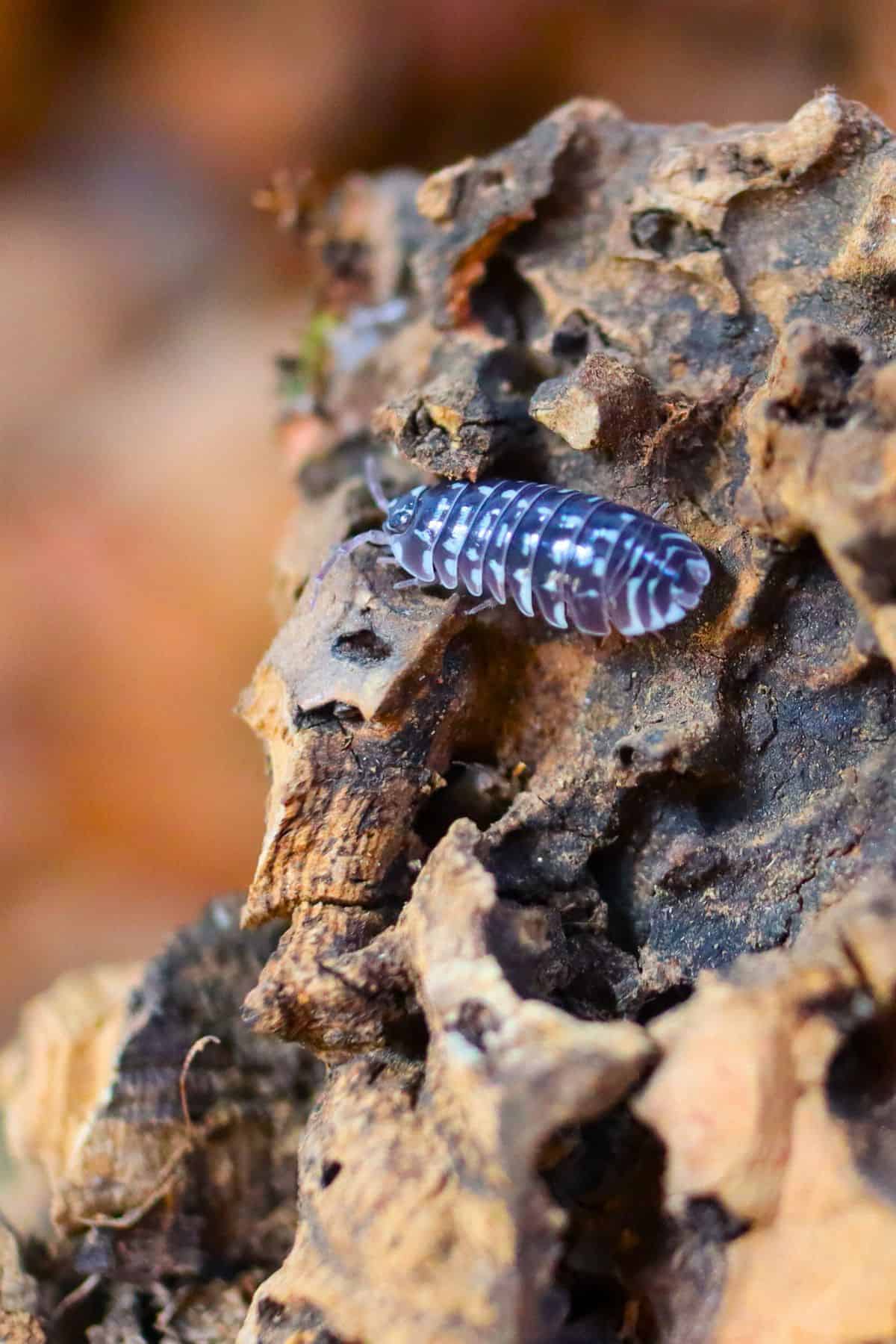
They’re often considered beginner-friendly, not because they’re flashy, but because their behaviour is easy to read and their rhythms are consistent (not to say they can’t be flashy though – check out the Yellow Zebra morph).
Porcellio Isopods
Porcellio is often described as an “active” genus – and that’s true – but it doesn’t tell the whole story.
These isopods are fast-moving and enthusiastic feeders, yet they’re also surprisingly good at staying out of sight. In well-structured setups, Porcellio species will happily disappear into leaf litter, bark, and substrate layers, re-emerging quickly when food is available (and you’ve probably left).
That combination of speed and stealth makes them feel busy without necessarily being on constant display. It’s also part of what makes them such effective processors of organic material once established.
Common Porcellio species include:
They may not always be visible, but their impact is usually obvious.

Cubaris Isopods
Cubaris species are often slower, more deliberate, and more moisture-dependent than other genera.
Many stay smaller, spend longer periods hidden, and reproduce more slowly, which contributes to their reputation as “display” isopods.
That said, many Cubaris species can still function effectively in terrarium environments, just at a different pace than more aggressive feeders. There’s always a balance to be struck between function and beauty, after all.
Speaking of beauty, the common theme here is their delightful “ducky” faces!
Common Cubaris species and morphs include:

Porcellionides (Powder Isopods)
Okay, not a broader genus this time.
The “Powder” isopods are a collection of common isopod morphs all belonging to a single species – Porcellionides pruinosus.
Characterized by their soft, dusty appearance, often in blue, orange, or pale cream colors.
In terms of behaviour, powder types tend to be active and hungry. They move quickly, breed readily, and adapt fast to changing conditions, which is part of why they’re so commonly recommended for setups of all kinds.
Common powder-type isopods include:

Dwarf Isopods
Dwarf isopods are defined less by lineage and more by scale.
As the name suggests, they remain much smaller than most commonly kept isopods, often no bigger than a grain of rice even as adults. Because of their size, dwarf species are rarely noticed individually (we sell them in higher culture sizes, too).
They also behave differently to larger isopods.
Dwarf species spend most of their time within the substrate and leaf litter. They tend to blur the line between “present” and “invisible.” They’re rarely the stars of a setup, but once established, they’re often doing way more than they appear.
Common dwarf isopod types include:
- Dwarf White Isopods (Trichorhina tomentosa)
- Dwarf Purple Isopods (Trichoniscidae sp.)

There’s also the very cute White Shark Isopods (Dwarf Cubaris sp.), but they function way more like a typical Cubaris display species than these other bioactive powerhouses.
Understanding Isopod Types (Beyond the Names)
As more isopod varieties enter the hobby, it’s easy to feel like you need to memorise an ever-growing list of species and morph names.
In reality, many of those names describe simple visual differences layered on top of the same underlying behaviours.
Once you understand the broad types – how certain species eat, breed, and behave – new names stop feeling overwhelming. You can usually place an unfamiliar isopod fairly quickly by recognising the patterns it fits into.
Species names matter, but they’re rarely the whole story. Behaviour, scale, and pace tend to shape how isopods are experienced far more than color and jazzy markings alone.

I love the Dalmatian isopods
rubber duckie isopods and diary cow isopods are the BEST!!!!
I started a terrarium project about a year ago before I even knew about bioactive setups. I then acquired about a half dozen Lava isopods and have successfully increased their numbers to about 150+ while I continue to work on the terrarium. I have left side paralysis and am slowly getting it done with a DIY piezoelectric misting waterfall, with meandering stream and an upper catch pool and lower reptilian soaking pool. I noticed a few color morph throwbacks and separated them unto their own breeding container. I now have an unknown number of Lavas with orange and varying degrees of grey patchy splotching and 9 blemish free totally shiny dark gunmetal gray isopods which I breeding to add a colony with a striking contrast to the original Lavas.
Thanks so much for putting this together. I’ve just set up my first terrarium, which looks great all planted with a deep substrate, already have about 10 isopods, not sure which ones they are grey. Have a bumblebee millipede coming, I am so excited to have found this great hobby. Thanks again for all the useful info