

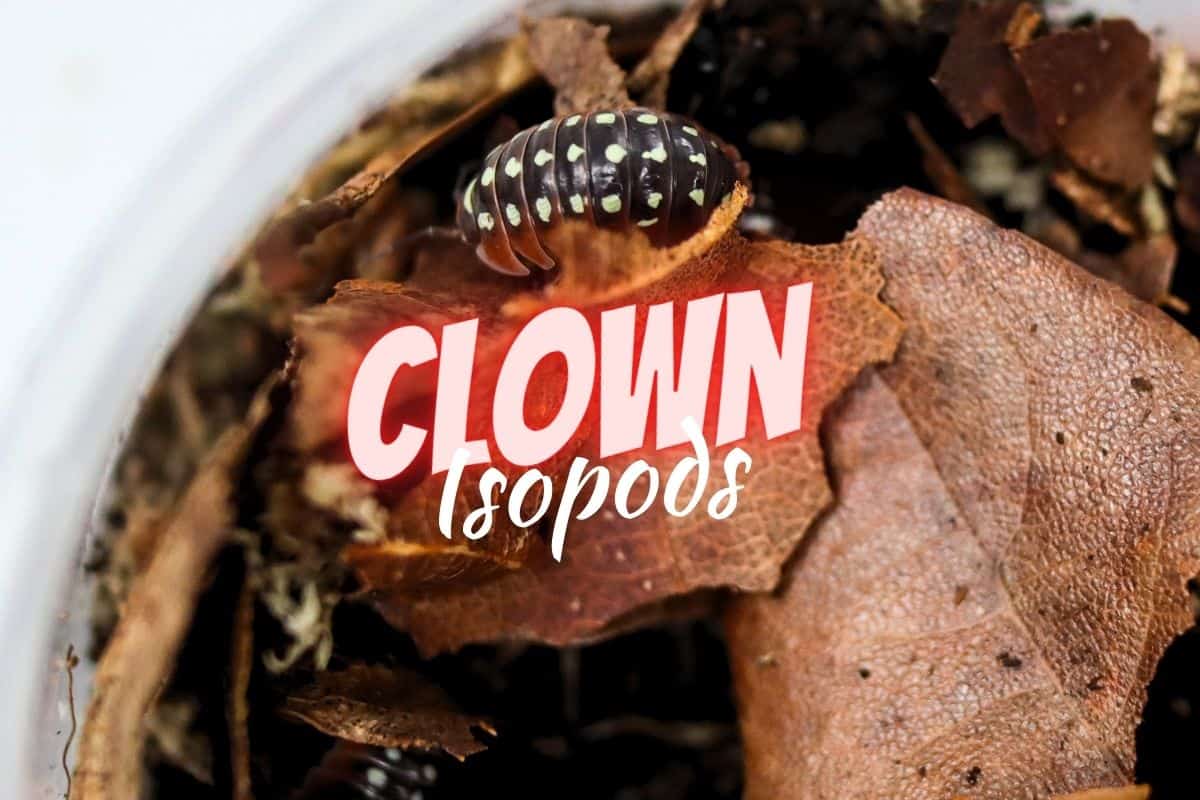
Clown Isopods are just like their wacky human counterparts: bright, colorful, and sure to stand out in a crowded scene.
Exactly what you want from an isopod pet, right?
That being said, their nuanced behaviors and environmental needs make them great in certain niche cases but not necessarily across the board.
Read on to find out how to best care for these enigmatic critters and when to use them in a bioactive setup.
Terrarium Tribe is reader-supported. When you purchase through links on our site, we may earn an affiliate commission (at no further cost to you). 💜
A Quick Overview of the Clown Isopod
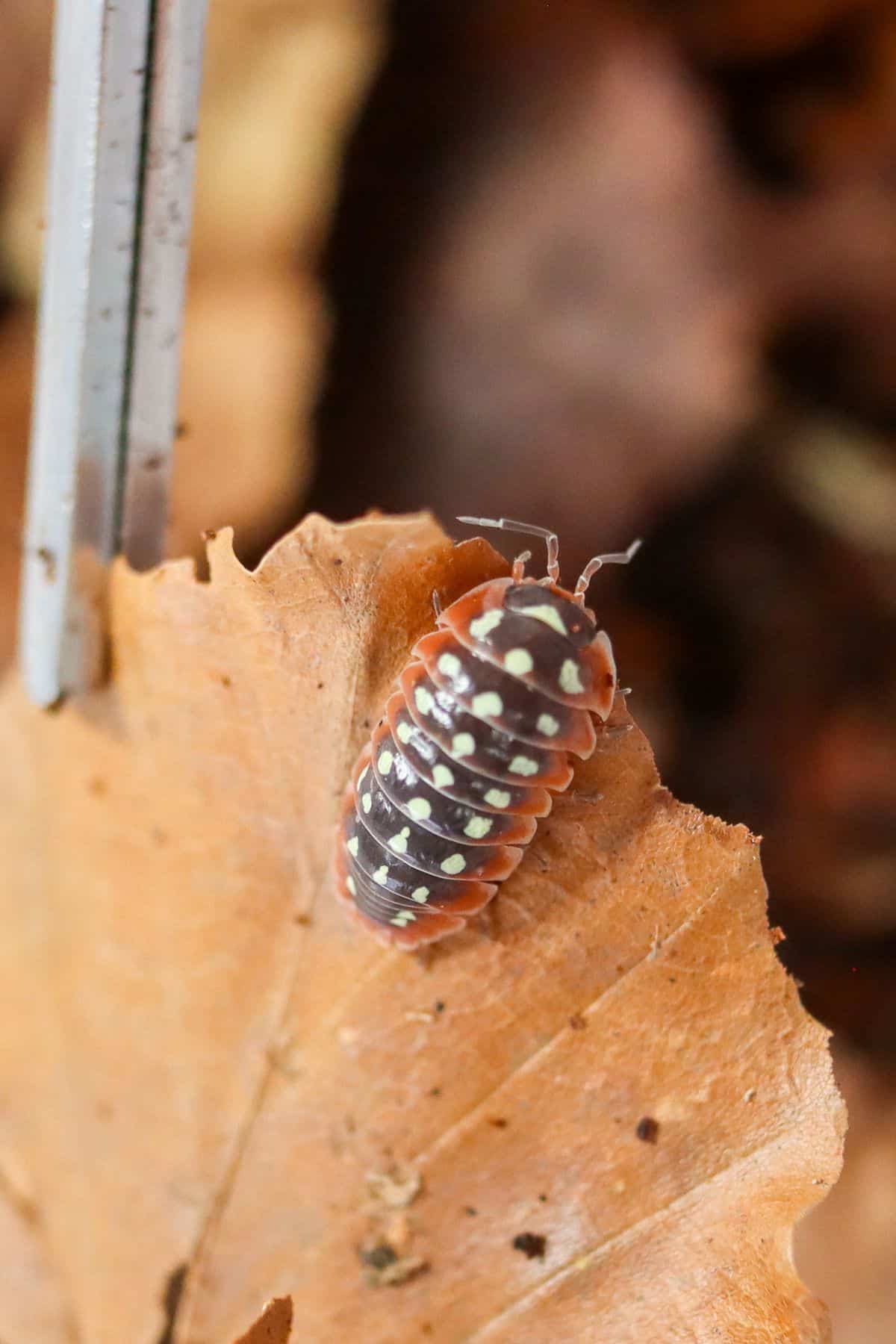
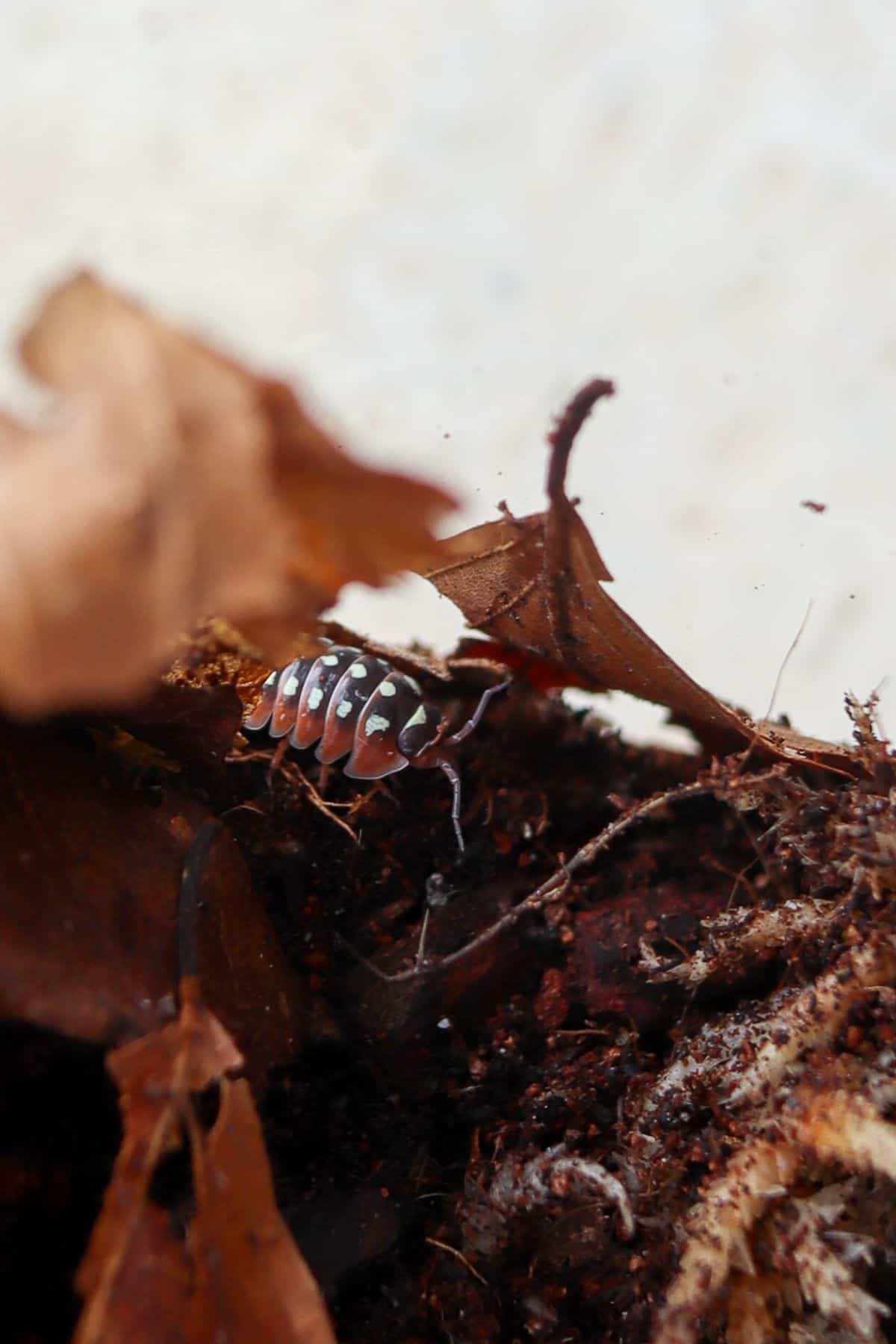
Clown Isopods (Armadillidum klugii) are named for their characteristic spotted colors, which come in a variety of yellows and creamy whites – depending on the variety.
Besides just being fabulous, they’re probably a natural defense mechanism to deter would-be predators.
Personally, I’m not sure they make a convincing Black Widow Spider… but I definitely wouldn’t eat one. Hopefully, the same could be true of any vivarium frogs and lizards, too.
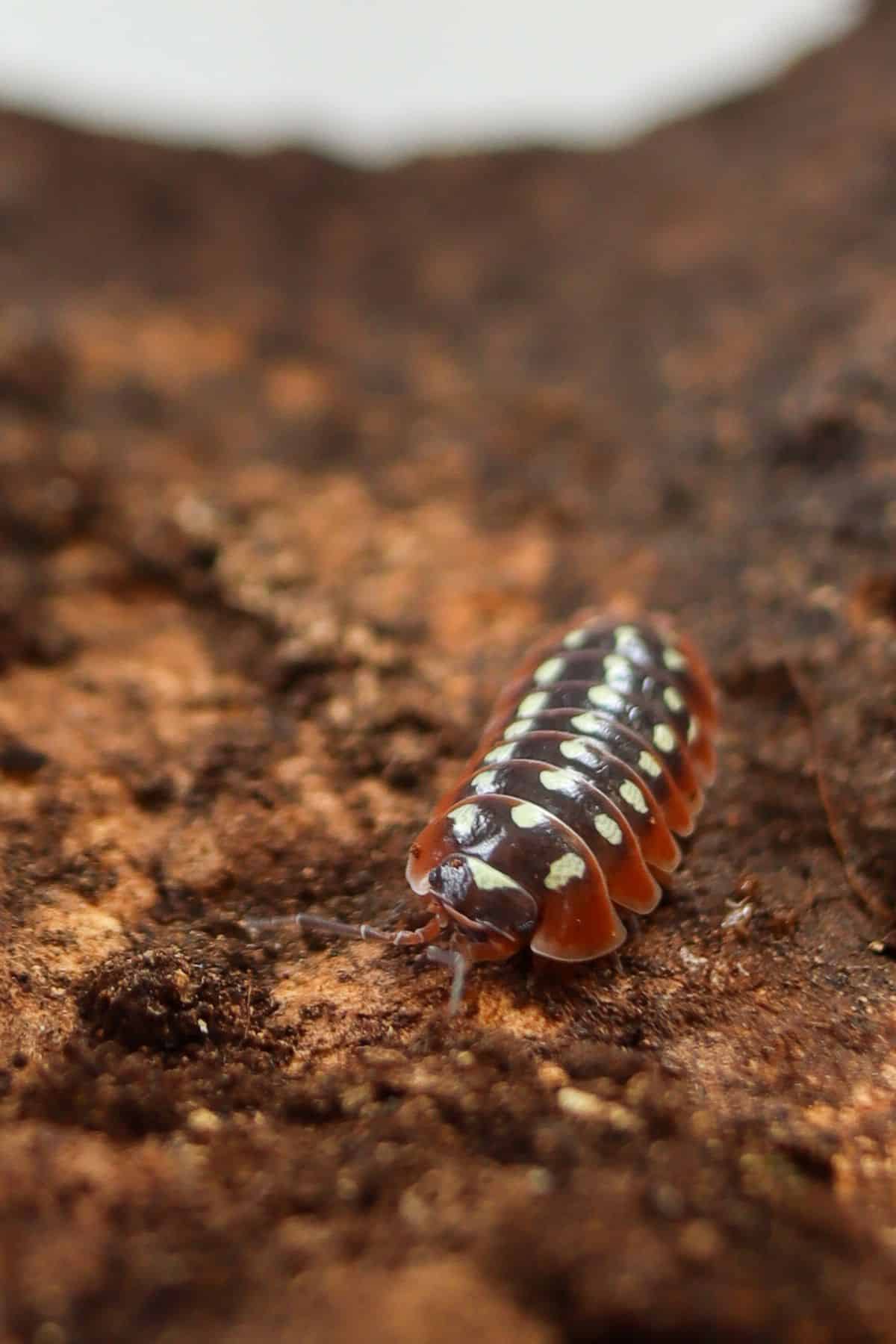
Interestingly, their temperament appears to match their evolutionary adaptations because they tend to be quite shy and avoidant. Not something you’d expect from something called a Clown Isopod, right?
Besides their spots, Armadillidum klugii are also further labeled for the places they originated from.
Giving rise to the popular “Dubrovnik” and “Montenegro” varieties (from the Balkan regions of Europe, no less), each with its own unique smattering of bright colors.
Montenegro looks more on the red side than their Croatian counterparts and has colored spots vs. simple white spots.
Okay, now we’ve covered their characteristics, let’s move on to their care.
Clown Isopod Care
Habitat
For some reason, Clown Isopods are often slow to get started in fresh cultures.
Losing some in the initial stages is seemingly quite normal, too. They don’t take too well to travel.
So, if you’re planning on adding them to a bioactive vivarium/terrarium of any kind, it’s worth culturing them separately to get their numbers up.
As a medium-sized isopod species, they measure up to around half an inch (or just over a cm). That means you can get away with a reasonably sized culture container. A shoebox size should be plenty.
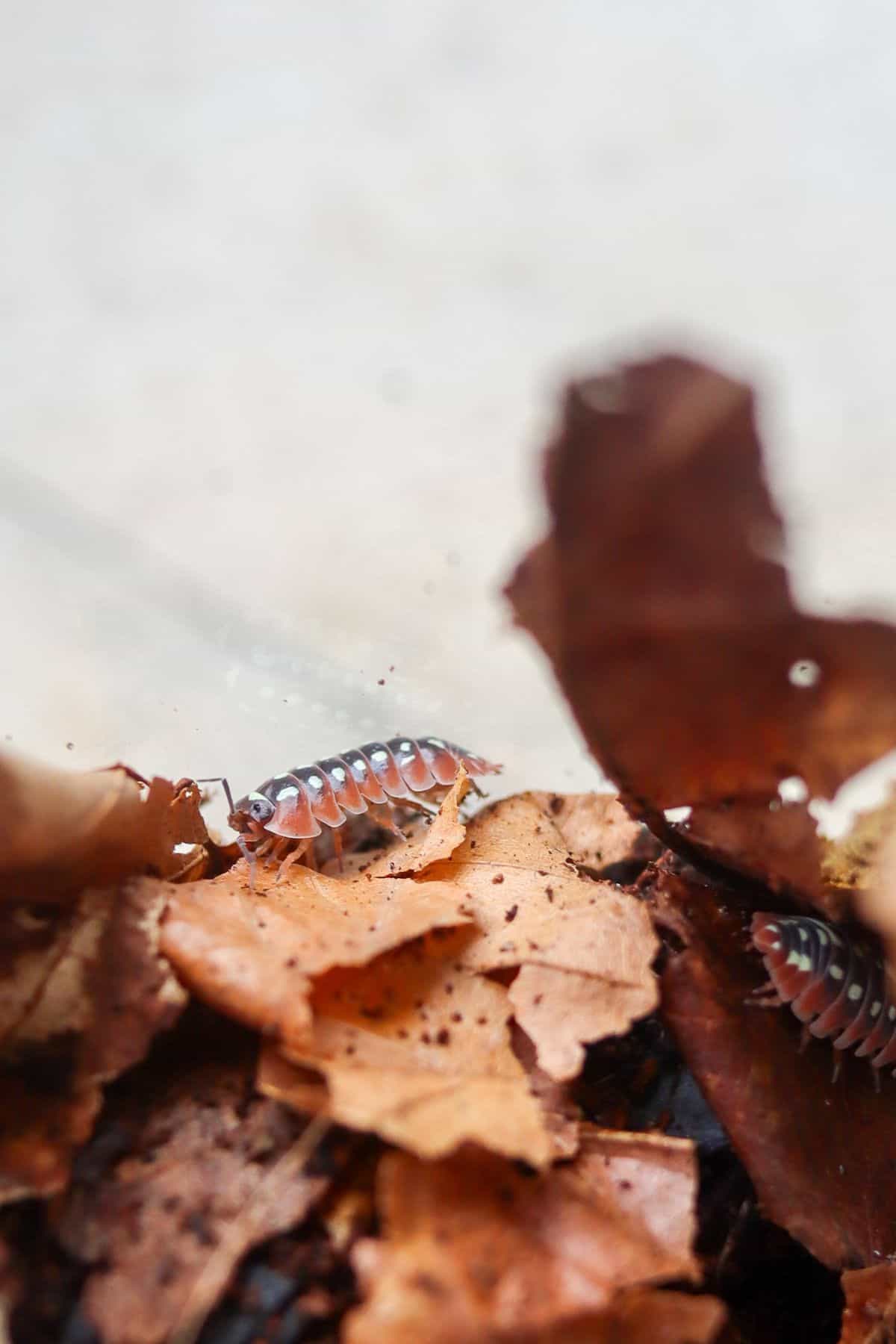
However, your chosen habitat will need lots of ventilation.
Make sure to find (or fashion yourself) a box with plenty of ventilation holes around the sides and the top of the container.
You can always cover your ventilation with mesh to prevent any jailbreaks, but to be honest, the sheepish nature of these isopods means they’re unlikely to attempt anything. They seem to prefer to burrow rather than climb.
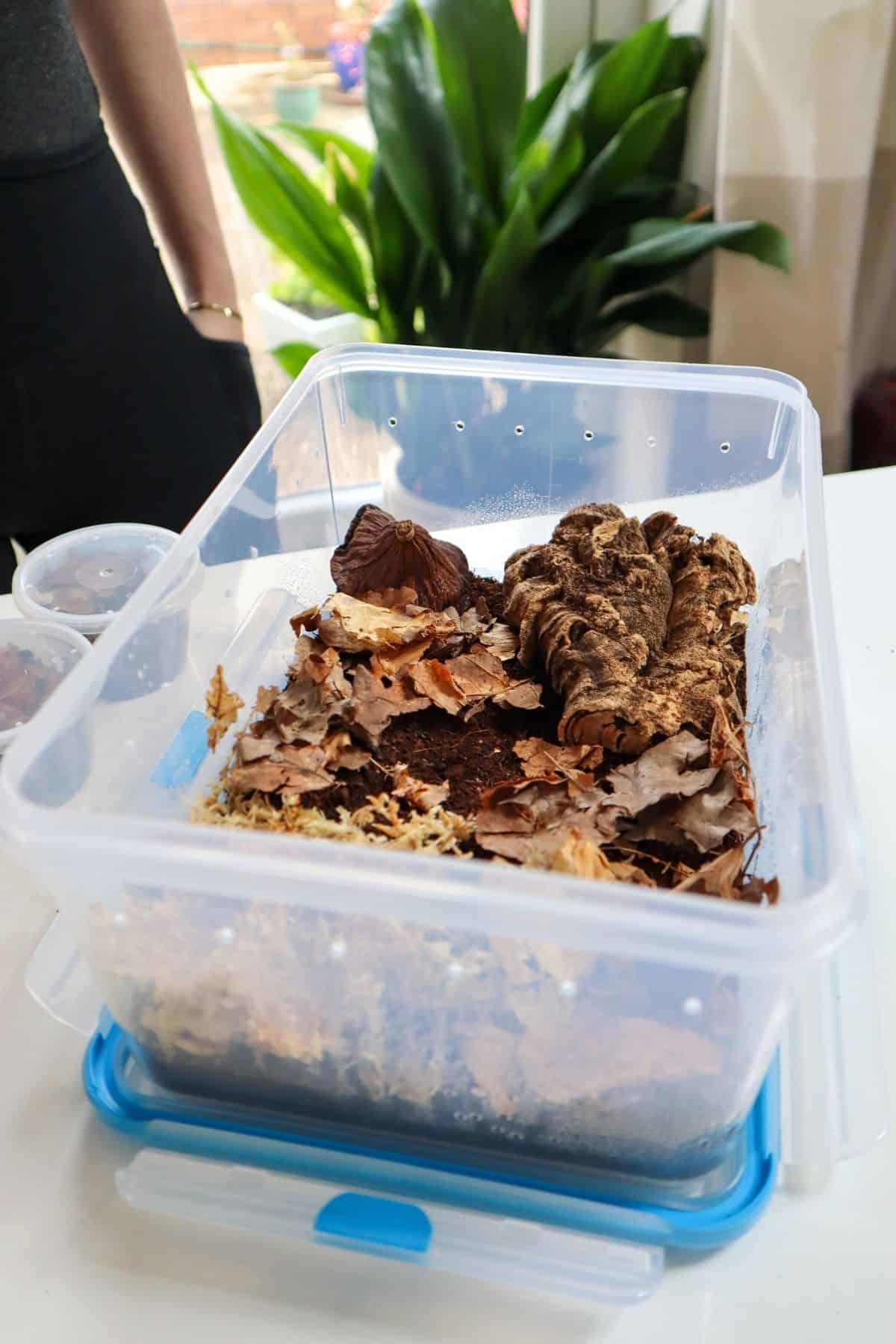
Finally, as always, these isopods love some cork bark in their habitat.
It’s their favored hiding spot, and it’s a great place to help them calm down and self-regulate. Even just a small cork bark flat makes a big difference.
Substrate
Many experienced breeders recommend a strong moisture gradient with this species.
Suggesting that Clown Isopods prefer a dryer environment overall, with a more localized wet area to help them regulate when necessary.
So, clearly, a super humid tropical terrarium would not be the best fit… Especially those with automated misting systems that are going to water the whole environment indiscriminately.
On the flip side, this positions them well as potential cleanup crews in dryer bioactive setups.
It’s good to have options for all setups of all kinds, right?
To achieve this moisture gradient, you’ll want at least one area that contains a moisture-retentive substrate. Of course, you can still use a tropical substrate (e.g., ABG Mix) throughout your enclosure if you’re strategic about where you’re watering.
Or, if you’re using these in a more arid setup, you can keep the watering localized to one corner.
Humidity and Temperature
The ideal temperature for Armadillidium klugii is pretty straightforward.
A typical room temperature of 70-85°F should be just fine, but you might find they’re more prolific at the higher end.
So, if you’re breeding your Clown Isopods or just starting out with a new culture, it might be worth pumping up the temperature a little to get them going… In more ways than one.
When it comes to humidity, the ideal amount appears to be up for debate.
Of course, all isopods need a minimum humidity level in order to breathe (they are crustaceans, after all). But if you find they’re happier in dryer conditions, you can probably get away with a lot less than you typically would.
Anything above 50% is fine for most isopods, and it’s easily achievable in a closed container. So, as long as you’re adding some level of moisture to your container, I’m sure you’ll be fine.
Food Requirements
The standard isopod diet of decomposing leaf litter and softwoods still works a treat for this species.
They’re not overly fussy, and you can easily supplement them with all manner of vegetable scraps from your kitchen. I’d add just a small bit at a time and stick to dryer things to prevent unwanted mold outbreaks.
Though, as with other species with a hard calcified carapace, you’ll find Clown Isopods appreciate a higher proportion of both protein and calcium in their diets.
Our Isopod Superfood Blend is packed with calcium, protein, and nutrients – everything they need in each sprinkle.
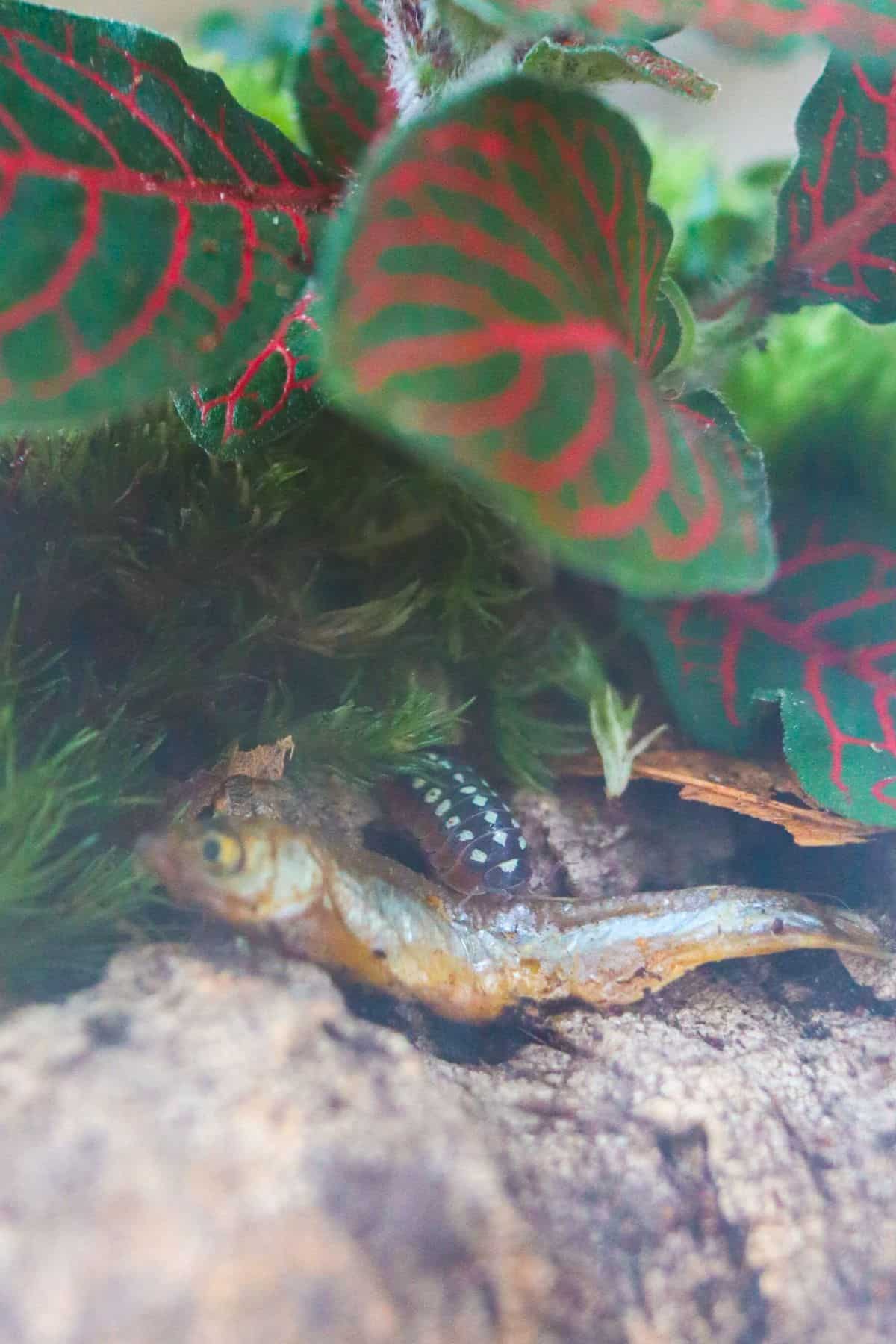
One thing to note with Armadillidium is that they can enjoy snacking on soft plants and mosses from time to time.
So I wouldn’t put them in with your prized plants!
I’ve recently tried them in a simple planted terrarium to see if they favor some of the more common terrarium plants like moss and Fittonia.
Are Clown Isopods Right for Your Setup?
Clown Isopods are bold, beautiful, and surprisingly versatile.
In display enclosures, they can bring some much-needed visual contrast – and in the right bioactive setup, they can pull their weight as part of a cleanup crew too.
In reality, they’re not the most moisture-dependent species, nor the most protein-hungry, which makes them a comfortable middle ground for many keepers.
If you’re ready to get your own troupe, you can buy Clown Isopod cultures directly from our store.
Still comparing options? It can help to zoom out and explore how different species behave. Our full guide to choosing between isopod types breaks down temperament, moisture needs, and difficulty so you can match the species to your enclosure (not the other way around).
And if you’re ready to build your colony, you can browse the current live isopod selection in our store to see what’s available.
