

Some plants look perfect in sealed glass – for about five minutes.
The real test is what happens once humidity builds, airflow drops, and the terrarium starts behaving like a closed system.
Plenty of plants can tolerate those conditions for a while. Far fewer stay happy in them long-term.
This guide focuses on the compact, humidity-loving species that (genuinely) suit enclosed terrarium conditions, rather than the ones that slowly start plotting their escape.
The Best Types of Plants for Closed Terrariums
Spend enough time with closed terrariums, and you begin to recognise the usual suspects – certain plant types show up again and again, for good reason.
Here’s what works best in our experience, both in categories and example plants.
Compact Terrarium Ferns
Ferns are perfectly suited to life in closed terrariums, and nothing delivers more on the texture front.
The best terrarium ferns are all relatively compact, easy to care for (so no Maidenhair Fern, I’m afraid), and ever so pretty. I find the best are often mini dwarf varieties of popular houseplant species.
It’s true – good things come in small packages!
We’ll start with the ever-popular Boston Fern (Nephrolepis).
Vibrant green, with sword-shaped fronds, they bring so much character and verticality. A few amazing varieties always seem to find their way into our projects – I can’t help myself.
1. Lemon Button Fern (Nephrolepis cordifolia ‘Duffii’)
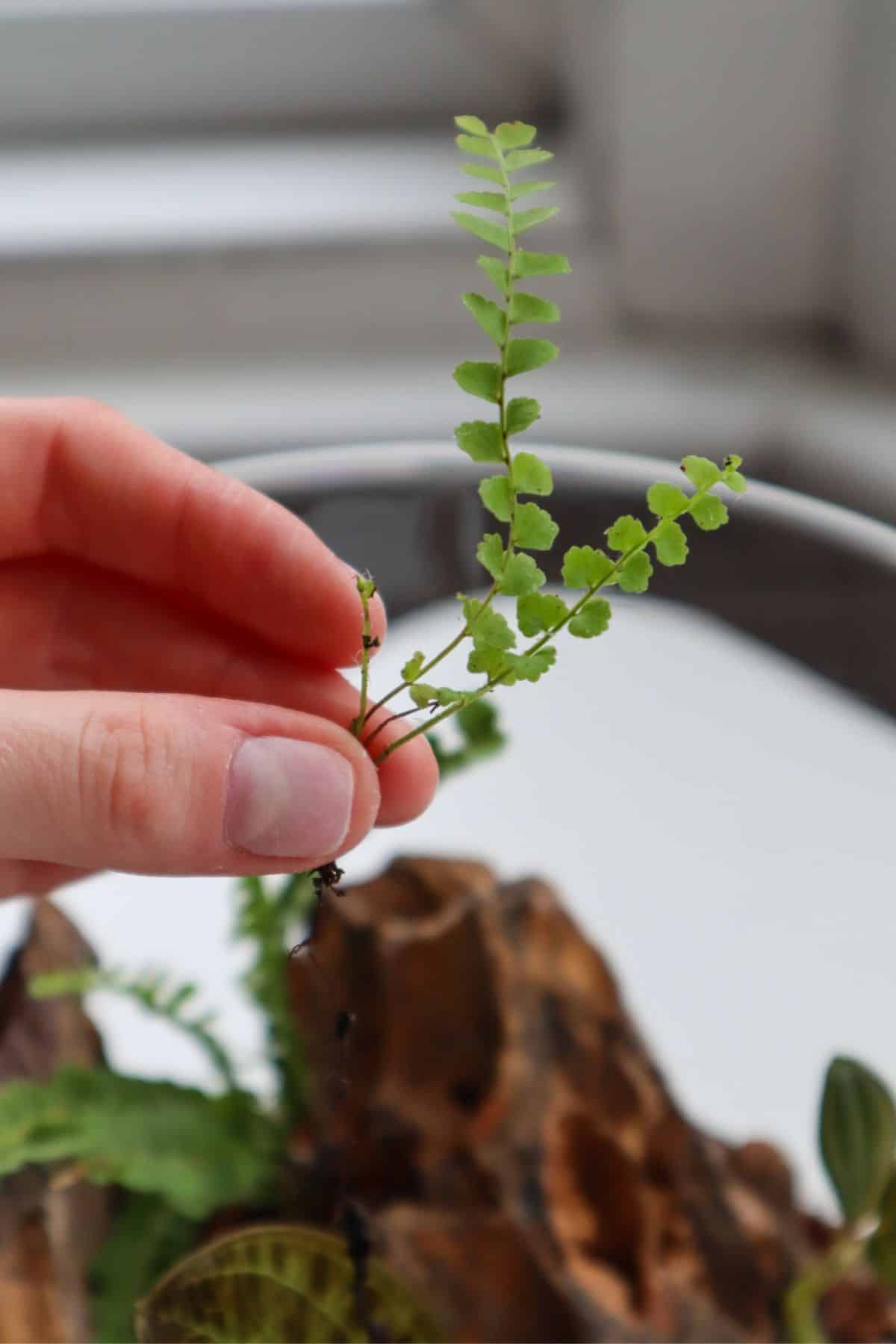
Endlessly versatile and super petite, the Lemon Button Fern is our go-to fern choice. Particularly for smaller closed terrariums.
Despite their minute size, the overarching fronds really lift a scene, and the ability to be divided into tiny clumps of fronds really helps with placement.
Seriously, you can turn one plant into 5 and pop them all over your terrarium.
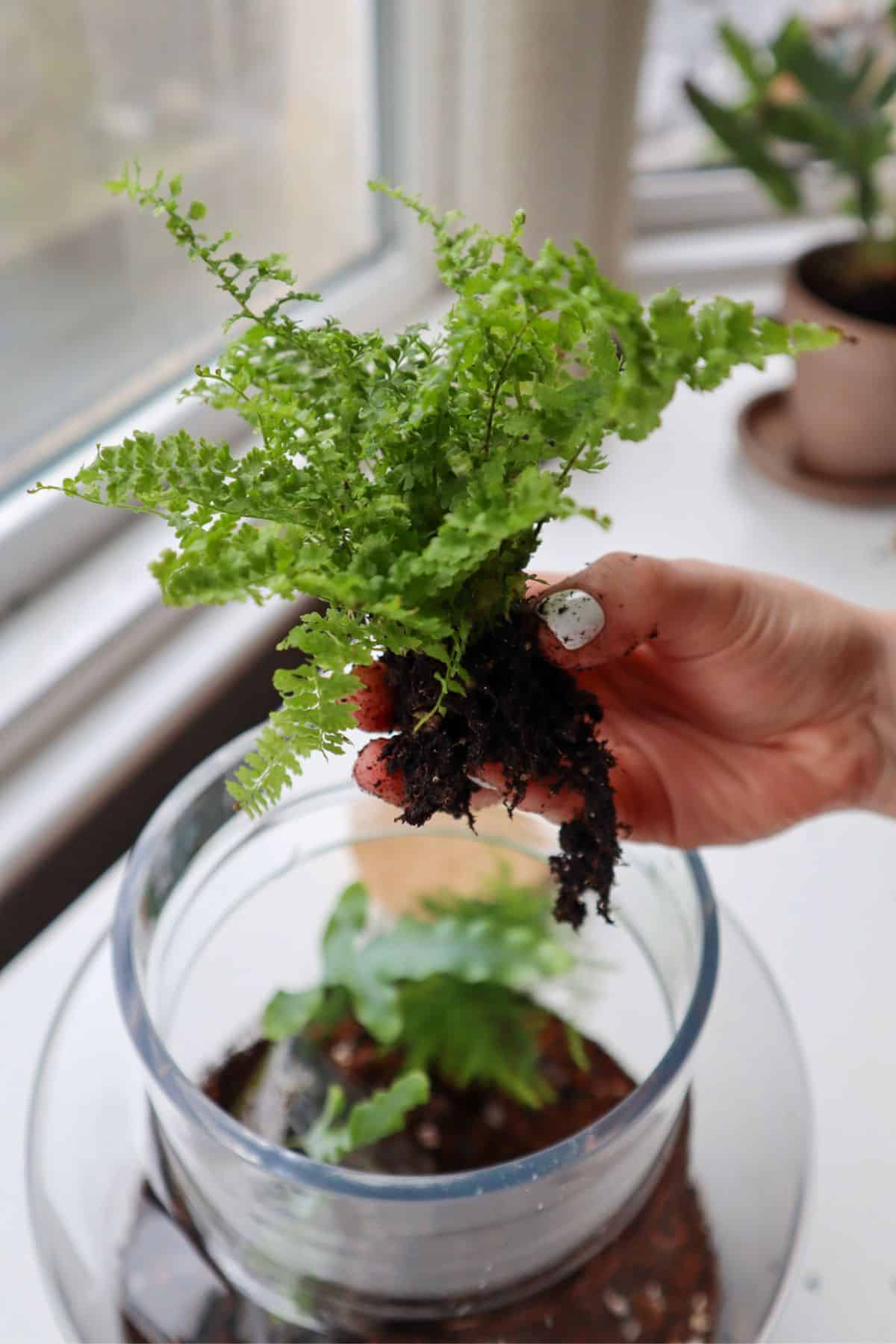
2. Fluffy Ruffles Fern (Nephrolepis exaltata ‘Fluffy Ruffles’)
Come on, can the names get any cuter?
The Fluffy Ruffles Fern is one of the more compact yet “full-looking” ferns, making it incredibly easy to use. It’s one of our favorite small terrarium plants.
Pop it in the foreground for an instant texture boost.
3. Heart Fern (Hemionitis arifolia)
These heart-shaped leaves are bursting with charm.
I like to use them both as a centerpiece and a filler, depending on how fabulous my foliage plants are by comparison.
And though not a dwarf species, it still only grows up to ten inches tall. So, that’s pretty manageable, and the stalk-like fronds are very easy to trim back at the base.

Honorary mentions
- I love a Crocodile Fern (Microsorum musifolium). The combination of their scaly, broad-leafed fronds and electric green coloration is amazing. But they do get quite big, so they’re not quite as versatile.
- The Button Fern (Pellaea rotundifolia) is a dainty-looking fern with fronds that spill in all directions, full of little button leaves. It’s very pretty but a bit harder to style.

Just remember, moisture-loving ferns like these will do best in a terrarium substrate mix that both retains moisture well and provides enough aeration to let their roots breathe.
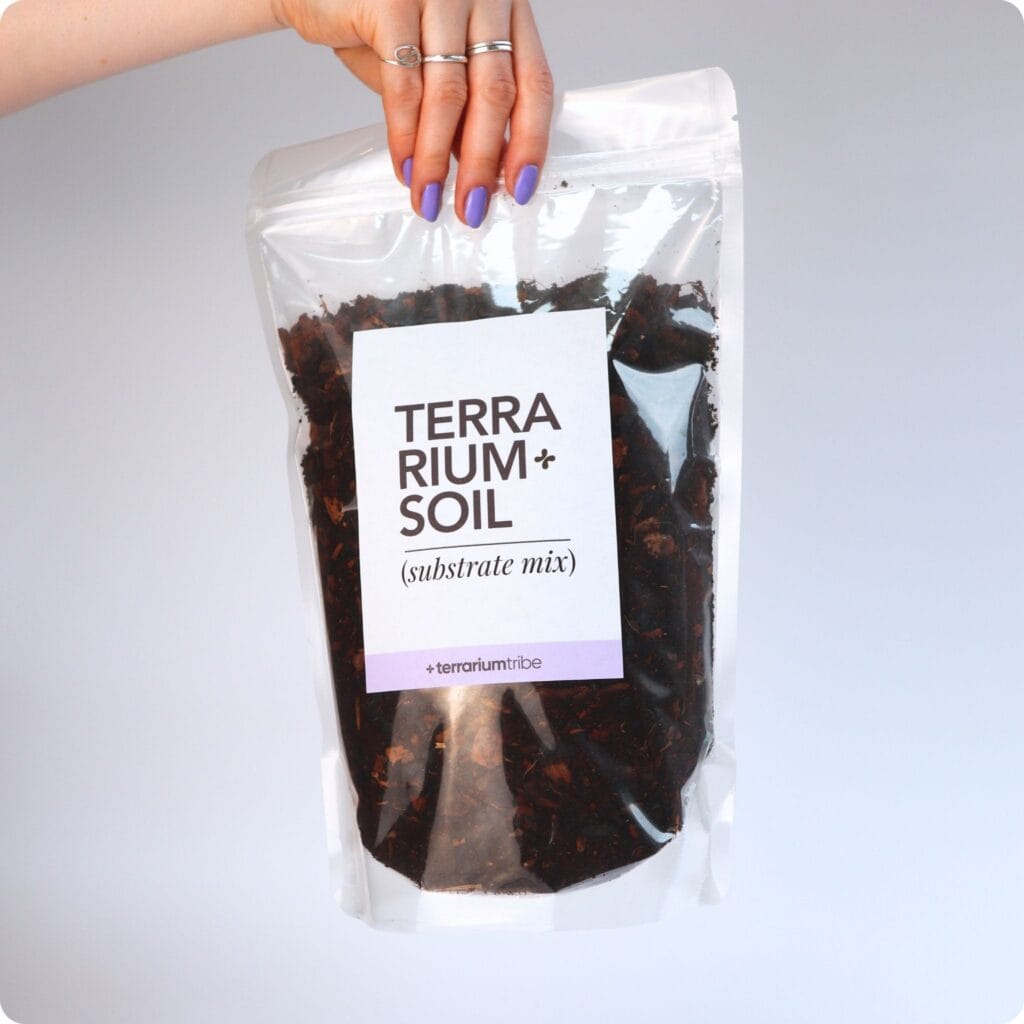
Terrarium Substrate Mix (Premium Blend)
A carefully crafted blend that balances all of your plants’ needs and sets you up for long-lasting success.
Beginner-friendly • Ready to use
Delicate Terrarium Vines
Terrarium vines can include a wide variety of trailing, climbing, and creeping tropical plants.
Generally, anything that grows along the ground of a terrarium or climbs up the sides.
The likes of the classic Pothos come to mind, but those things can grow enormous (our potted Pothos was over 10 feet long).
So, it’s better to think on a smaller scale here for a closed environment.
I favor the small, delicate terrarium vines. Often, you don’t even need to plant them. You can just snip them up and scatter them around your scene.
Over time, they’ll grow to weave amongst the moss and hardscape, adding a dynamic element of natural wildness.
Plus, they tend to be better epiphyte choices for closed terrariums. Where other epiphytes (like Air Plants) can struggle in low airflow environments, these little beauties do fine.
1. Pilea glauca ‘Aquamarine’
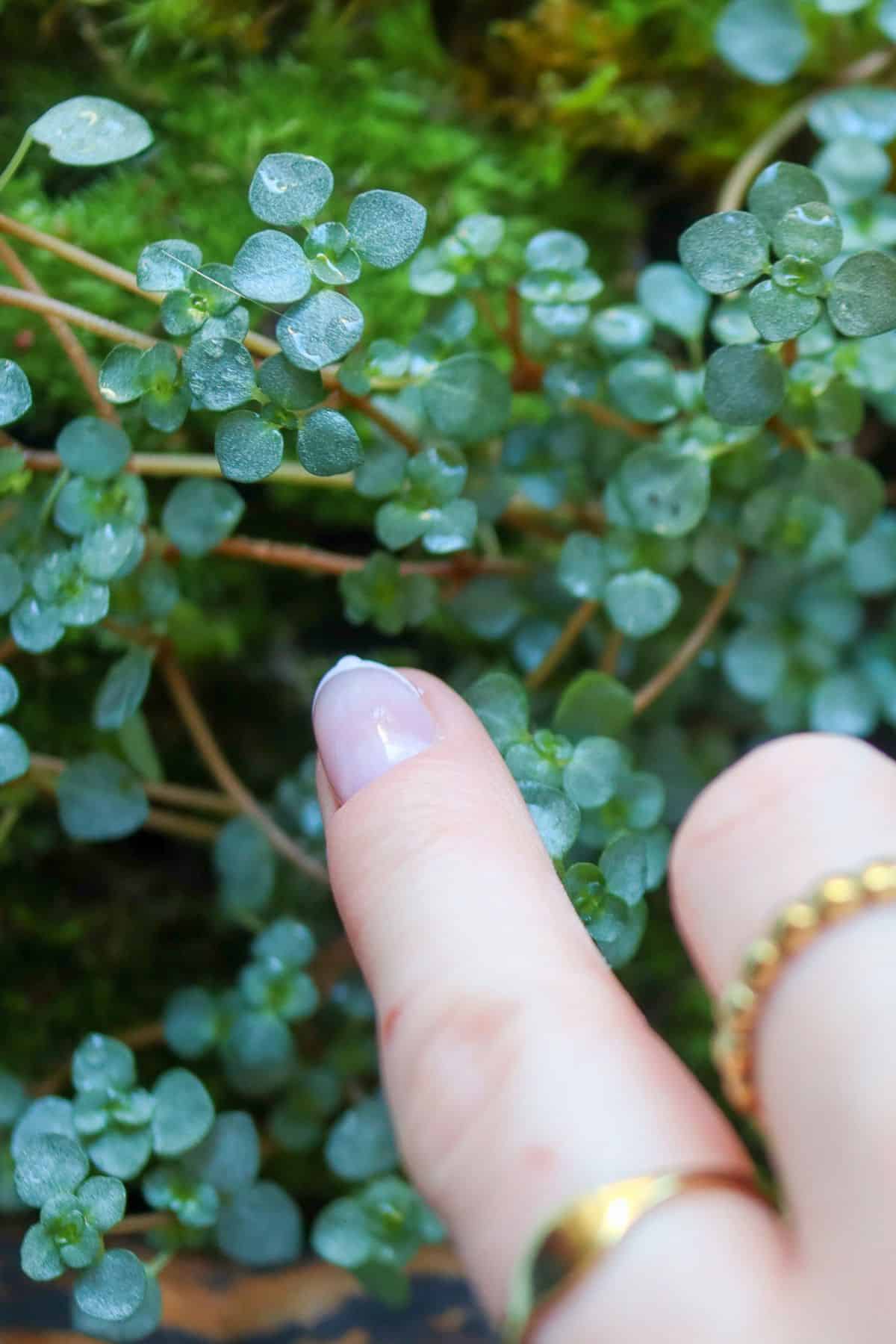
With dainty metallic gray-green leaves, Pilea glauca is such an elegant little plant.
The colors really contrast with the classic tropical greens of a typical terrarium.
It’s an ideal choice for terrarium ground cover or as a simple accent piece. Once it’s formed a full mat, its vines will continue to wander over surfaces.
2. Ficus pumila (Creeping Fig)
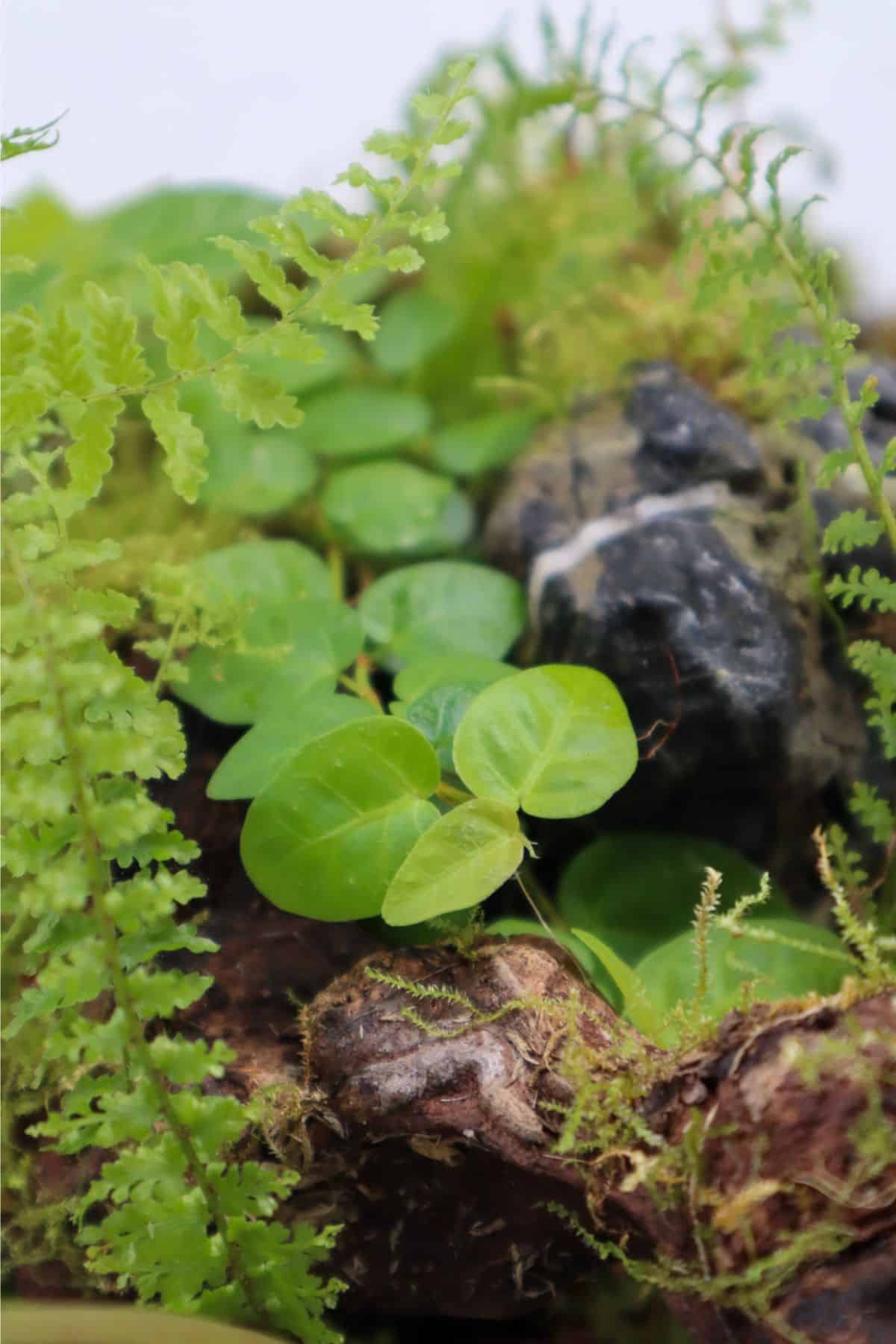
Ficus pumila is a mainstay in the naturalistic terrarium world.
It’s a very strong grower, thriving in humid and moist conditions. Just a few cuttings can easily fill out all areas of a terrarium container.
So it may need a little pruning every now and again, but you’ll certainly have no problems growing it.
The vines help create a great sense of scale, and their free, unrestrained growth provides a more natural look.
3. String of Turtles (Peperomia prostrata)
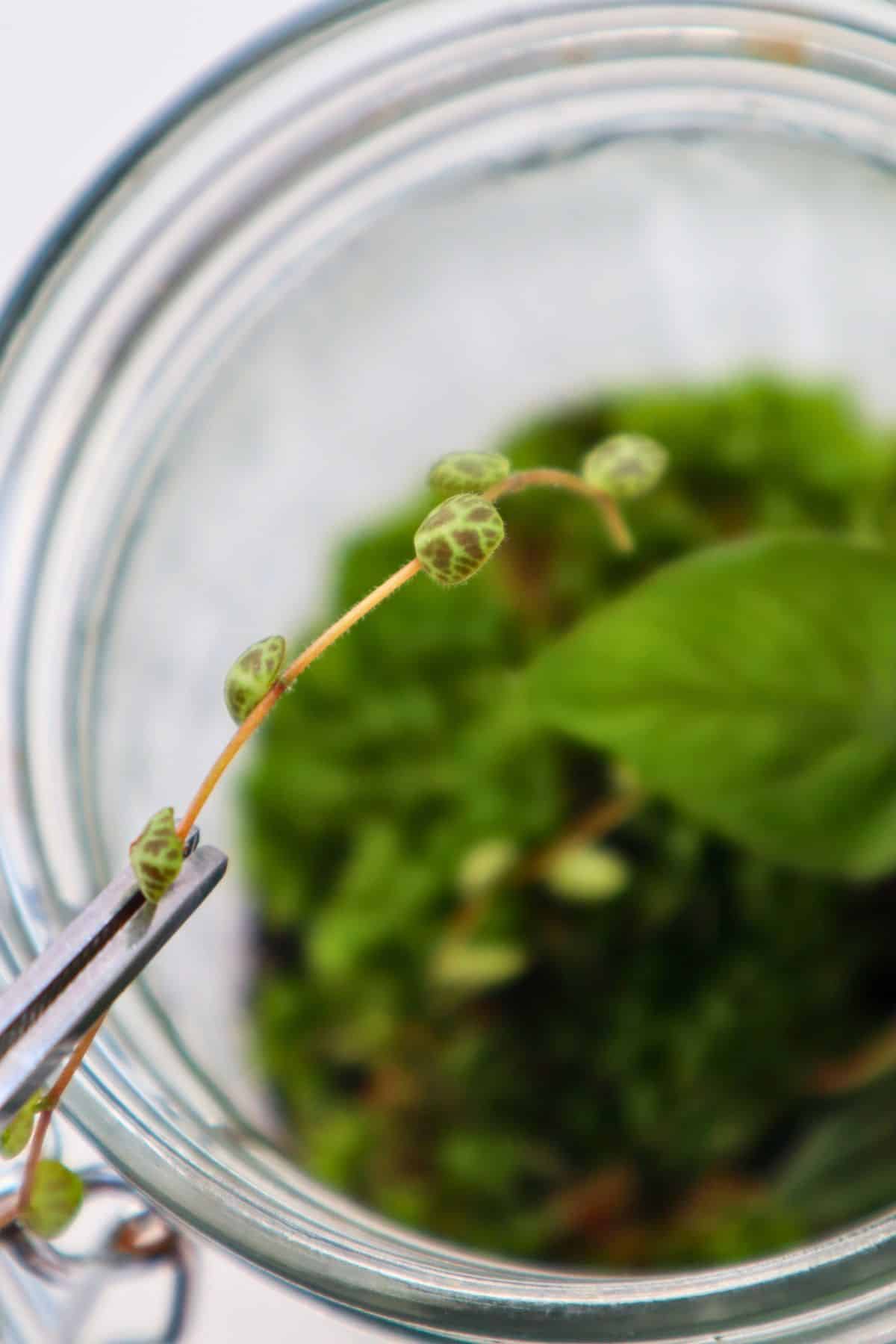
As a tropical semi-succulent, the String of Turtles has somehow done the impossible and become popular in the terrarium, succulent, and houseplant worlds simultaneously.
Quite the achievement for such a tiny plant.
That said, it really is a lovely little vine. It’s easy to grow and even easier to propagate. Even planting a leaf cutting is often enough to grow a new plant.
4. Peacock Plant (Selaginella uncinata)
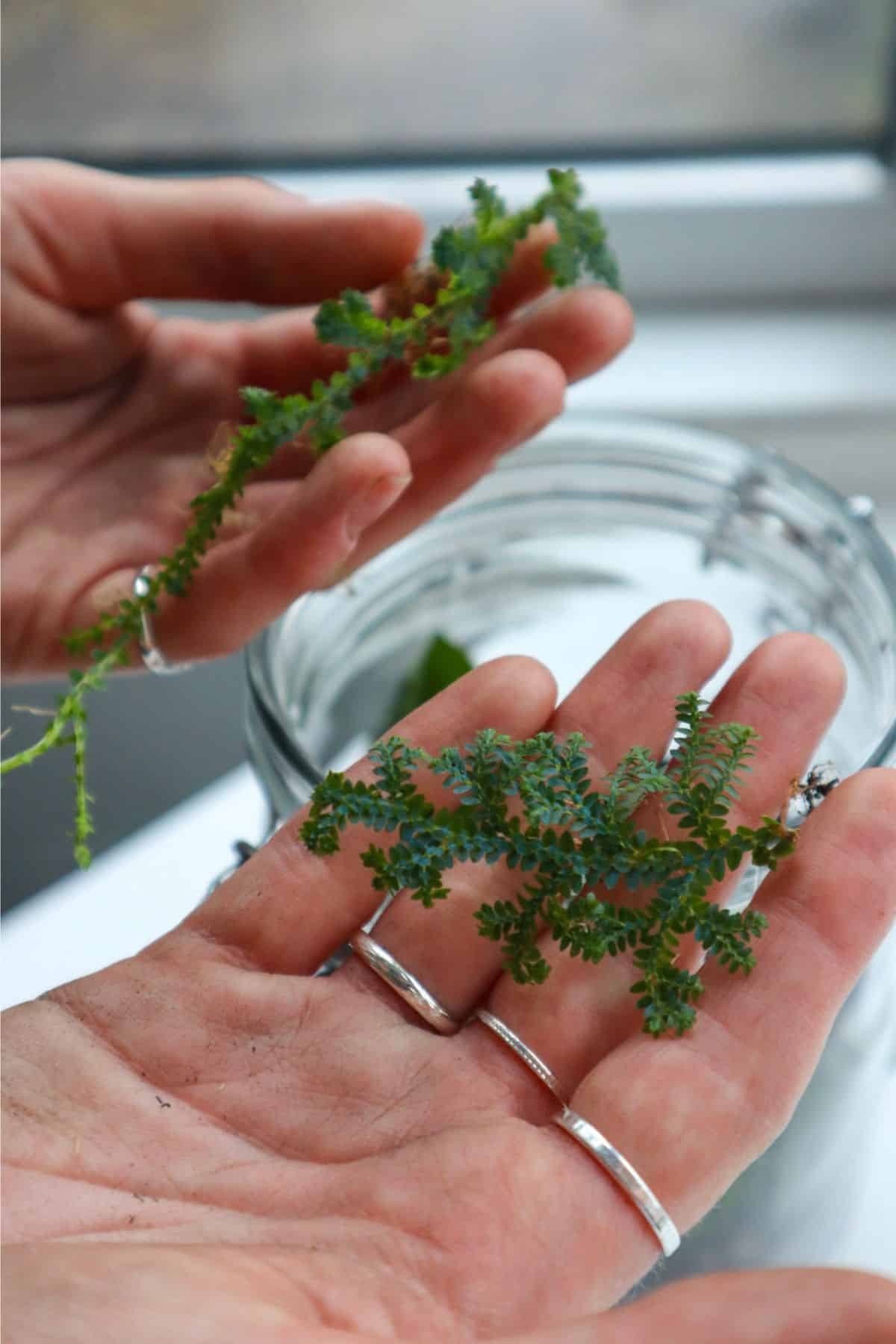
Selaginella are the best-kept secret about tropical terrariums.
Little known in the houseplant world, but absolute stars here in the terrarium hobby. They’re technically somewhere between a fern and a moss, but they act more like a vine.
Selaginella uncinata is by far the prettiest, with iridescent blue foliage
Incredibly hardy, perfectly suited to terrarium life, and easy to grow – the perfect beginner terrarium plant?
Showstopper Foliage Plants
“Foliage” isn’t an exact plant category and contains many types of plants.
It’s more of a useful way to group plants that are prized for their stunning leafage rather than their flowers. Think broader, more vibrant, or unique leaves.
So this group includes many different plant types, from lush tropical greenery to shrubs and palm-like plants.
1. Fittonia sp.
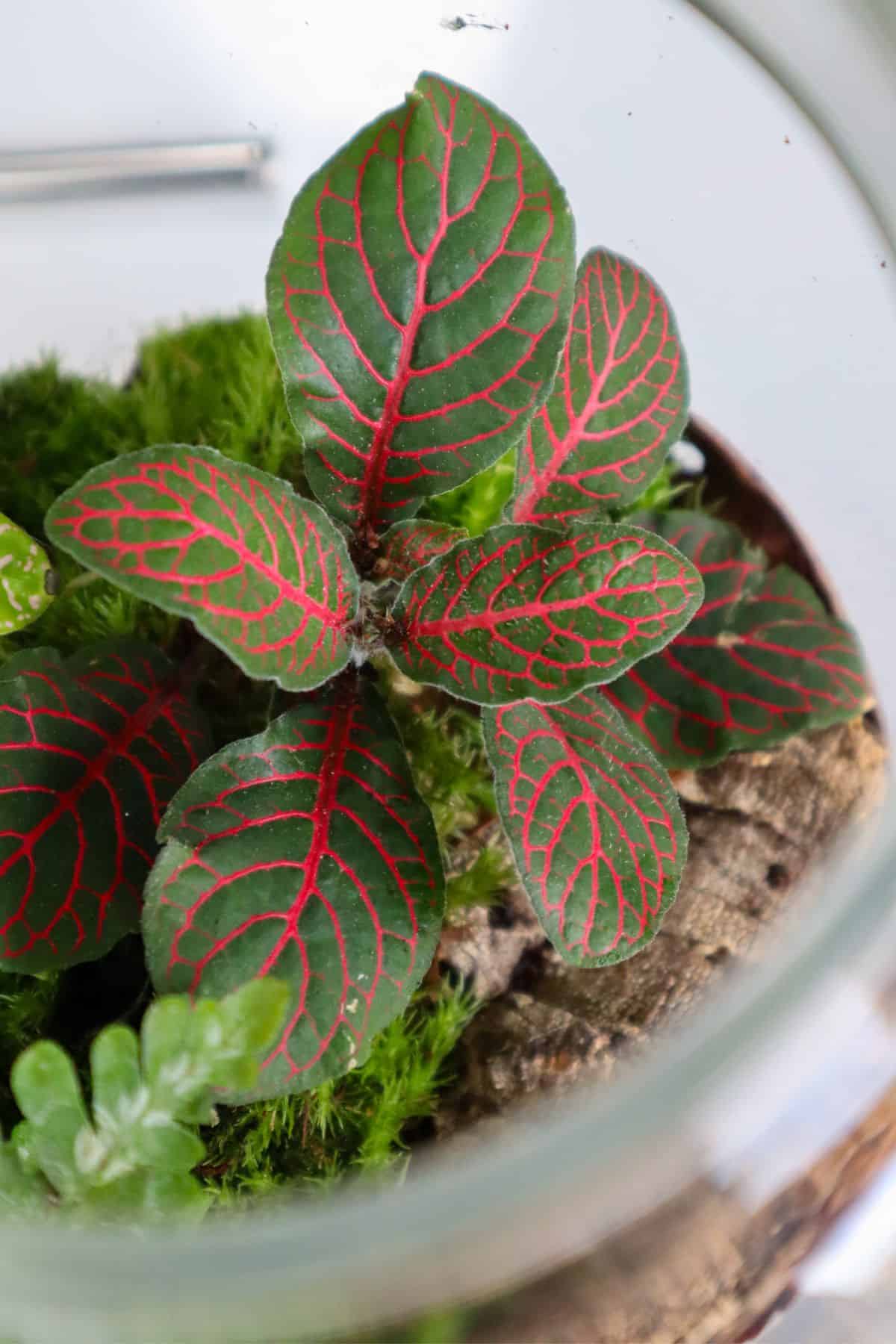
Nerve plants are a truly classic terrarium plant.
Tropical evergreen perennials with delicately veined leaves. They come in a variety of beautiful colors, from pink, white, and green.
Plus, they’ll typically only grow to about 6 inches high, but they like to spread wider.
The Polka Dot Plant is another popular choice that ticks a lot of the same boxes.
2. Pilea Moon Valley (Pilea mollis)
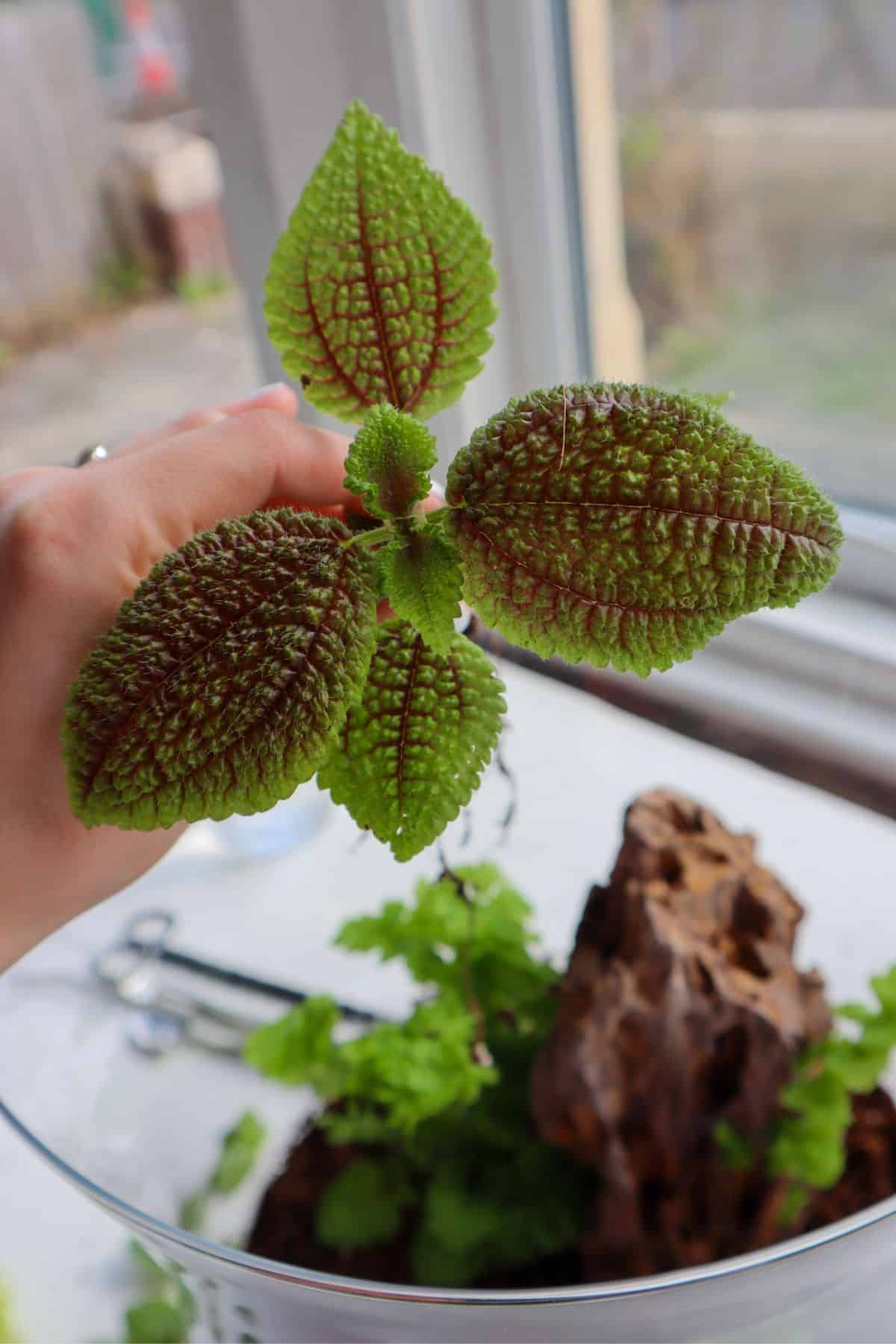
Though the Aluminum Plant (Friendship Plant) is probably the most popular Pilea plant species, I think the Pilea Moon Valley is much prettier.
It also tends to stay more compact, whereas the former is more of a bush.
3. Little Tree Plant (Biophytum Sensitivum)
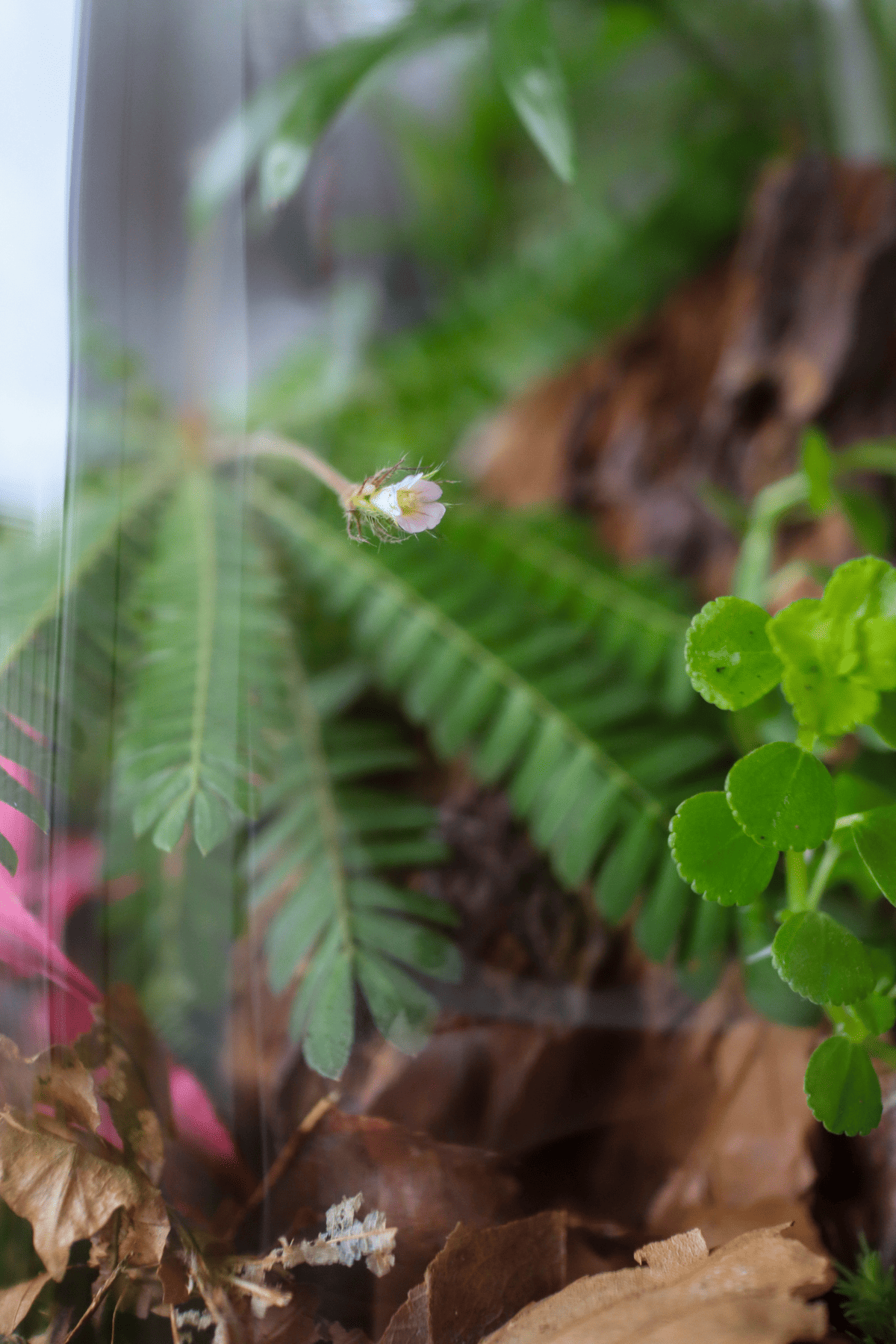
This tiny tree-like plant is adorable and loves high-moisture environments.
It never grows beyond a few inches tall, and so it’s great for creating a palm-like tropical aesthetic on a micro level. It’s one of our favorite tropical terrarium plants.
4. Earth Stars (Cryptanthus bivittatus)
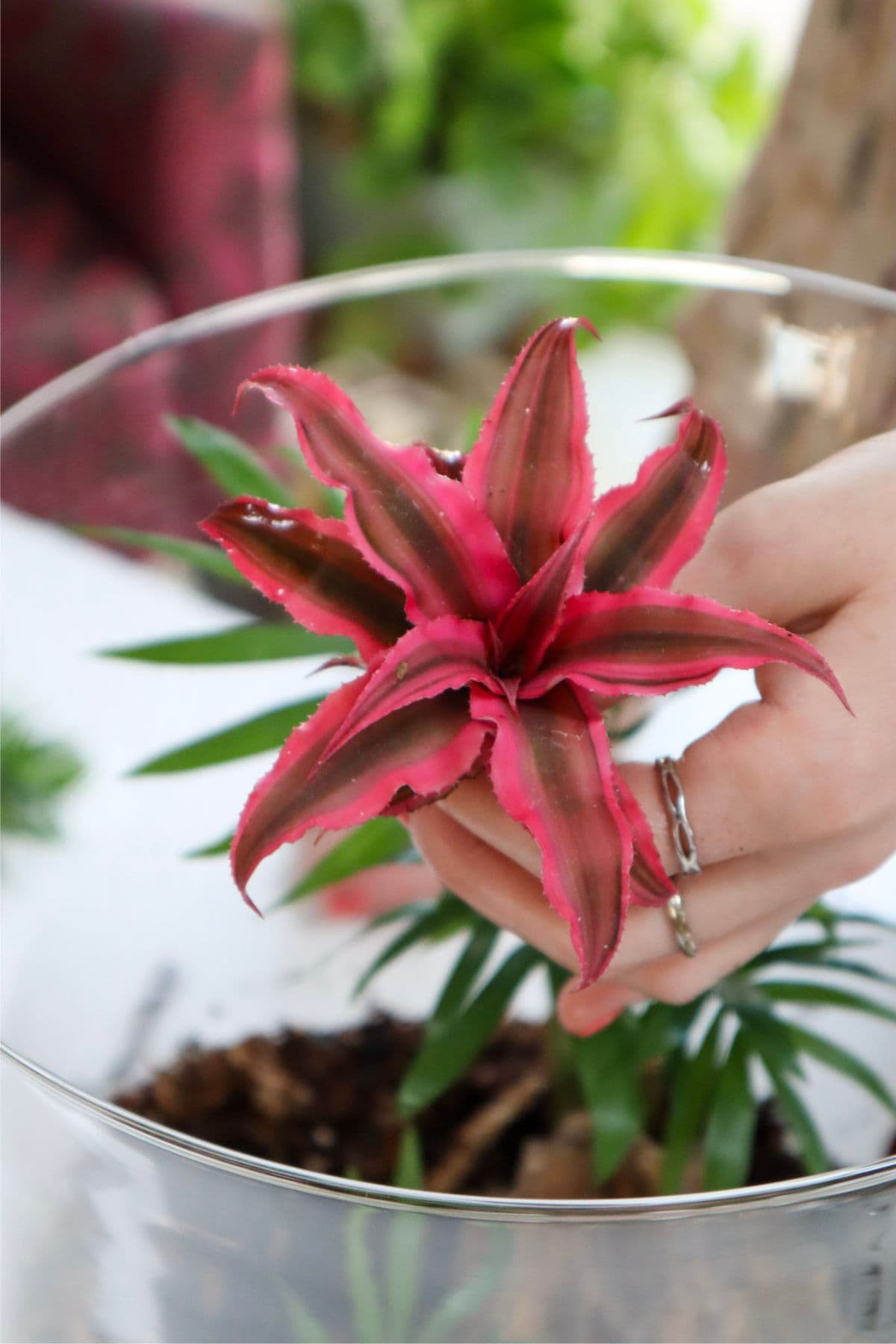
Something completely different to finish on.
These are low-growing, low-light-loving little superstars. Definitely one of the best low-light terrarium plants (they can really thrive in difficult conditions).
Coming in all manner of vivid colors, they’re completely at home on the tropical forest floor.
Why Plant Choice Matters in Terrariums
Plant choice is only one part of what makes a sealed terrarium work, but it’s one of the most important.
As we’ve learned, the species that do best here tend to stay compact, handle constant humidity well, and cope with the low airflow environment that a closed terrarium setup creates.
Of course, closed terrariums are just one end of the spectrum. Open builds, drier setups, and low-humidity containers all place very different demands on plants. Which is why something that thrives here might struggle elsewhere (and vice versa).
If you’re ready to put those plants to work, my practical terrarium build guide walks through the full process from container to planting.

Really helpful information, thank you
So excited about developing my first terrarium
Very very helpful!! Is there a particular type of soil or can I use my regular potting mix?
Also I live in an area that doesn’t get a lot of natural light & I rely on artificial grow lights for my plants through winter. is this something I can do for a closed terrarium as well?
I’m glad you found it helpful Samantha 😀 I’d generally steer clear of regular potting mix for tropical terrarium plants. Check out https://terrariumtribe.com/terrarium-soil-substrate/ for a better option. And yes, you can absolutely rely on a grow light for terrariums. In many ways it’s easier, as it’s consistent and even light.
Would soil blend for succulents be ok?
It’s not great for tropical plants on it’s own because it doesn’t tend to retain enough moisture. If you can add some sphagnum moss and/or coco coir to a succulent soil mix then it’ll do a lot better.
Hello great article. I am looking to build a tall terrarium, about 6′ x 2×2 I would really like to do this with epiphtye type plants.
what would you recommend..
Thank you
All sorts! For smaller species you can look to the semi-aquatic plants like Bolbitis heteroclita ‘Difformis’ or smaller Anubias nana species (ferns like the Rabbit’s Foot Fern can work well for larger spots). Dischidia make great epiphytic vines, and Neoregelia can add some wonderful colour.
Hi! Great article! Do you think a Chinese dollar plant could grow ok in a closed terrarium?
Thanks Trisha! I have a few of those growing around my house but I’ve never tried them in a terrarium. I imagine they would grow just fine in a closed terrarium environment but they can get pretty big 😀
Yes I would think so! 🙂
Hi! I am looking to start a closed terrarium and love your list. It helps me out a lot. I was wondering what you recommend for artificial lighting? I am looking for something to fit my 30x12x12 aquarium tank (20 gallons) and that doesn’t break the bank. And how would you position the lights? (desk lamp, hanging from ceiling, on top of lid, etc.) How close should I have the lights to my terrarium? Any information would be super helpful!!
I’ll be producing an in-depth lighting guide soon, but if you’re already using an aquarium then it should be easy to find some fitted aquarium lights that’ll do fine 😀 It shouldn’t be too hard to find an inexpensive LED bar that fits directly over the top of the tank.
Hi there! This article was super helpful and I have never kept a terrarium before but my husband and I are currently trying to fix a lava lamp and should that fall through I wanted to try converting it into a small terrarium! Would something that shape/size work alright and if so would Venus fly traps work in there? I have mostly only kept succulents and the immortal pothos and money plant haha so I’m not very skilled yet and trying to create something I can maintain with my limited knowledge. 😀 thank-you again for the article!
Hi Meaghan, I’m so glad it was helpful for you! A lava lamp terrarium sounds like it could be tricky if it has a narrow opening but I’m sure it’s a fun challenge. I’d say go for it. 🙂
Venus fly traps most likely will die in a closed terrarium
Hello! I just purchased a mangosteen seedling and it sounds like it would be perfect to grow in a partially closed terrarium for the first few years, what are your thoughts?
I’ve never heard of anyone using that species specifically but yeah, I think it’d work. Worth a try! 🙂
Loving all these articles! I’ve always has a bit of an obsession with terrariums and have finally decided it’s time to make one 🙂
Would an Africian Voilet work in a closed terrariums?
Thanks
They work for sure, I’d just be careful to remove any dropped flowers/petals (they can lead to mold and rot problems).
Could use springtails tho
Awesome article, very helpful and a bit surprising. Thank you for sharing your knowledge. I have questions about peperomias. I have been using them as succulents! Though I do water them a lot more than my echeverias and crassulas. You mention string of coins and turtles. Do they need to be treated special when combined with topicals such as syngonium pixie and hypoestes phyllostachya? Also how can I use the “string of” plants hanging? I am thinking of using tall pieces of slate in my closed terrarium. If I can, how would I attach them?
Thanks so much Barbara! My String of Turtles plants have always fared super well alongside tropical plants in terrariums – I don’t treat them any differently in terms of care. And absolutely, mounting them to rocks and branches is a great method. 👍
Dan, I am encouraged and excited for my terrarium build. I’ll post pix when I get it done. Thanks for a great site.
Thanks for your list of good plants for a closed terrarium! I planted a Joseph’s Coat recently in my new closed terrarium, but I might have over watered it because this week I saw a fuzzy mold starting. So I treated it by wiping it out as much as possible with a swab of hydrogen peroxide, opened the top to let it air out, and put the terrarium in a brighter spot( but no sun). Now I wonder if I should just stick to ferns? Is the Josephs coat not a good pick?
I’ve never seen a Joseph’s Coat in a terrarium, they like full sun so they’re not an ideal fit – plenty of other plants to choose from 🙂
I’m hoping 2 use a Hosta plant 4 my terrarium on my windowsill will it grow with that much sun???????
I’ve never used a Hosta I’m afraid. As a shade plant, I wonder if a windowsill position might be too strong for it (depends on the direction of the window to the sun of course).