

Syngonium are a good middle ground for terrariums.
They like the warmth and humidity, they’re (usually) more manageable than the other aroid climbers, and they bring enough leaf shape and color to earn their space.
That classic arrowhead foliage is doing a lot of the heavy lifting here.
Some stay compact enough for smaller setups. Others are better as colorful feature plants. And a few are only really worth using in larger builds, where they have room to vine, climb, and stretch out.
These are the best Syngonium for terrariums, and where each one actually makes sense.
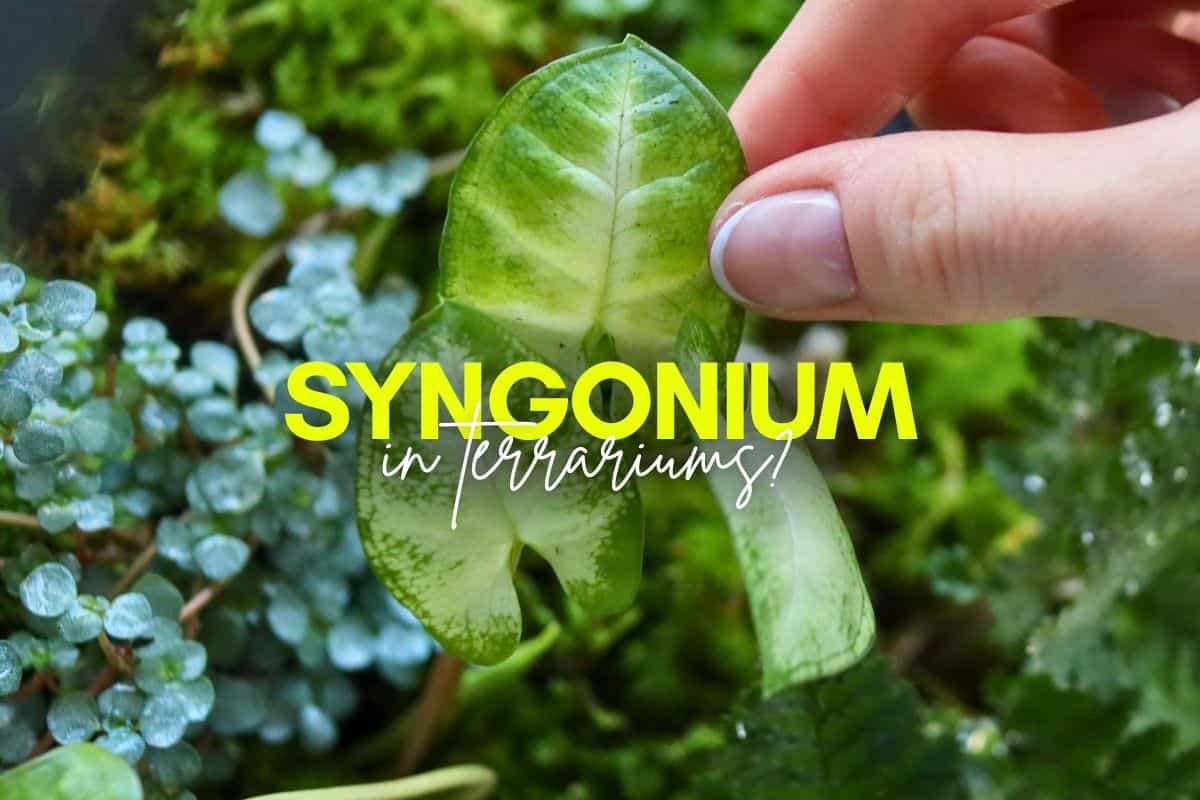
1. Syngonium podophyllum ‘Pixie’
Verdict: The best small Syngonium for terrariums.
For me, Syngonium ‘Pixie’ is the obvious terrarium choice.
It has the classic arrowhead-leaf shape, creamy white variegation, and a much smaller growth habit than standard Syngonium podophyllum varieties.
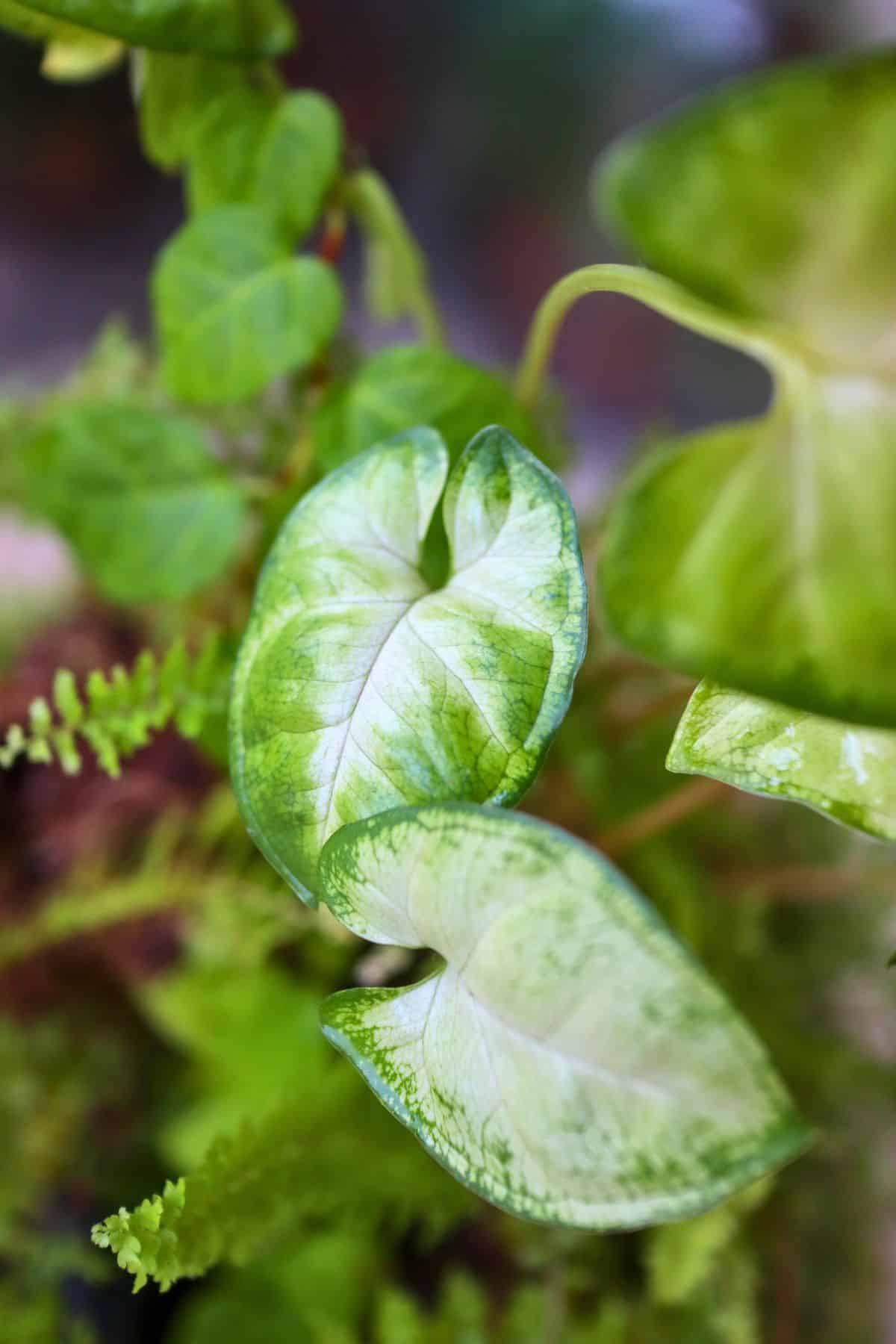
That’s exactly what makes it useful.
Most Syngonium are technically suitable for terrariums, but many eventually throw out longer stems or larger leaves.
Pixie stays much more manageable.
It still grows, of course. Mine arrived as a compact little bundle, then started pushing upward and outward once it settled into a closed tropical terrarium.
The leaves stayed small, but the stems began twisting through the hardscape and filling gaps in a way that looked far more natural than I planned.
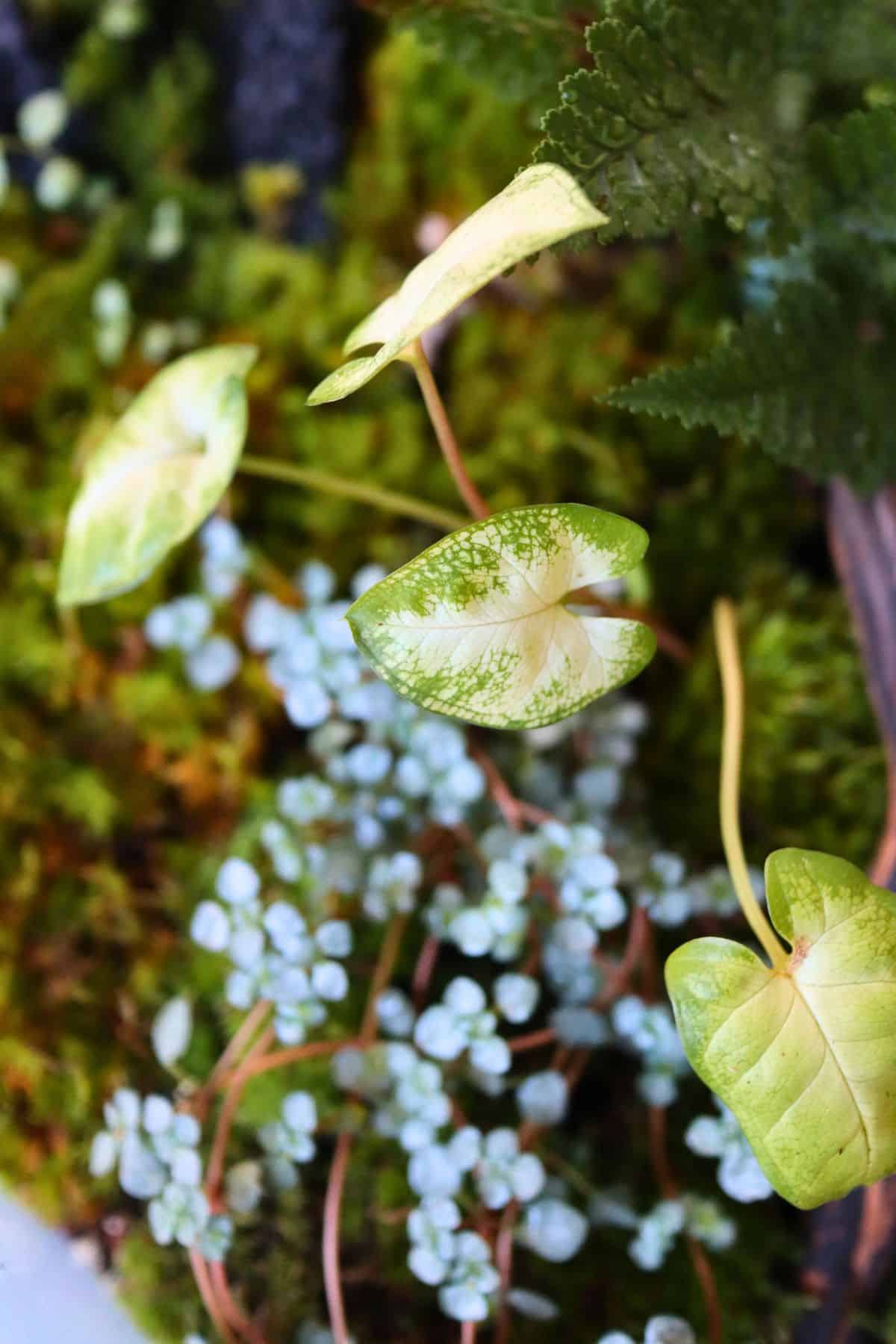
Use Syngonium ‘Pixie’ as a compact feature plant in small to medium tropical terrariums.
P.S. There’s also a ‘Mini Pixie’ variety, which is even smaller and better suited to tiny containers.
2. Syngonium ‘Neon Robusta’
Verdict: The best Syngonium for soft color.
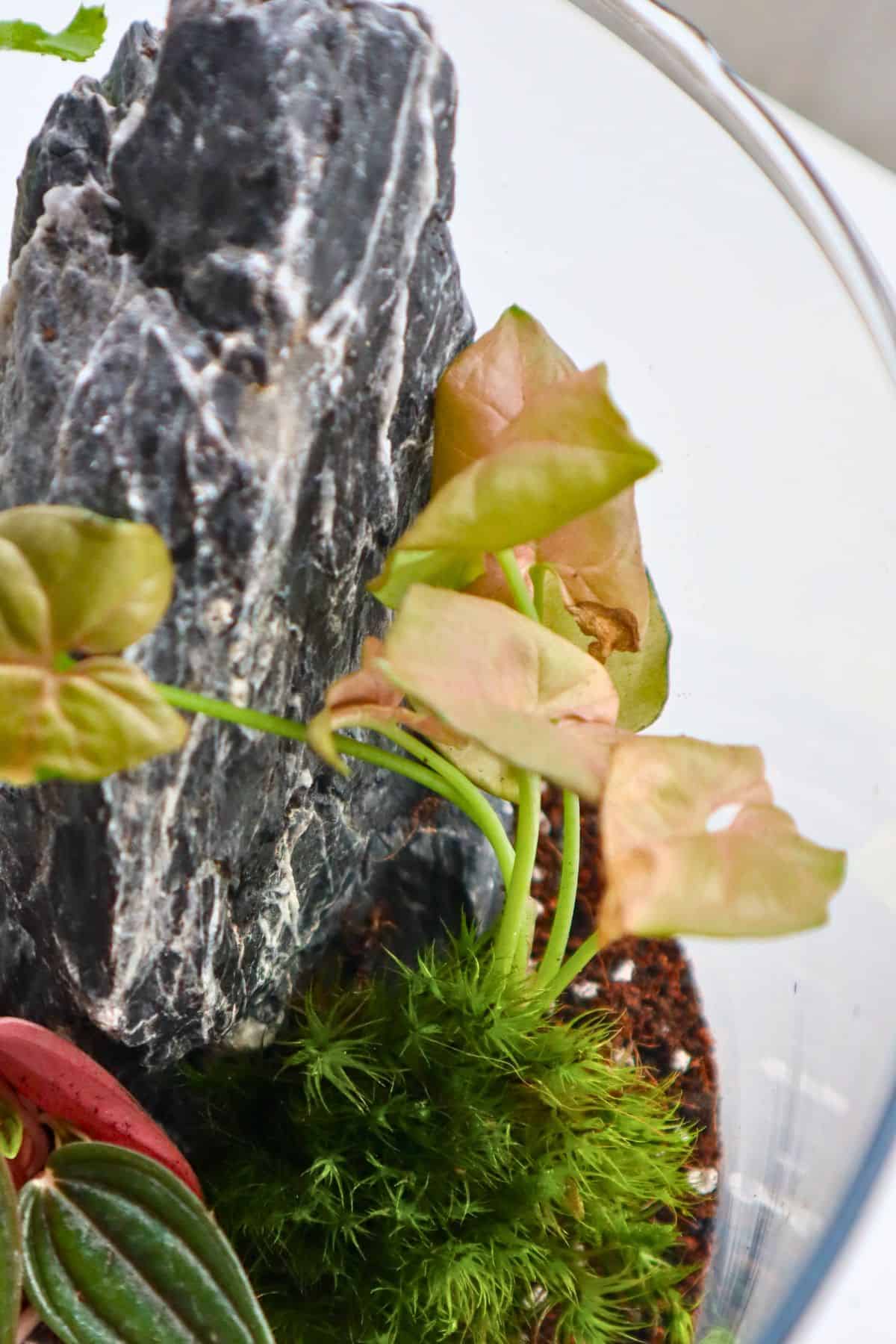
Syngonium ‘Neon Robusta’ is the one to use when your terrarium needs a splash of color. But not too much.
The dusty pink leaves bring a completely different look from the usual green tropical planting, but without feeling garish or artificial. It’s a soft kind of contrast, which is usually what works best in planted glass.
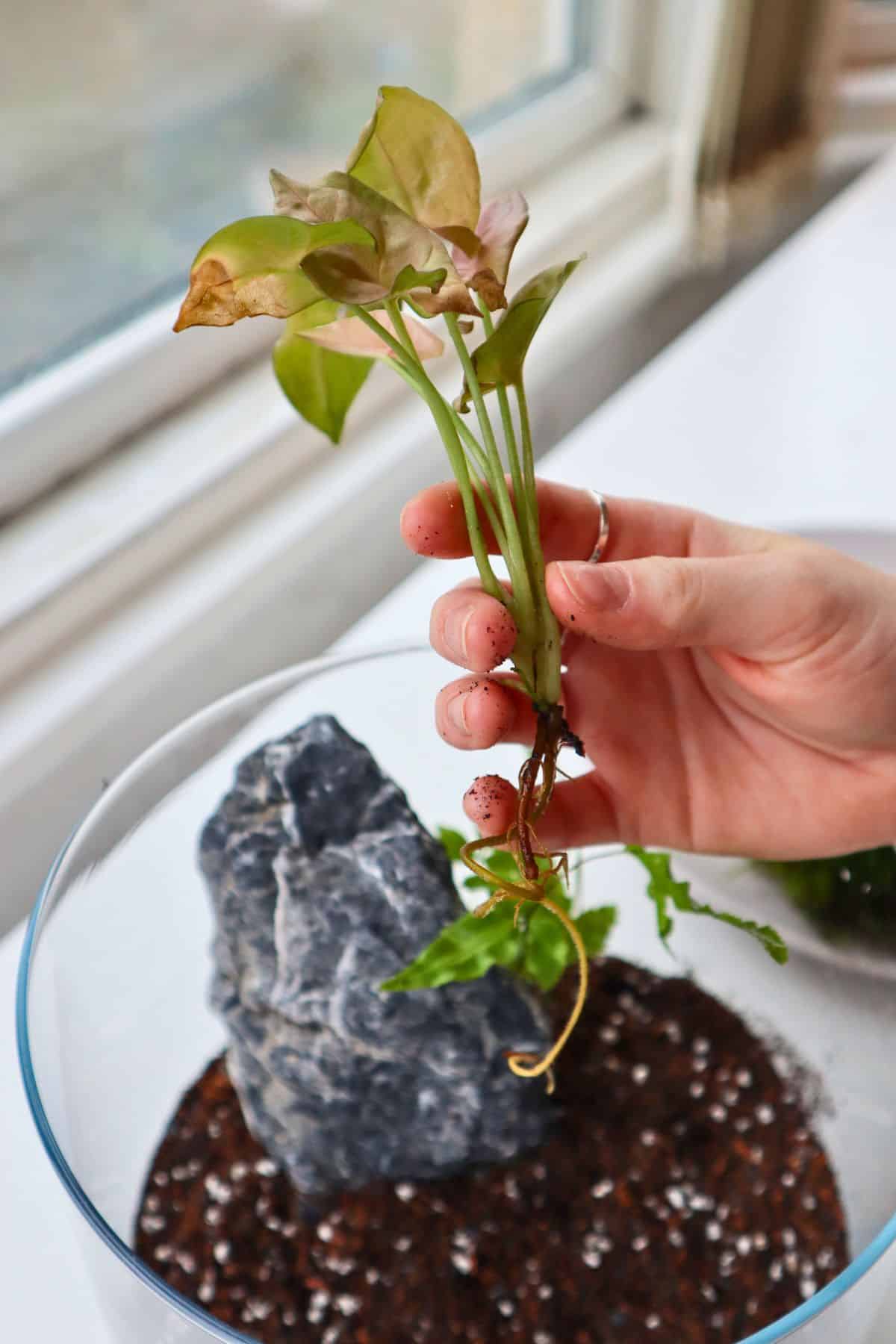
This variety tends to grow as a dense clump when young, which makes it surprisingly useful as a foreground or midground feature plant.
Despite technically being a vine, I don’t find Neon Robusta especially trailing in its juvenile form. It tends to stay more compact and bushy unless you give it something to climb.
That makes it easier to use than most aroids.
In a terrarium, I’d treat it as a colorful focal plant rather than a background vine. Give it enough space for the leaves to show properly, and place it somewhere the pink tones can contrast against moss, dark hardscape, or simpler green foliage.
3. Syngonium erythrophyllum ‘Llano Carti Road’
Verdict: The best Syngonium for contrast and climbing.
Syngonium erythrophyllum ‘Llano Carti Road’ is the dramatic one out of the bunch.
The leaves range from deep green to dark chocolate, often with crimson undersides. It’s moody, elegant, and very different from the softer look of Pixie or Neon Robusta.
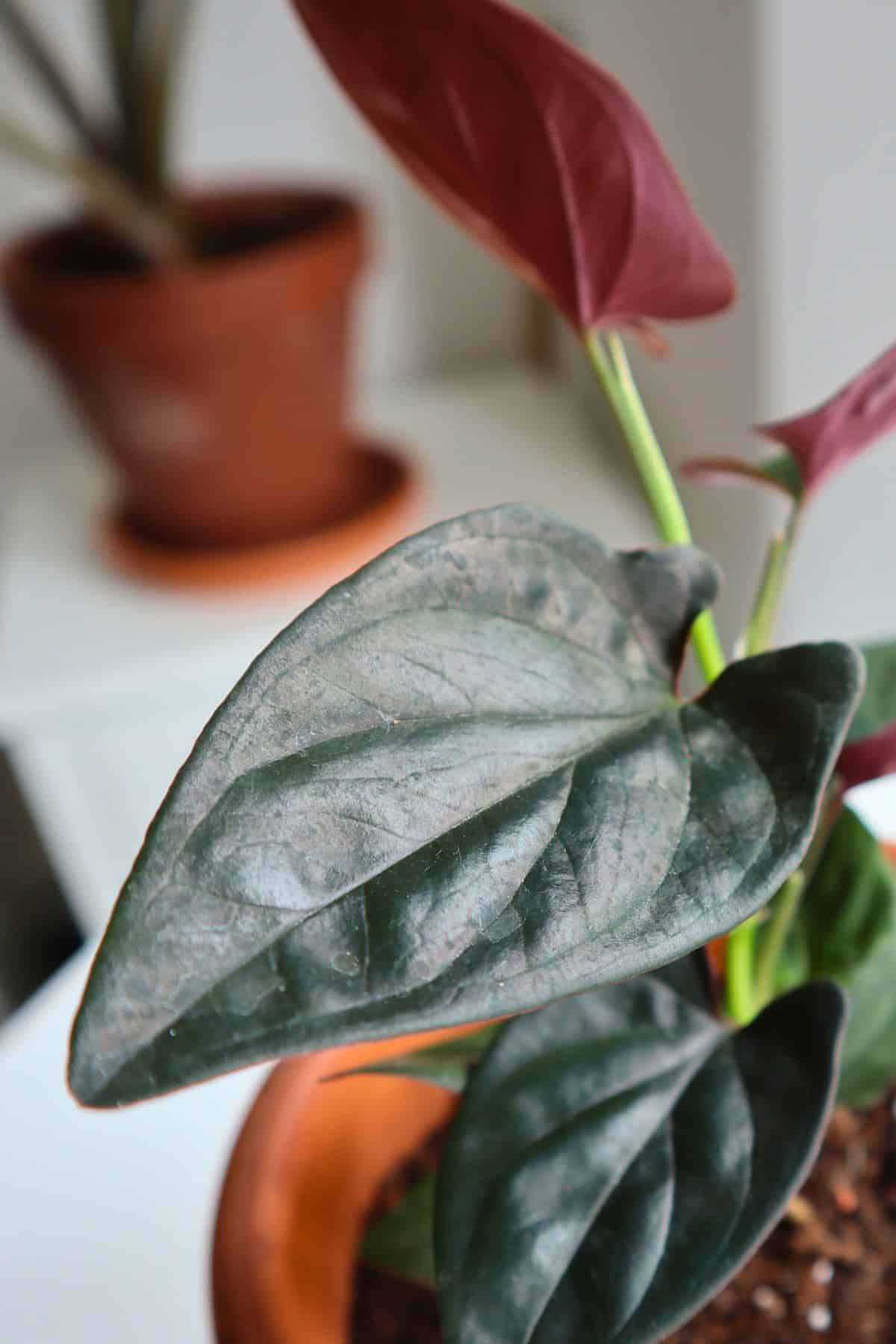
It’s also much more of a vine.
Where some Syngonium form compact clumps, this one creeps outward and wants to move. It has a scandent growth habit, so it’s better used in larger terrariums where it can trail, climb, or work through hardscape.
The leaves are also bigger (often around 3–4 inches), so this isn’t the one I’d choose for a tiny jar.
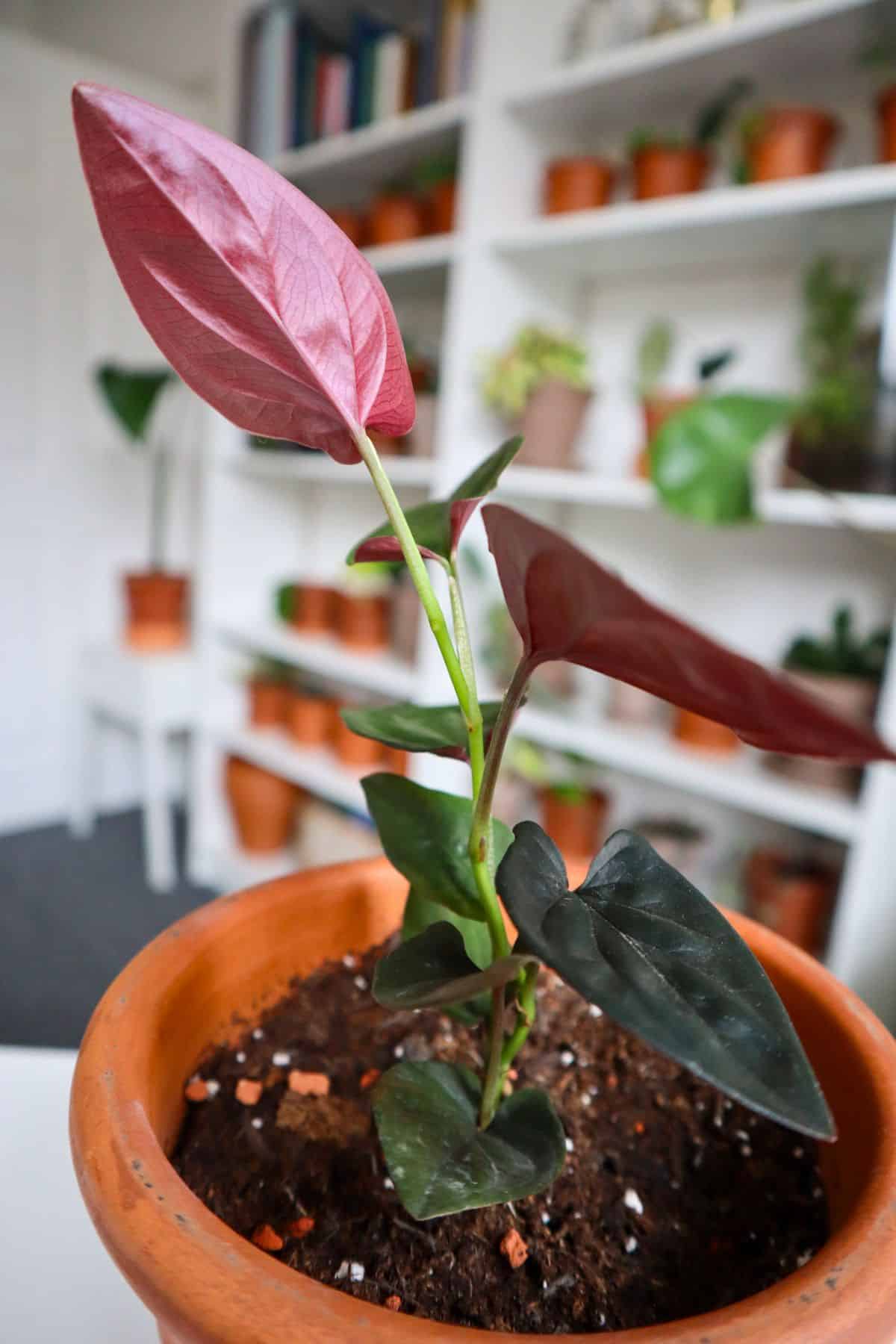
It’s also a natural low-light terrarium plant, so if you happen to have a particularly dark room (or just a dark space in a larger setup), this should be on your shortlist.
It visually pairs especially well with brighter green plants, moss, and pale hardscape, where the darker leaves can actually stand out. It’s also a good choice if the planting feels too sweet.
Llano Carti Road gives you a bit of drama.
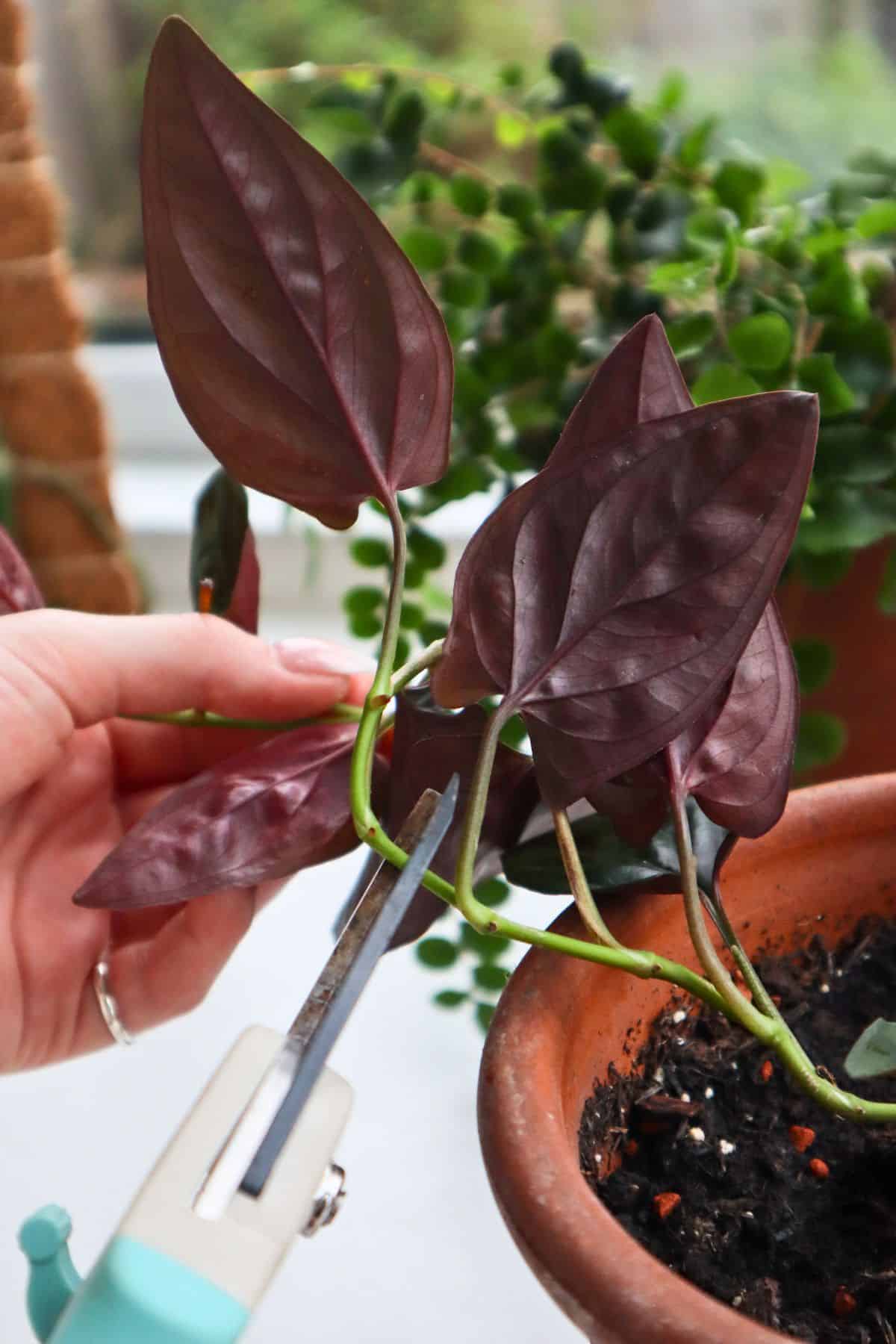
And like other Syngonium, it’s super easy to propagate from stem cuttings, and the long vining growth gives you plenty of cutting points once it gets going.
How to Use Syngonium in a Terrarium
Syngonium work best when you give them a clear role.
Use compact varieties as feature plants, colorful varieties where you need contrast, and larger vining types only where they have room to move. The more space and structure you give them, the more they’ll use it.
The main thing to consider with these plants is scale.
Granted, Syngonium rarely reach the size of Monstera or Philodendron… but that’s quite the scale to judge against. Aside from the ‘Pixie’ and ‘Mini Pixie,’ they will still outgrow most small terrariums.
To keep them manageable:
- Start with compact varieties or small cuttings rather than full nursery pots.
- Place them where the growth has somewhere natural to go.
- Trim vines regularly before they dominate the layout.
- Make sure they get plenty of light so they don’t stretch.
Think of Syngonium as plants to shape into the layout, not plants that politely stay where you put them.
Final Thoughts
Syngonium can be excellent terrarium plants, but they’re not all doing the same job.
For most terrariums, Syngonium ‘Pixie’ is the safest pick. It gives you the look, the scale, and the manageability.
The others are more about intent.
Use them where their growth habit makes sense, give them space to grow, and be ready to guide them as they settle in.
