

Philodendron is one of the more useful plant groups in terrariums.
In warm, humid tanks, a lot of Philodendron genuinely thrive. They climb well, root readily, tolerate humidity, and bring that lush tropical aroid look without needing especially fussy care.
The catch is that “Philodendron” covers a lot of ground (literally and figuratively).
Some stay relatively compact and easy to work with. Whereas others become broad-leaved monsters that only really make sense in tall vivariums or cabinet-style setups.
So in this guide, I’ll show you which Philodendron are genuinely useful in regular terrariums, which are better saved for large vivariums, and which tend to cause more trouble than they’re worth.
Types of Philodendron for Terrariums
Most useful terrarium Philodendron fall into three broad groups – compact climbers, vining types, and larger statement plants for big enclosures.
1. Vining and trailing types
This is the most reliable Philodendron category for standard terrariums.
Plants in the Philodendron hederaceum group are especially useful because they are adaptable, easy to source, and easy to shape. They climb, trail, root along the stem, and respond well to pruning.
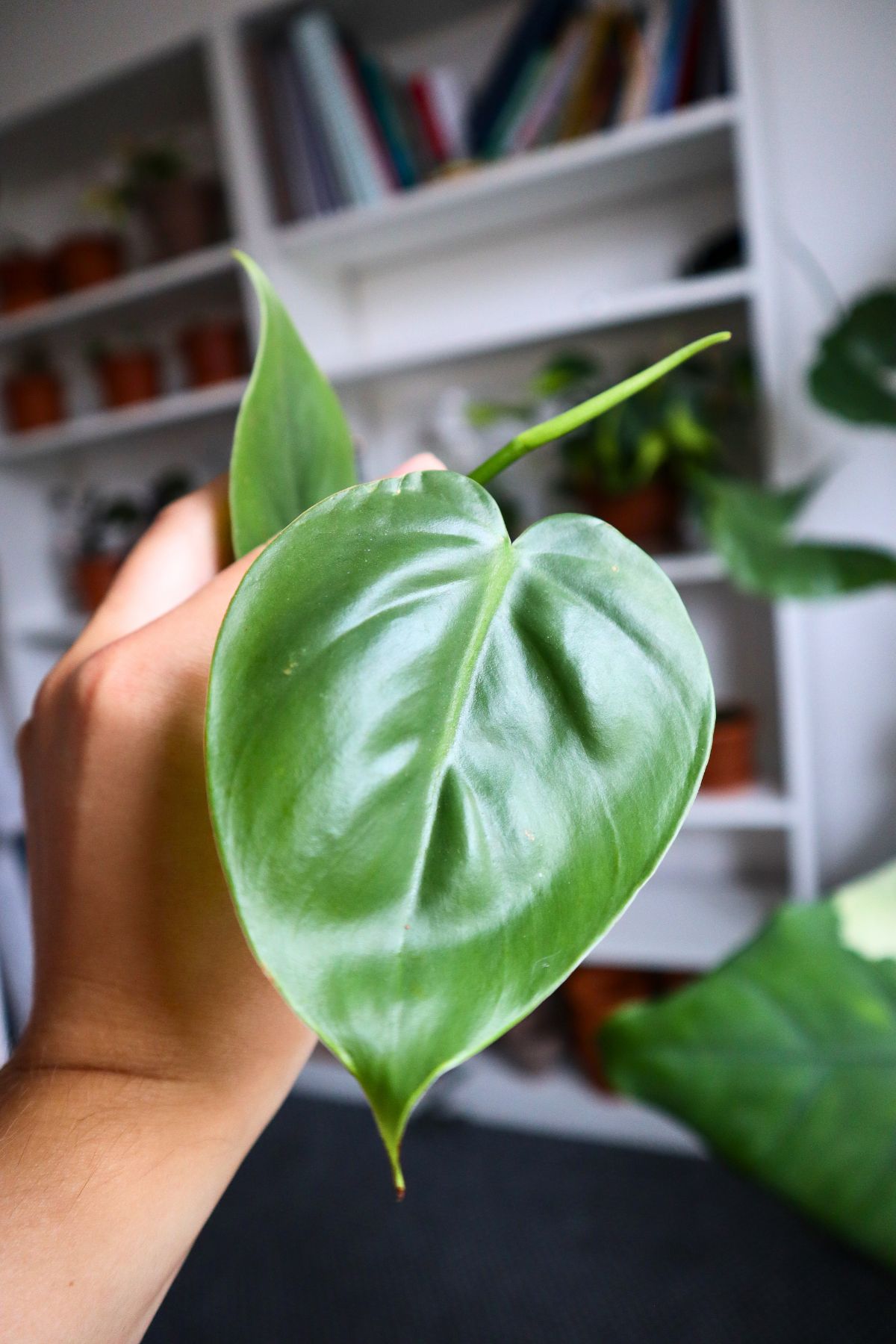
That makes them ideal for backgrounds, hardscape, and taller tropical builds where you want the plant to move through the enclosure rather than just sit in it.
They can still work in smaller terrariums too, but you have to stay on top of them. Left alone, they will keep going.
2. Smaller compact growers
Some Philodendron are just easier to live with in glass.
Smaller climbers like Philodendron ‘Mini Santiago’ or ‘Sodirini’ have a lot going for them. They still give you that classic Philodendron look, just at a size that is easier to absorb into a terrarium planting.
The downside is practicality. These plants are usually harder to source, and the naming can get a bit messy depending on the seller.
So while they can be excellent terrarium plants, they are not always the easiest place to start.
3. Big statement plants
This is where people often get tempted into trouble.
Some Philodendron look incredible in humid enclosures, but only if the enclosure is genuinely large enough to carry them. These types are not really small terrarium plants.
They are vivarium plants, cabinet plants, or feature plants for bigger tanks.
Philodendron verrucosum is a good example.
In a tall vivarium, it can look seriously stunning. Huge velvety leaves, bright veining, fuzzy petioles, rich undersides – it has all the drama you could want.
But in a standard smaller terrarium, it quickly overwhelms the space. I tried it in this fish tank terrarium, and the main leaves were pushing against the lid within a couple of months.
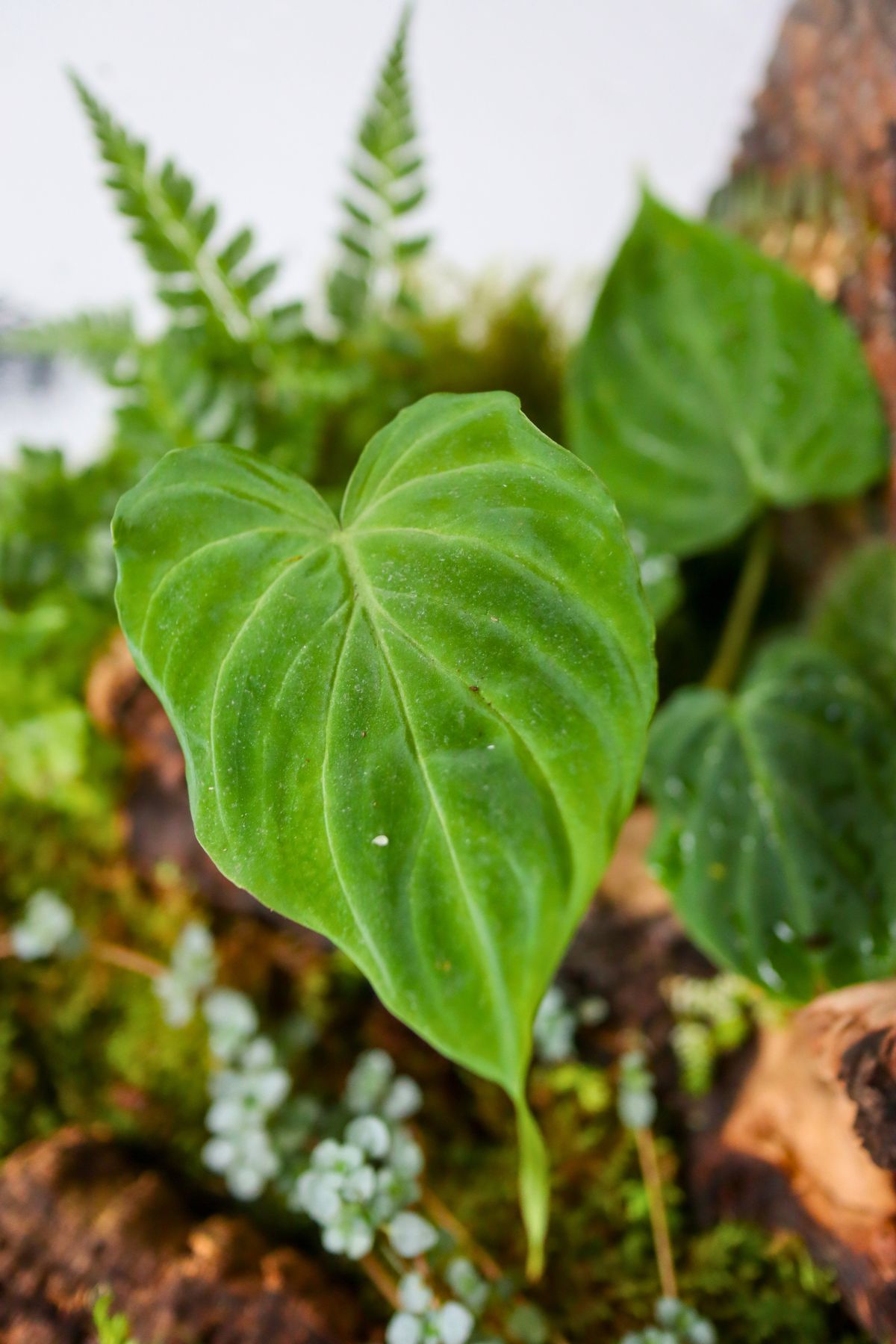
Honestly, not worth the hassle.
That does not make it a bad terrarium species, it just makes it a species for a very particular kind of terrarium.
The Best Philodendron for Regular Terrariums
Assuming you are not building something tiny, a few of the more standard Philodendron can work very well in a regular terrarium.
The catch is that even the best options still need some guidance. Philodendron are not really “set and forget” plants. The good ones are simply easier to steer.
Best for most builds
Philodendron hederaceum is probably the best place to start.
It’s a true climber, readily uses aerial roots, and can either trail or climb depending on the structure you give it. The leaves stay at a believable size for quite a while, and it takes well to pruning.
Pruning doesn’t just keep it in bounds, it also encourages bushier, denser growth, which is usually much more useful in a terrarium than a few long, leggy vines.
It is also forgiving, widely available, and easy to shape. Hard to argue with that really.
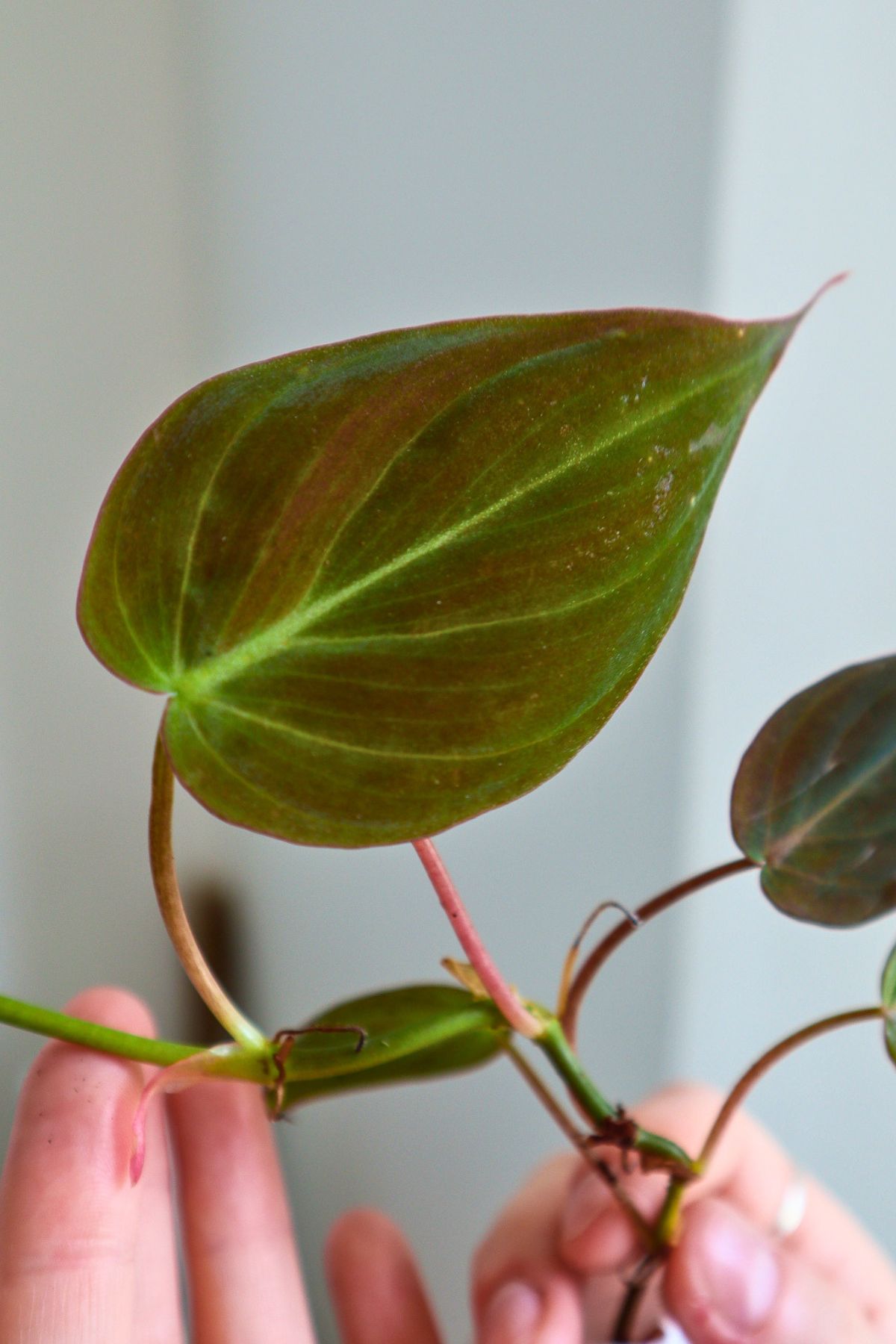
If you want more texture, Philodendron hederaceum var. Micans gives you the same broadly useful growth habit, but with softer velvety leaves and bronze-green tones that work especially well in tropical builds.
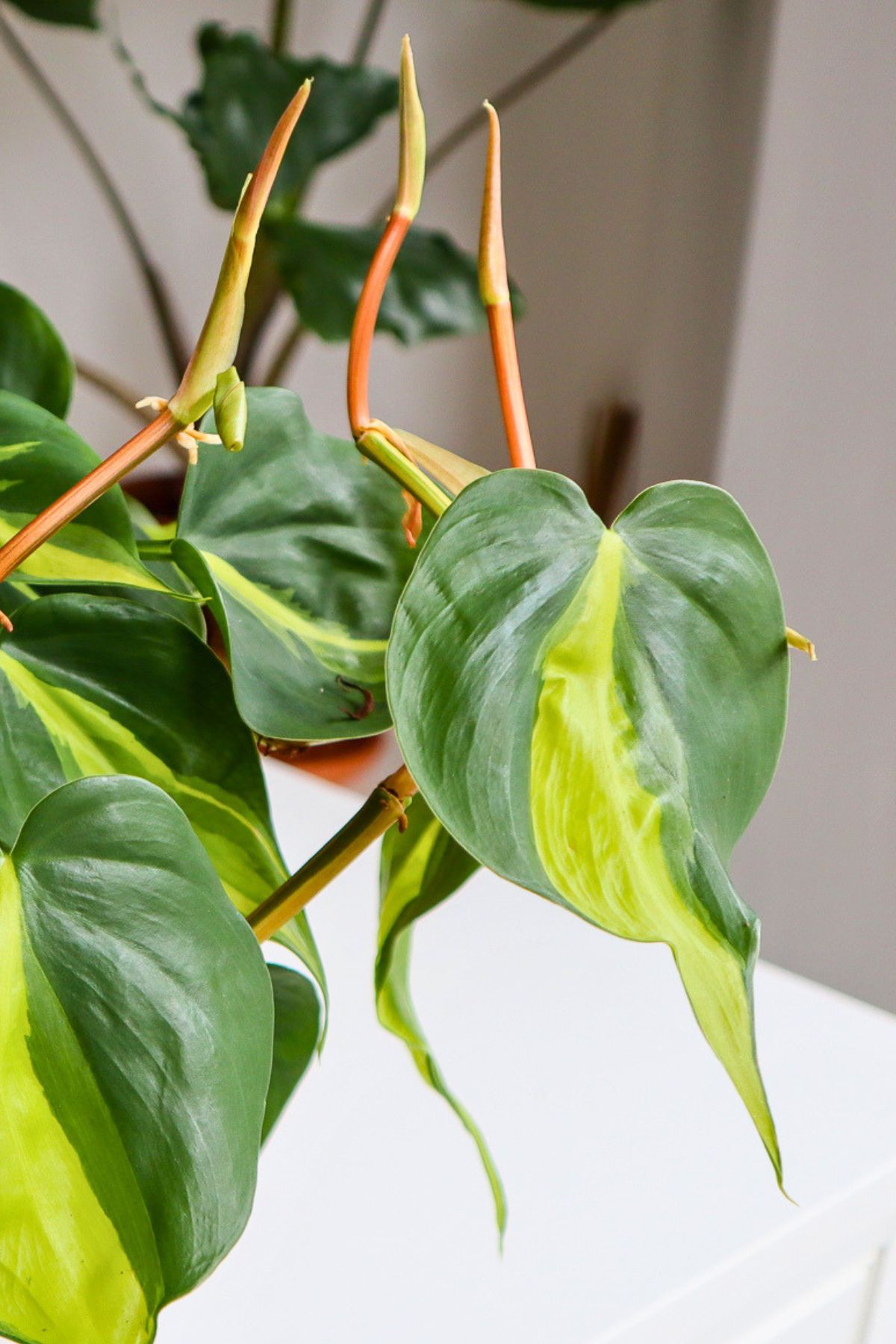
If you want more contrast, Philodendron hederaceum ‘Brasil’ gives you the same general habit with brighter variegation. It can lift darker planting and stop everything blurring into one wall of green.
Workable, but less forgiving
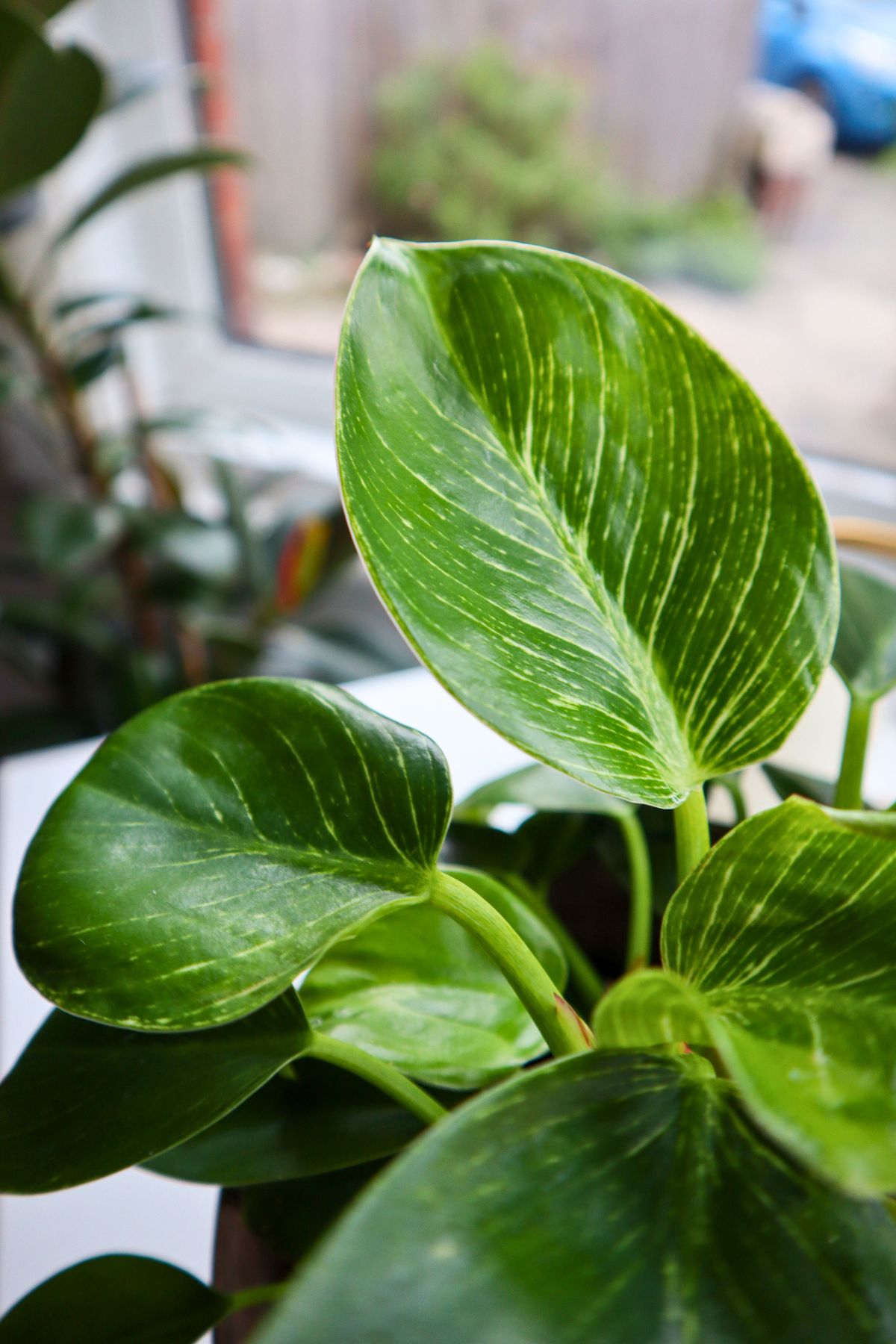
Philodendron ‘Birkin’ gets recommended for terrariums quite a lot because it looks neat, striped, and compact while young.
I get the appeal. I just don’t think it’s one of the best choices.
It can work for a while, especially in a larger enclosure, but it behaves more like a decorative houseplant that happens to tolerate humidity than a plant that really wants to be part of a terrarium composition.
As it matures, the leaves and overall bulk start to feel heavy for the space.
So no, it’s not unusable. It’s just not where I’d point most people.
Philodendron ‘Wend-imbe’ sits somewhere nearby.
It can stay manageable for longer than you’d expect, and it’s easier to absorb into a larger planting than some of the more dramatic Philodendron. But it still doesn’t have that same easy, flexible usefulness that makes hederaceum so dependable.
It works best when you’ve got a bit of room to spare and don’t mind stepping in to prune or reposition it now and then.
A decent option, then. Just not the first one I’d choose.
Philodendron That Work Better in Large Vivariums
This is the distinction that tends to get blurred.
A lot of Philodendron recommendations come from people building larger tropical vivariums, not smaller decorative terrariums. And those are very different use cases.
In a bigger vivarium, you can use more vigorous species because there is enough height, airflow, and planting volume to absorb them.
That is where plants like Philodendron verrucosum start to make sense.
In that setting, the large leaves and heavier presence are not a problem. They’re the whole point.
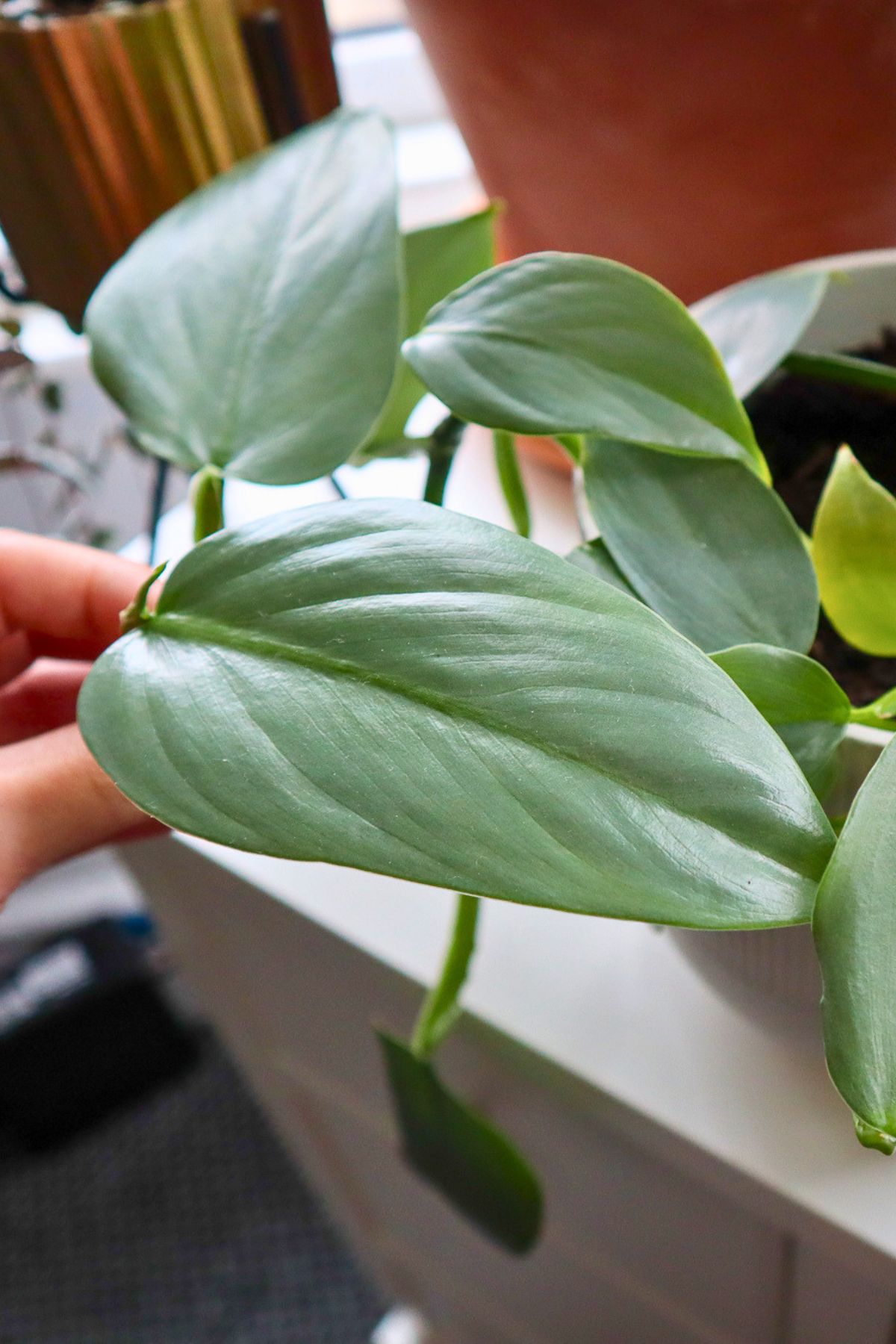
You could make a case for Philodendron hastatum here too. It’s a strong climber, and its leaves can get very large as it matures, so tall enclosures are the best fit.
The Main Mistake People Make
Most people choose Philodendron by leaf, not by habit.
Which is understandable. Philodendron is full of beautiful leaves.
But leaf shape tells you almost nothing on its own about whether the plant is a good long-term terrarium choice.
What matters is the whole growth pattern:
- How fast it climbs.
- How large the leaves become.
- How easily it can be pruned.
- Whether the plant still fits the enclosure after six months of growth.
That is why smaller, steadier species tend to be much easier to live with.
They give you more room to build around them, more room to prune without wrecking the look, and more room for the rest of the planting to matter.
My Philodendron Philosophy
Philodendron can be excellent terrarium plants.
Not because every species fits, but because there’s enough range in the genus to find options that genuinely do. Choose by habit, not by the prettiest leaf, and you’ll usually make a better call.
For regular terrariums, the smaller and more flexible species make the most sense.
The bigger, bolder Philodendron can absolutely look amazing too, but they’re usually better treated as vivarium plants than general terrarium recommendations.
That’s the difference that matters.
