

Monstera are a good match for terrariums in principle, but in practice? Often not so much.
The classic Monstera that most people picture is enormous, iconic, and almost completely wrong for what most terrariums need. Big leaves, chunky aerial roots, and aggressive climbing habits are a poor fit for life in glass.
That’s why Monstera can seem like an odd terrarium category at first glance.
But that’s not always the case. Some species are far more workable than people might assume, especially in setups that give them the structure and space they need.
In the right setup, with the right species, you can make it work.
Can Monstera Grow in a Terrarium?
Yes, most Monstera can grow very well in a terrarium.
Heat, moisture, and humidity are not going to be an issue. Most Monstera come from tropical conditions anyway, so a humid enclosure is not exactly a shock to the system.
The problem (as with most aroids) is scale.
Some species stay manageable while young and can climb in a way that can work well in glass. Most are pushing the limits from day one, or quickly become far too assertive for the space.
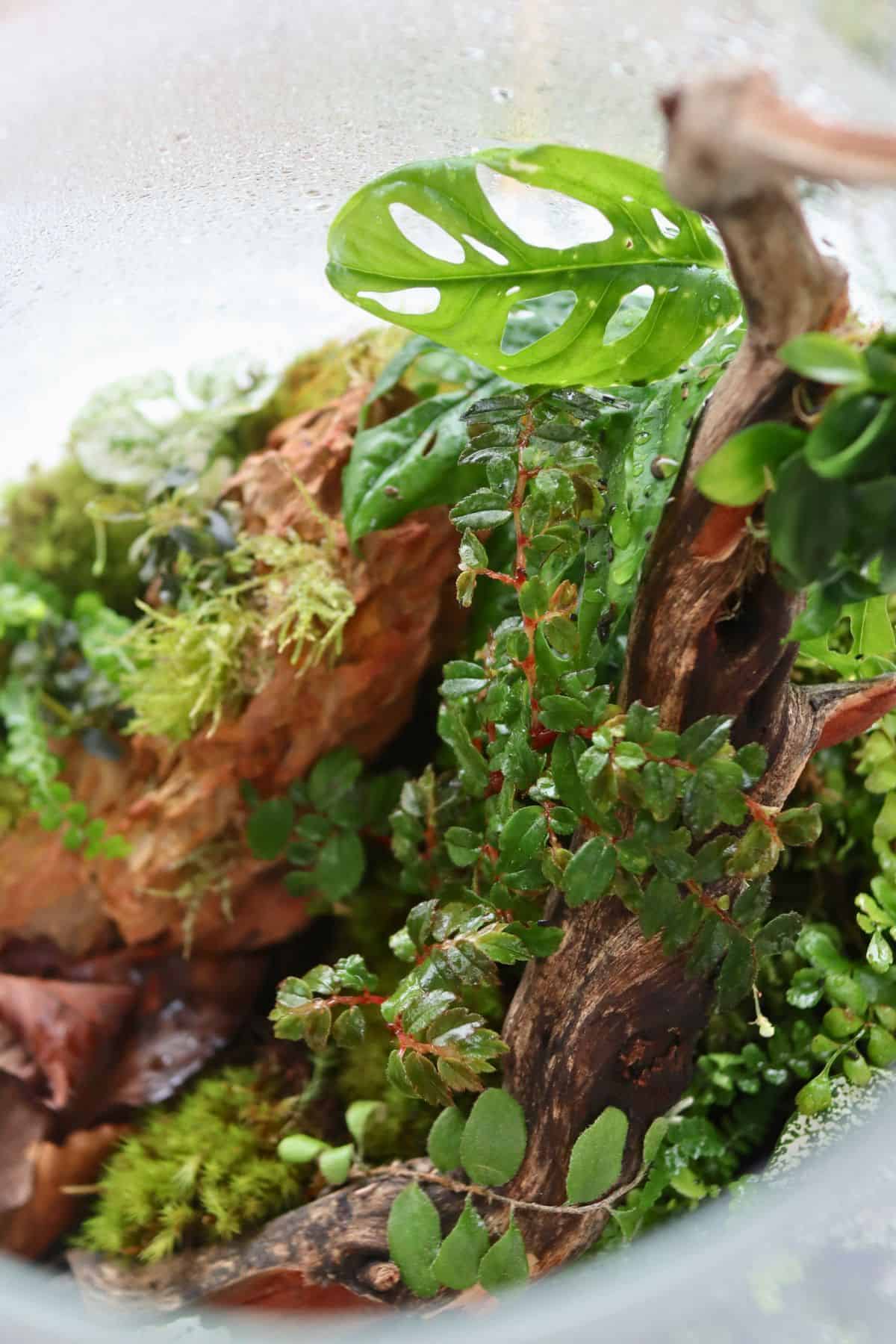
So yes, Monstera can work.
You just have to stop treating it like a generic tropical plant and start thinking where it’s growth is heading. Really, that trajectory matters more than the nursery pot size it comes in.
Why Monstera Only Works in the Right Kind of Build
Monstera is not really a “drop it in and see how it goes” kind of terrarium plant.
The species that work best are usually climbers, so they need a terrarium with a bit of height, a bit of structure, and enough scale to make that climbing growth look intentional.
That’s why the most convincing Monstera terrariums usually include:
- Cork bark or wood for it to climb (usually, a sturdy background).
- Real vertical space, as much as you can give it.
- A planting style that is slightly larger and looser.
- An owner willing to prune before the plant takes over the whole composition.
Without that, even the better species can look awkward.
A Monstera with nowhere to climb often looks stranded. Put one in a tightly packed miniature composition and it can feel oversized before it has even settled in. Put one in a small decorative terrarium and you need to start the pruning countdown timer immediately.
Done well, though, it can look brilliant. Seriously.
It just helps if the terrarium already has some scale of its own.
Juvenile Monstera is the Sweet Spot
In terrariums, the juvenile stage is the most workable one – by far.
The leaves are smaller, growth is tidier, and the plant still feels proportionate to the enclosure.
A lot of the climbing or shingling species are especially good at this stage. You get the texture, the movement, and that recognisable aroid ‘feel’ without the plant immediately turning into a space problem.
The best part is, some species stay this way in terrariums (e.g., Monstera dubia).
And for those that dont, it helps to think of that smaller form as a phase rather than a permanent feature. Enjoy it while it lasts, and be prepared to prune hard or remove the plant once it starts pushing beyond the space.
That doesn’t make Monstera a bad choice. It just means you need to be honest about which phase of the plant you are designing around.
Which Monstera Actually Work in Terrariums?
A few species genuinely make sense in the right enclosure.
Not because they stay tiny forever, but because their juvenile growth, climbing habit, or smaller overall scale makes them workable for much longer than the usual Monstera suspects.
1. For the Classic Monstera Look
If you want a Monstera that still looks unmistakably like a Monstera in a terrarium, Monstera adansonii is the clearest place to start.
It’ll still give you the classic perforated leaves, but on a smaller and more flexible plant.
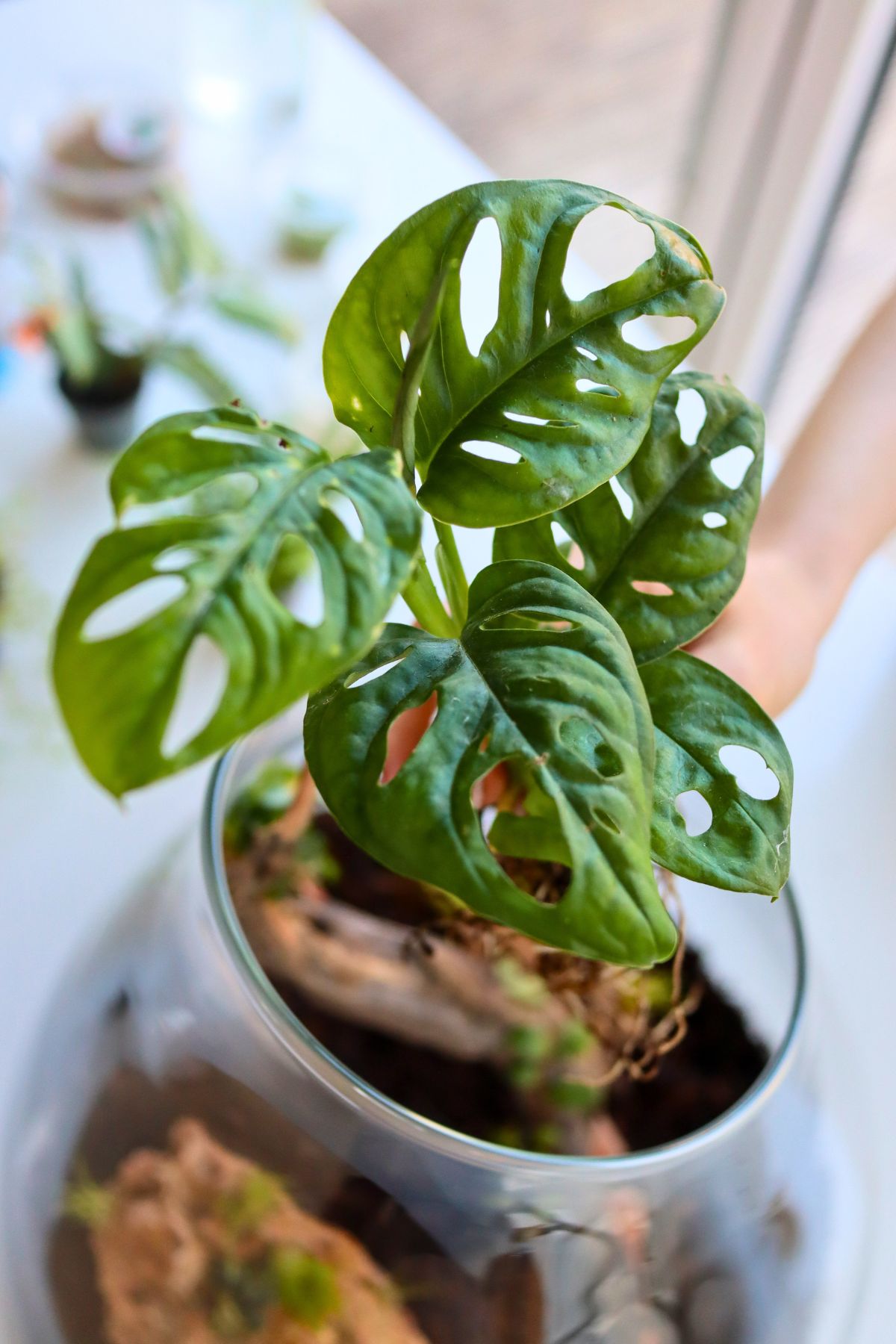
Naturally, this plant still likes to climb and still needs managing, but it is at least operating at a scale that a larger enclosure can usually absorb.
In a taller tropical terrarium or vertical vivarium, it can look completely at home.
- Monstera acuminata can fill a similar role in a tidier way. Same general feel, same fenestrated climbing habit, just a bit neater.
- Monstera obliqua also fits the same criteria. In practice, it is rare, fragile, expensive (and constantly misidentified) so be careful with that one.
2. For Vertical Backgrounds
In my view, Monstera dubia is probably the best Monstera option for a terrarium.
As a juvenile plant, it grows as a shingling vine, pressing its silvery leaves flat against the surface it climbs. It’s perfect for vertical setups with a cork backboard.
It’ll still grow bigger leaves as the vine grows, but largely looks the same.
You are not really choosing this plant for its mature form. You are choosing it because the juvenile phase looks so good on bark or background structure.
3. For Texture Rather Than Fenestration
Not all Monstera earn their place through holes in the leaves.
Some, like Monstera siltepecana, bring a lighter, more refined kind of climbing growth. The juvenile leaves are narrower, softer, and brushed with a silvery finish that looks especially good against a typical green tropical backdrop.
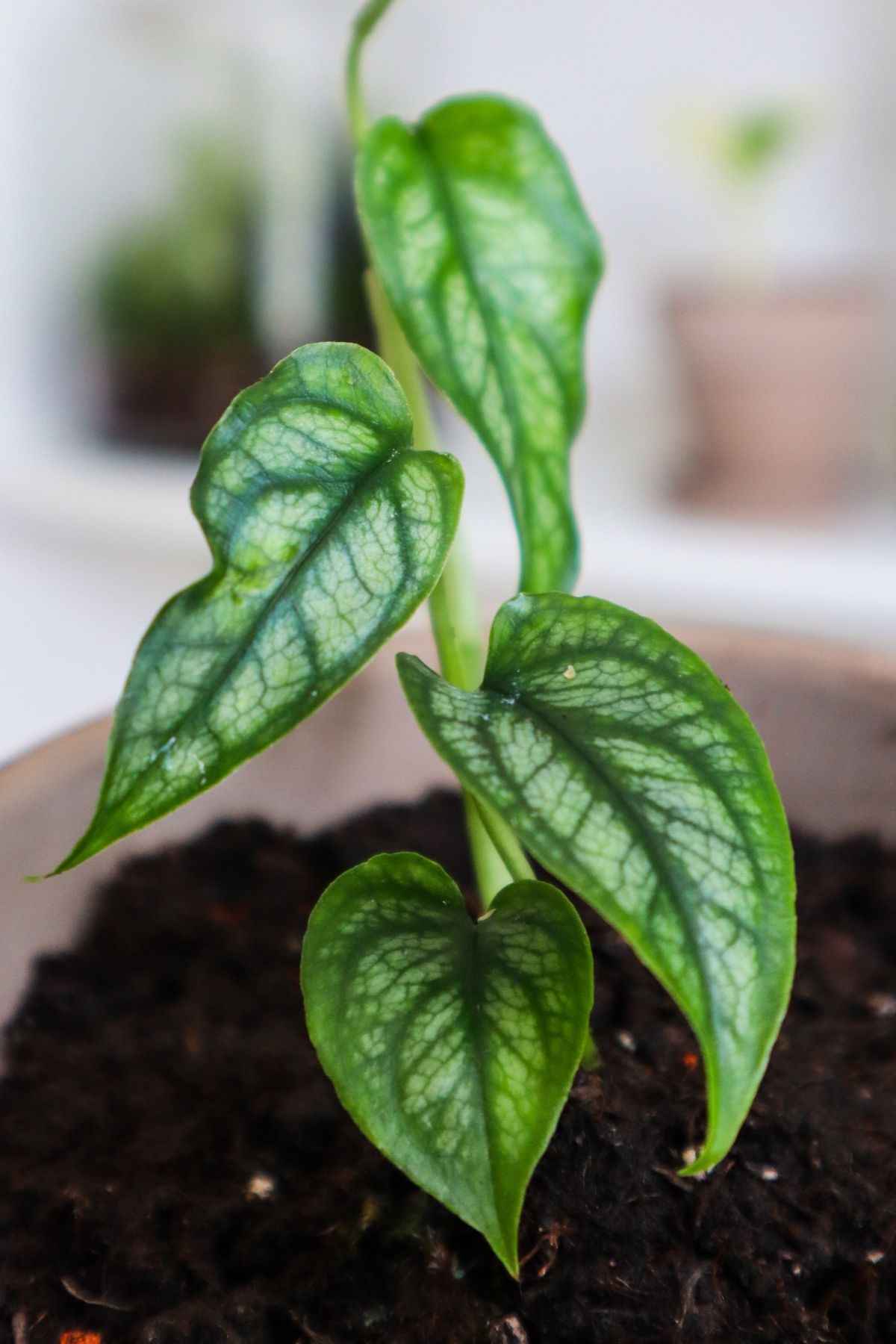
Others, like Monstera peru, bring something heavier and more visually dynamic. Its quilted foliage is compact, textured, and much easier to keep visually contained than the broader, flashier species.
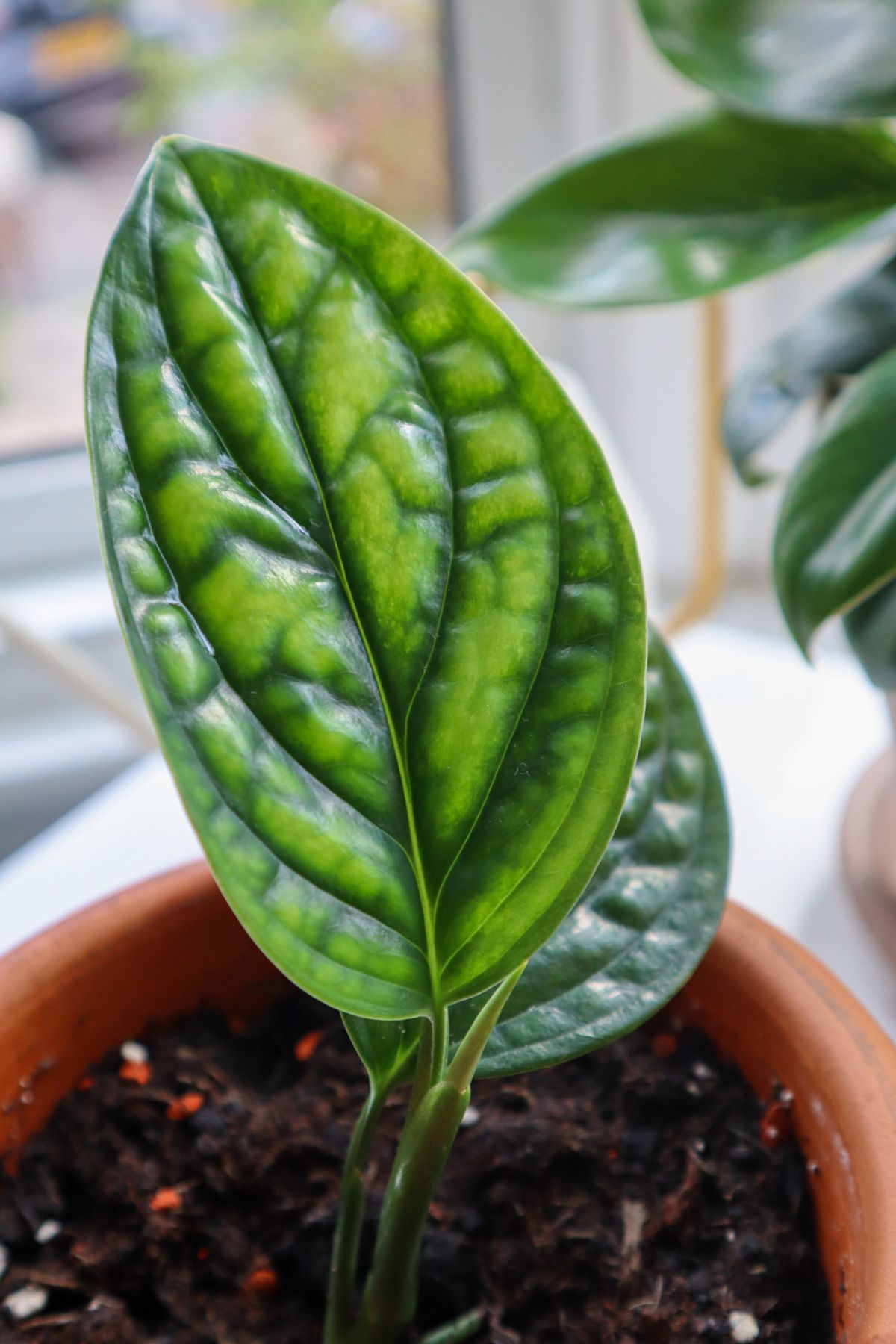
Both still need plenty of space (or a firm hand in pruning) but they remain pretty popular in the vivarium/terrarium community.
Which Monstera to Avoid in Terrariums
Some Monstera are simply too big or too short-lived in proportion to be worth the trouble.
- Monstera deliciosa – The mature form is far too large, and even the juvenile stage has enough momentum that it rarely makes sense unless the enclosure is genuinely huge.
- Monstera subpinnata – Beautiful plant. Wrong setting. This is a broad, dramatic climber that wants open space, not a carefully scaled glass enclosure.
- Monstera pinnatipartita – This is one of those plants that seems promising while young and then moves on very quickly.
What about Mini Monstera?
This always comes up, so it is worth clearing up.
Mini Monstera is not a true Monstera. It is Rhaphidophora tetrasperma.
Still, people mention it for good reason. It gives a similar split-leaf tropical look at a smaller scale, and in a larger terrarium or vertical enclosure it can work in much the same spirit as the better Monstera species.
It is still energetic. It still climbs. It is still better suited to bigger builds than tiny decorative terrariums.
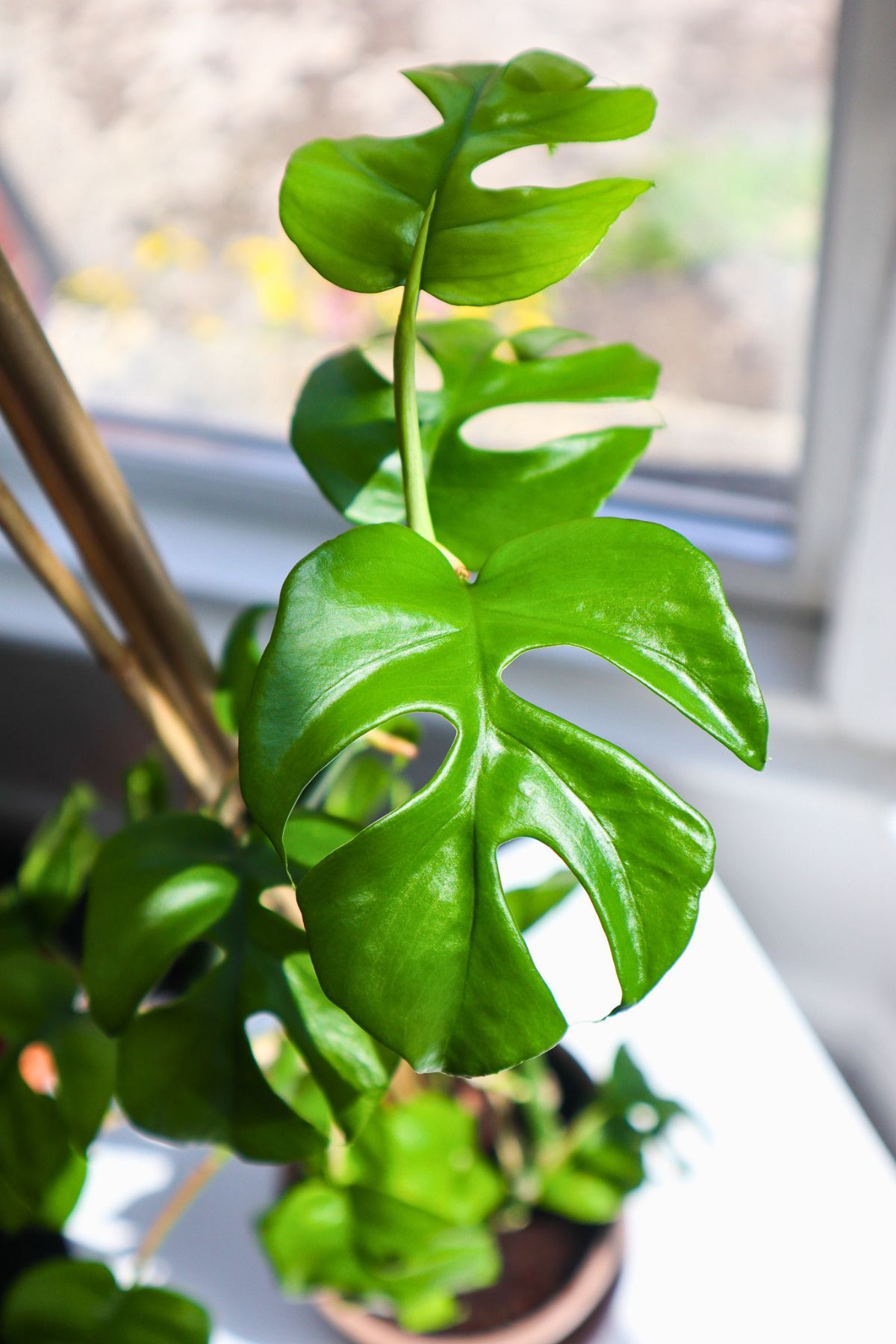
Useful, yes. Actually Monstera, no.
Final Thoughts
Monstera can work in a terrarium.
But only the right species, in the right kind of setup, and usually at the right stage of growth.
If the enclosure has height, humidity, and structure, you have a lot more wiggle room. If the build is small, tightly scaled, or meant to stay neat for the long haul, Monstera is usually the wrong instinct.
Used well, it looks brilliant. Used badly, it quickly becomes a question of when, not if, it outgrows the space.
