

Cubaris isopods have a special way of pulling people in.
Let’s face it, they’re loved for one very specific reason – they’re disarmingly cute.
Their rounded bodies and soft, almost cartoonish “ducky” faces make them instantly appealing (even to people who didn’t expect to care about isopods at all). And the new color morphs just keep coming.
This isn’t a care guide or a checklist of what to keep. It’s a look at why Cubaris inspires such a loyal following in the hobby, through a collection of species that showcase just how strange, varied, and quietly captivating this genus can be.
If you’ve ever wondered why people don’t just keep one Cubaris… this is probably how it starts.

The Cubaris Appeal (Faces First, Details Second)
Much of the recent attention around Cubaris can be traced back to the Rubber Ducky Isopod.
That rounded body and unmistakable ducky face captured imaginations well beyond the usual isopod crowd. Since its discovery in Thailand, this single isopod has quietly expanded the reach of the hobby and helped push the Cubaris genus into the spotlight.
After reaching instant fan-favourite status, interest quickly spread to other Cubaris varieties – many of them increasingly vibrant, detailed (and often a little zany) in their own right.
Add to that the fact that many Cubaris are slow or difficult to breed (small broods/long cycles), which naturally limits availability and further amplifies their appeal, often turning a casual interest into a more deliberate, collector-minded pursuit.
Here are some of the standout Cubaris species, minus the hype.
Standout Cubaris Species
1. Panda King Isopods (+ Red Panda Isopods)
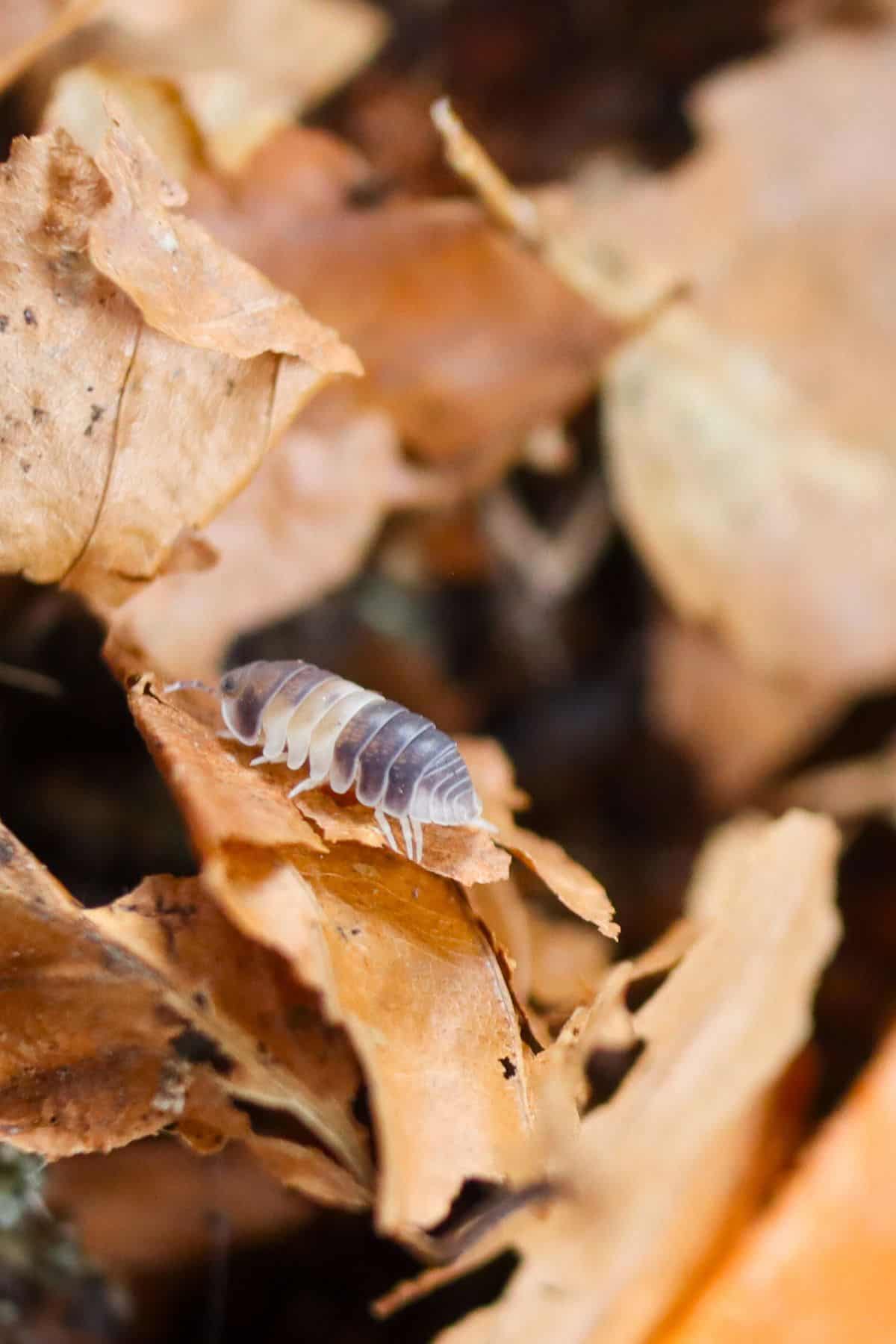
You could certainly argue that the Panda King Isopod is named after an animal almost as cute as the Rubber Ducky Isopod.
They’re actually one of the smaller Cubaris species, so their signature black-and-white coloration makes them look more like babies than giant pandas.
If you’re looking for a way to get started in the cute Cubaris pet isopod trend (without breaking the bank), Panda King Isopods could be the solution.
They’re also arguably the best beginner species here, being amongst the easiest Cubaris varieties to keep and breed – so you can rest assured your investment is a safe bet.

2. Cubaris murina (+ Glacier & Papaya Isopods)
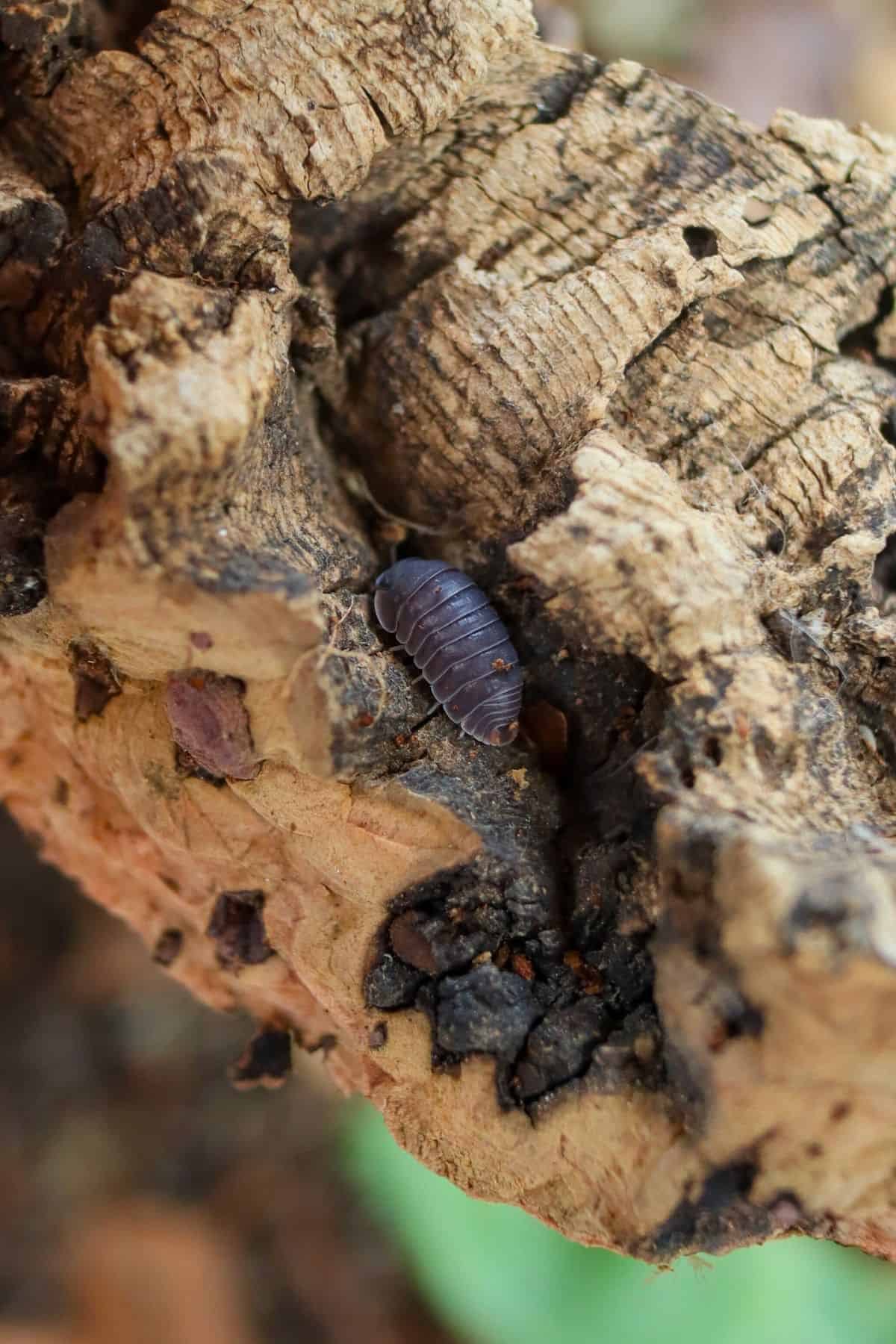
Cubaris murina has taken a different path.
With their blueish, grey coloration, I wouldn’t say they’re the most visually striking Cubaris species (though they do have their subtle charms). So, instead, they’ve become the default Cubaris for bioactive enclosures.
Little Sea Isopods enjoy the high humidity of a tropical terrarium/vivarium, so it’s partly that.
They’re also reported to establish pretty well (though it’s probably best to still maintain a side culture just in case).
It certainly helps that they’re the cheapest Cubaris on this list!
Plus, they have some really lovely color morphs.

What happens if you take the strengths of Cubaris murina and turn up the cuteness factor?
You get the Papaya Isopods!
As a (very aesthetic) pink/peach mutation, you get a lovely little terrestrial isopod that can serve as a pet or a bioactive cleaner.
The best of both worlds? I certainly think so.
(There’s also a creamy white ‘Glacier” morph).

3. Rubber Ducky Isopods (+ Blonde & White Ducky Isopods)
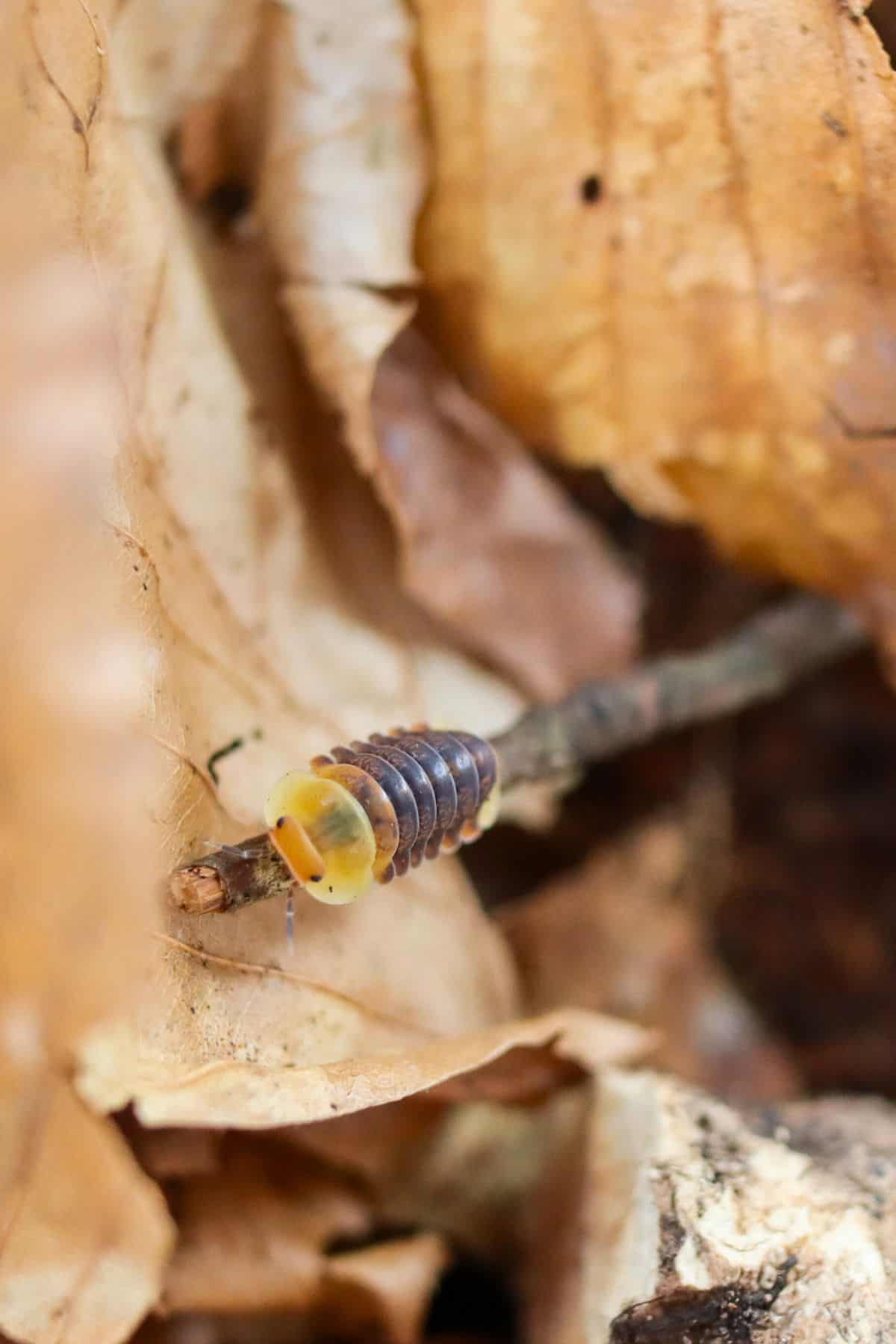
The variety that put Cubaris on the map, the Rubber Ducky Isopod!
Their little yellow faces have become the de facto face of the isopod hobby, and they continue to be super popular to this day.
Alas, they continue to be challenging to source, so jump on the opportunity whenever you can.
If that’s not enough, there are also the ‘White Ducky’ and Blonde Ducky Isopods too!


Oh, and you could arguably fit the Pak Chong Isopods in with this crowd, too. With their dark bodies and pinky-orange faces, they’re a different type of contrast for your setup.

4. Cappuccino Isopods

Honestly, I think these are my new personal favorites.
Cappuccino Isopods are full of deliciously mottled coffee colors. Just like those images of fresh espresso mixing into cold milk, you’ll see unique combinations of creamy whites, dark browns, and warm tans.
Though they’re pretty new (and very rare), I’m hoping these take off. 🤞
5. White Shark Isopods (Dwarf Duckies!)

White Shark Isopods are relatively new, and are honestly a bit of a game-changer for terrariums.
Granted, they’re not as small as something like Dwarf White Isopods, but they’re still really tiny. Coming in around 0.5cm on average, they’re perfect for smaller terrariums.
They have a lovely little tri-color pattern, with a pop of contrast between their white and orange sections.
So… Which One Gets You?
Well, we’ve seen an absolute boatload of Cubaris isopod inspiration in one place.
If there’s a Cubaris you keep coming back to – or one we’ve missed that deserves a closer look – it’s always interesting to hear which details resonate most.
Alternatively, if Cubaris caught your attention, it can also help to zoom out and see how they compare to other popular isopod species – especially in terms of care, behaviour, and suitability for different setups.
You never know where your next love might be hiding…

thank u. i liked reading this. never stop <3
Just got into the hobby! Waiting for my Panda Kings to arrive in the mail! It’s so cool to discover new morphs and color patterns within the Cubaris species! Can’t wait till I get more!